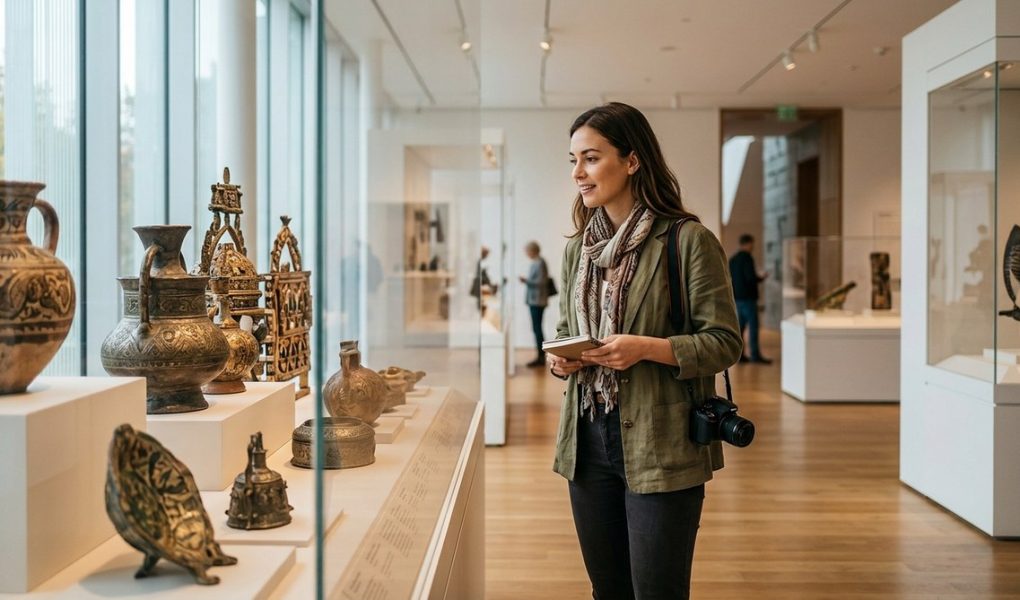
Most travelers line up for the Mona Lisa while entire floors of extraordinary art sit empty three galleries away. The world’s museums hold millions of objects, but only a fraction ever makes it into the spotlight. These overlooked museum collections offer something better than famous masterpieces: space to breathe, time to look closely, and stories that haven’t been told a thousand times before.
Overlooked museum collections provide richer cultural experiences than blockbuster exhibits. Storage galleries, decorative arts wings, and regional museums house extraordinary objects with minimal crowds. Planning visits around these hidden collections transforms museum trips from rushed photo stops into meaningful encounters with history, craft, and storytelling that mainstream attractions cannot match.
Why museums hide their best work
Storage space limitations force curators to make brutal choices. Most major museums display less than 5% of their total holdings at any given time. The Metropolitan Museum of Art owns two million objects but shows roughly 50,000. The British Museum’s collection tops eight million pieces, with the vast majority locked in basement storage.
This creates an opportunity for curious travelers. Many institutions now open study collections, visible storage galleries, and rotating displays that showcase objects normally kept behind closed doors. These spaces lack velvet ropes and audio guides, but they overflow with unusual artifacts.
The Smithsonian’s National Museum of Natural History maintains visible storage in its Q?rius center, where 6,000 specimens sit in glass cases available for close inspection. Visitors handle real fossils, examine taxidermy mounts, and ask questions without competing with tour groups.
Similar setups exist worldwide. The Museum of Anthropology at the University of British Columbia displays 9,000 objects in its visible storage galleries, compared to 500 in traditional exhibit halls. You can spend hours examining Northwest Coast masks, ceremonial regalia, and everyday tools that would never fit in a standard gallery.
Decorative arts collections that outshine paintings
Art museums organize their floor plans around paintings and sculpture, relegating furniture, textiles, and ceramics to side wings. These decorative arts collections often receive a fraction of visitor traffic despite housing objects of equal historical importance and superior craftsmanship.
The Victoria and Albert Museum in London holds the world’s finest collection of decorative arts, yet most tourists rush through the ceramics galleries on their way to the fashion exhibits. The Islamic Middle East galleries contain 400 objects spanning 1,000 years, including Persian tilework and Ottoman textiles that demonstrate technical mastery rarely seen in Western painting.
Period rooms offer another overlooked format. The Minneapolis Institute of Art maintains 18 fully furnished historical interiors, from a 1580s English manor hall to a 1972 California living room. Each room provides context that isolated objects cannot convey. You see how people actually lived with their possessions.
These installations require massive resources to maintain and interpret, which explains why museums tuck them into quiet corners. That same isolation makes them perfect for travelers seeking contemplative experiences. Similar collections worth planning trips around include those found in underrated European cities that rival Paris and Rome.
Regional museums with world-class collections
Major cities dominate museum tourism, but regional institutions often hold specialized collections that surpass anything in metropolitan centers. These museums benefit from local expertise, community support, and focused acquisition strategies.
The Corning Museum of Glass in upstate New York houses 50,000 glass objects spanning 3,500 years. No general art museum can compete with this depth of coverage. The collection includes everything from ancient Roman vessels to contemporary sculpture, with live glassblowing demonstrations that reveal the technical challenges behind each piece.
The International Quilt Museum in Lincoln, Nebraska owns the world’s largest quilt collection, with more than 6,000 textiles from 60 countries. The museum occupies a purpose-built facility with climate control and lighting designed specifically for fabric preservation. Quilts rotate through galleries in thematic exhibitions that contextualize American social history, global trade networks, and artistic innovation.
“Regional museums let you see objects in relationship to their communities of origin. You’re not looking at decontextualized treasures. You’re seeing how craft traditions evolved in specific places for specific reasons.” — Museum educator with 15 years of experience in collection interpretation
Medical history museums represent another overlooked category. The Mütter Museum in Philadelphia maintains 25,000 anatomical specimens, medical instruments, and pathological models. The collection serves active research purposes while offering public galleries that document the evolution of surgical practice and disease understanding.
How to find hidden collections before you visit
Most museum websites prioritize blockbuster exhibitions and family programming over permanent collection information. Finding overlooked galleries requires deliberate research strategies.
-
Search the museum’s online collection database rather than browsing the visit planning pages. Most major institutions now digitize their holdings, allowing you to identify specific objects and note their gallery locations.
-
Read the museum’s collection policy and strategic plan documents, usually available in the “About” section. These files reveal acquisition priorities and upcoming reinstallations that might showcase previously stored objects.
-
Contact the education or curatorial departments directly with specific questions about collection access. Many museums offer behind-the-scenes tours, study room visits, or curator talks that provide access to storage areas.
-
Check for museum studies programs or university partnerships. Institutions with academic affiliations often maintain teaching collections open to serious visitors by appointment.
-
Look for “visible storage” or “study collection” mentions in floor plans and gallery guides. These spaces increasingly appear in museum renovations as institutions recognize visitor interest in seeing more objects.
Practical benefits of overlooked collections
Beyond novelty value, these hidden galleries offer concrete advantages for travelers planning museum visits.
Benefits of visiting overlooked museum collections:
- Empty galleries allow extended viewing time without crowds pushing you forward
- Photography restrictions relax in non-blockbuster spaces, enabling detailed documentation
- Gallery attendants have time for conversations and can answer questions about objects
- Seating areas remain available for sketching, note-taking, or simple rest
- Repeat visits reveal new details without the pressure of “must-see” checklists
- Children can move and speak at normal volumes without disturbing other visitors
- Accessibility needs receive more attention when staff aren’t managing crowd control
These factors matter especially for travelers incorporating museums into broader cultural itineraries. The same principles that make weekend escapes feel like week-long vacations apply to museum visits: depth beats breadth, and attention beats coverage.
Collections that challenge mainstream narratives
Overlooked galleries often contain objects that complicate or contradict the stories told in main exhibition halls. Museums built their collections during specific historical moments, and storage areas preserve evidence of changing values and contested histories.
Ethnographic collections assembled during colonial periods now raise questions about acquisition ethics and cultural ownership. Many museums address these issues in study galleries where context and provenance receive fuller treatment than blockbuster spaces allow.
The Pitt Rivers Museum at Oxford University displays 500,000 objects in dense Victorian-style cases organized by type rather than culture. This unusual arrangement forces visitors to compare how different societies solved similar problems, from fire-making to body adornment. The museum’s “awkward” colonial history receives direct acknowledgment in labels and programming.
Natural history museums face similar reckonings. The Field Museum in Chicago recently reinstalled its Native North American Hall after consultation with tribal communities, moving sacred objects out of public view and correcting decades of interpretive errors. The reinstallation occupies a gallery that most visitors previously skipped on their way to the dinosaur halls.
Comparing collection types and visitor experiences
Different collection formats create distinct viewing experiences. Understanding these differences helps travelers choose museums that match their interests and energy levels.
| Collection Type | Typical Object Density | Interpretation Style | Best For | Common Mistakes |
|---|---|---|---|---|
| Blockbuster Galleries | Low (50-100 objects) | Heavy multimedia, audio guides | First-time visitors, general audiences | Rushing through to see “highlights” |
| Period Rooms | Medium (100-300 objects) | Environmental context, minimal labels | Understanding daily life, design history | Treating as photo backdrops only |
| Visible Storage | Very High (1,000+ objects) | Minimal labels, database access | Researchers, repeat visitors | Feeling overwhelmed by choices |
| Decorative Arts | High (300-500 objects) | Technical detail, material focus | Craft enthusiasts, design professionals | Skipping in favor of fine art |
| Study Collections | Very High (variable) | Self-directed, appointment-based | Specialists, students | Not knowing these exist |
This table simplifies complex institutions, but it highlights how collection presentation shapes visitor behavior. Travelers who recognize these patterns can plan museum days that balance energy expenditure with learning goals.
Making the most of storage galleries
Visible storage galleries require different viewing strategies than traditional exhibitions. The sheer density of objects can overwhelm visitors accustomed to curated narratives and clear pathways.
Start with a focused question rather than attempting comprehensive coverage. Pick a material, time period, or cultural region and follow it through the cases. The Museum of Anthropology’s visible storage allows this approach beautifully. You might trace the evolution of Coast Salish weaving or compare ceremonial masks across different First Nations.
Bring a notebook or use your phone to document object numbers and locations. Most visible storage connects to online databases where you can research pieces after your visit. This transforms a single museum day into an ongoing learning project.
Allow time for random discovery. The pleasure of storage galleries lies in unexpected juxtapositions and visual rhythms created by massed objects. You might notice how 18th-century teapot shapes evolved or how different cultures approached similar decorative challenges.
Many institutions offer handling collections alongside visible storage. The please-touch approach lets you experience weight, texture, and construction in ways that glass cases prevent. Museums maintain duplicate objects specifically for this purpose, recognizing that physical engagement deepens understanding.
Building museum trips around hidden collections
Planning travel specifically to see overlooked collections requires advance research but delivers unique experiences unavailable through standard tourism.
Contact museums months before your visit to request study room access or curator meetings. Most institutions accommodate serious visitors with specific research interests. A collector friend spent three hours in the Metropolitan Museum’s Costume Institute study room examining 1920s evening wear construction techniques, an opportunity never advertised but readily granted upon request.
Schedule visits during off-peak hours when staff have bandwidth for questions and conversations. Tuesday mornings in February beat Saturday afternoons in July for meaningful engagement with collections and people who care for them.
Combine museum visits with related cultural experiences in the same city. If you’re traveling to see the Corning Museum of Glass, also visit local glass studios and take a glassblowing workshop. This contextualizes the historical collection and reveals how contemporary artists build on traditional techniques, much like learning basic phrases transforms your travel experience by connecting you more deeply to places.
When overlooked becomes overcrowded
Social media occasionally discovers hidden collections and transforms them into tourist destinations. The Mütter Museum now manages crowds that would have seemed impossible 20 years ago. The Museum of Jurassic Technology in Los Angeles went from obscure curiosity to must-see attraction after enough travel writers praised its strange holdings.
This pattern creates a moving target for travelers seeking authentic experiences away from crowds. Yesterday’s hidden gem becomes tomorrow’s Instagram hotspot. The solution involves cultivating genuine curiosity about subjects rather than chasing novelty.
Ask yourself what you actually want to learn rather than what you want to photograph. Museums with strong collections in your areas of interest will always reward visits, regardless of crowd levels. A textile artist will find value in the Textile Museum in Washington, D.C. whether it’s empty or packed, because the objects themselves provide the experience.
Collections that complement outdoor adventures
Museum visits and outdoor activities might seem opposed, but many overlooked collections enhance understanding of natural landscapes and adventure destinations.
The Museum of the Rockies in Bozeman, Montana houses the world’s largest collection of dinosaur fossils from the Hell Creek Formation. Visiting before or after trips to nearby Yellowstone or Glacier National Park adds geological depth to mountain landscapes. You see the same rock formations that preserved 66-million-year-old ecosystems.
Maritime museums in coastal cities provide similar context. The Mystic Seaport Museum in Connecticut maintains the nation’s largest maritime collection, including a full-scale whaling ship and preservation shipyard. Understanding 19th-century whaling technology changes how you view ocean conservation efforts and coastal ecosystems.
Natural history museums increasingly connect collections to contemporary environmental issues. The California Academy of Sciences in San Francisco links its 46 million specimens to active research on climate change, biodiversity loss, and ecosystem resilience. The collection becomes a baseline for measuring environmental change over decades and centuries.
These connections matter for travelers building meaningful itineraries rather than checking boxes. The same intentionality that guides finding unmarked beaches that locals keep to themselves applies to museum selection.
Why these collections deserve your attention now
Museum funding models increasingly favor blockbuster exhibitions and popular programming over collection care and research. Institutions face pressure to boost attendance numbers and generate revenue, which pushes resources toward crowd-pleasing temporary shows.
This threatens the long-term survival of specialized collections that lack obvious commercial appeal. Decorative arts departments get merged or eliminated. Study collections lose staff and access hours. Regional museums struggle to maintain climate control and conservation standards.
Visiting these collections sends a clear message about what travelers value. Attendance figures influence institutional priorities and funding decisions. Your presence in an empty gallery matters more than adding yourself to the crowd around a famous painting.
Many museums track gallery-by-gallery visitor numbers through security systems and floor sensors. When overlooked collections show steady traffic, institutions invest in better interpretation, extended hours, and improved access. Your visit literally shapes future museum planning.
Finding meaning in objects others ignore
The best museum experiences happen when you stop performing tourism and start actually looking. Overlooked collections facilitate this shift by removing the social pressure that surrounds famous objects.
Nobody expects you to have profound reactions to 18th-century ceramics or medical instruments. You can take your time, change your mind, and admit confusion without feeling inadequate. This freedom allows genuine curiosity to emerge.
Stand in front of objects until they stop being decorative and start being specific. That blue-and-white porcelain plate was made by a particular person on a particular day. Someone chose that shade of cobalt, painted that pattern, fired that glaze. The object carries evidence of all those decisions.
This attention transforms museum visits from cultural obligations into encounters with human ingenuity and creativity. You’re not checking off masterpieces. You’re meeting people across time through the things they made and used.
The same mindset that makes secret gardens and urban oases rewarding applies here. Looking closely at overlooked things reveals richness that hurried tourism misses entirely.
What these collections teach about travel itself
Museums preserve objects because someone believed they mattered enough to save. Every collection represents countless decisions about what deserves attention and resources. These choices reveal values, priorities, and blind spots.
Overlooked collections often contain objects that didn’t fit prevailing narratives when institutions acquired them. A museum might buy an entire estate and display the paintings while storing the furniture, textiles, and personal items. Decades later, those “minor” objects become crucial evidence for understanding daily life, gender roles, or economic systems.
This pattern mirrors how travel itself evolves. Destinations and experiences that seem insignificant during one era become essential context for understanding later. The willingness to look at overlooked things, whether museum collections or travel destinations, builds richer understanding than following established paths.
Making overlooked collections part of your travel practice
Building museum visits around hidden collections requires shifting how you research and plan trips. Start with objects and collections rather than cities and landmarks. Let your curiosity about specific subjects guide destination choices.
If you care about textile history, plan trips to cities with strong textile collections rather than visiting famous museums that happen to have a few textiles. This focus creates more satisfying experiences than attempting comprehensive coverage of multiple subjects.
Join museum membership programs that offer reciprocal benefits at institutions nationwide or worldwide. Many regional museums participate in networks that provide free admission to members of partner institutions. This removes the financial pressure to “get your money’s worth” from every visit and enables relaxed, repeated engagement with collections.
Document your museum visits in ways that extend the experience beyond the day itself. Photograph object labels along with the pieces themselves so you can research them later. Sketch objects that interest you, which forces closer observation than photography allows. Keep a museum journal noting what surprised, confused, or moved you.
These practices transform museum tourism from passive consumption into active learning. You’re not collecting experiences. You’re building knowledge and understanding that compounds over time.
Where overlooked collections lead next
Once you start noticing hidden museum collections, you see them everywhere. Every city has institutions that locals value but tourists ignore. Every museum has galleries that receive fraction of the attention given to signature spaces.
This awareness changes how you move through cultural spaces. You start asking what’s upstairs, downstairs, or in the next building. You read donor plaques and collection histories. You wonder about the objects not on display and the stories not being told.
These questions lead to richer travel experiences and deeper engagement with places. You’re not just visiting destinations. You’re investigating how communities preserve and interpret their material culture. You’re learning what different societies consider worth saving and sharing.
The overlooked museum collections you visit today might become famous tomorrow, or they might remain quiet spaces for serious looking. Either way, you’ll have engaged with extraordinary objects on your own terms, which beats following crowds any day.