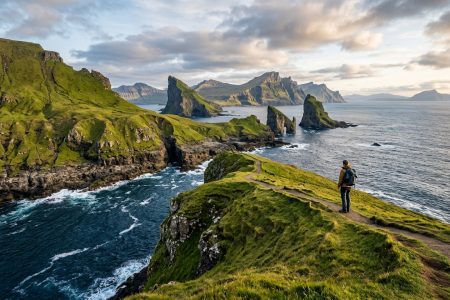
The Faroe Islands rise from the North Atlantic like a secret kept between Iceland and Norway. Eighteen volcanic islands connected by tunnels, ferries, and causeways form an autonomous territory of Denmark that most travelers have never heard of. Dramatic cliffs plunge into churning seas. Grass-roofed villages cling to hillsides. Puffins outnumber people. And the entire archipelago feels like stepping into a landscape that time forgot.
The Faroe Islands offer adventure seekers a rare Nordic experience with accessible hiking trails, dramatic coastal scenery, and authentic cultural encounters. Located between Iceland and Norway, these 18 islands require advance planning for flights and accommodations but reward visitors with uncrowded landscapes, friendly locals, and weather that changes by the hour. Expect rugged terrain, limited tourist infrastructure, and some of Europe’s most photogenic scenery.
Getting to This Remote Archipelago
Flying into Vágar Airport remains the most practical entry point for Faroe Islands travel. Atlantic Airways operates year-round flights from Copenhagen, with seasonal routes from Reykjavik, Edinburgh, and Bergen. The airport sits on the island of Vágar, connected to the main island of Streymoy through an undersea tunnel.
Book flights at least three months ahead. Atlantic Airways operates smaller aircraft, and seats fill fast during summer months. Prices fluctuate wildly based on season, with June through August commanding premium rates.
The Smyril Line ferry from Denmark offers an alternative route. This overnight journey departs from Hirtshals and takes roughly 15 hours, arriving in Tórshavn harbor. The ferry runs weekly during peak season and accepts vehicles, making it ideal if you plan to bring camping gear or prefer a slower arrival.
Weather delays happen frequently. Fog rolls in without warning. Wind speeds can ground flights for days. Build buffer time into your itinerary, especially if connecting to international flights.
When to Visit These Islands
Summer brings the midnight sun and accessible hiking conditions. From May through August, daylight stretches past 10 PM, trails dry out, and ferries run full schedules between islands. This window also brings the most tourists, though crowds remain manageable compared to Iceland or Norway.
Winter travel reveals a different character. Storms batter the coastline. Daylight shrinks to just a few hours. Some accommodations close entirely. But you’ll find cheaper rates, dramatic cloud formations, and the possibility of northern lights dancing over clifftops.
Spring and fall occupy a sweet spot. April, May, September, and October offer moderate weather, fewer visitors, and lower prices. Puffins arrive in April and depart by late August, so time your visit accordingly if seabirds top your priority list.
| Season | Daylight Hours | Weather | Crowds | Best For |
|---|---|---|---|---|
| Winter | 5-6 hours | Stormy, cold | Minimal | Northern lights, solitude |
| Spring | 12-16 hours | Cool, rainy | Light | Puffin arrivals, lower prices |
| Summer | 19-21 hours | Mild, changeable | Moderate | Hiking, midnight sun |
| Fall | 10-14 hours | Cool, windy | Light | Photography, shoulder season deals |
Where to Stay During Your Visit
Tórshavn serves as the logical base for first-time visitors. The capital offers the widest selection of hotels, guesthouses, and restaurants. You can walk the historic Tinganes district, browse local shops, and arrange day trips to other islands from here.
Hotel Føroyar perches on a hillside overlooking the harbor. The grass-roofed design mirrors traditional Faroese architecture while offering modern amenities. Rooms book months ahead during summer.
Budget travelers should consider Tórshavn Hostel or private rooms through local booking platforms. Faroese hospitality runs deep, and staying with locals often leads to insider tips about hidden hiking trails or upcoming cultural events.
Outside the capital, accommodations thin out considerably. Small villages might have a single guesthouse or Airbnb option. Book early and confirm reservations directly, as some hosts don’t check booking platforms regularly.
Camping is permitted in designated areas, but wild camping requires landowner permission. Weather conditions make tent camping challenging even in summer. Pack gear rated for wind and rain.
Moving Between the Islands
Renting a car provides maximum flexibility for Faroe Islands travel. Roads are well-maintained, and undersea tunnels connect major islands. Driving on the left side takes adjustment for Americans, but traffic remains light outside Tórshavn.
Tunnels require tolls, collected automatically through a system that bills rental car companies. The Vágatunnilin connecting the airport to Streymoy and the Norðoyatunnilin to the northern islands charge the highest fees.
Public buses cover main routes between villages. Schedules align with commuter patterns, meaning limited service on weekends and evenings. The Strandfaraskip Landsins website publishes current timetables, though route changes happen with little notice.
Ferries connect islands without tunnel or causeway access. The journey to Mykines, famous for puffin colonies, requires a 45-minute boat ride that often cancels due to rough seas. Book ferry tickets online and check weather forecasts obsessively.
Helicopters serve the most remote islands. Atlantic Airways operates scheduled helicopter routes that function like flying buses. Locals use them for medical appointments and grocery runs. Tourists can book seats, though flights prioritize residents.
Hiking the Dramatic Landscapes
Trails range from gentle coastal walks to challenging mountain scrambles. Most routes lack formal markings, relying instead on cairns and worn paths. Download offline maps before heading out, as cell service disappears outside populated areas.
The hike to Trælanípa and Bøsdalafossur waterfall ranks among the most accessible. This two-hour round trip from Miðvágur village leads to a cliff edge where a lake cascades directly into the ocean. The viewpoint sits 142 meters above crashing waves.
Slættaratindur, the highest peak at 880 meters, challenges experienced hikers with steep terrain and unpredictable weather. Start early and turn back if clouds roll in. The summit offers 360-degree views across the entire archipelago on clear days.
Gásadalur village became accessible by road only in 2004. Before the tunnel, residents hiked a mountain path or arrived by helicopter. The village waterfall, Múlafossur, tumbles over coastal cliffs in a scene that’s become iconic for Faroe Islands travel photography.
Pack layers regardless of forecast. Weather shifts from sunshine to sideways rain within minutes. Waterproof jacket, warm base layer, and sturdy boots are non-negotiable. I’ve watched tourists in sneakers turn back from trails after the first muddy section.
Understanding the Local Culture
Faroese culture balances Nordic traditions with fierce independence. The islands maintain their own language, flag, and customs while remaining part of the Kingdom of Denmark. Most residents speak English fluently, but learning basic Faroese phrases earns genuine appreciation.
The chain dance, or Faroese ballad dance, continues as a living tradition. Participants form circles, singing medieval ballads while stepping in synchronized patterns. Public performances happen during festivals, but locals practice year-round in community halls.
Grindadráp, the traditional pilot whale hunt, generates international controversy. This centuries-old practice remains culturally significant for many Faroese families. Visitors should approach the topic with cultural sensitivity rather than judgment.
Food culture centers on seafood and lamb. Fermented mutton, dried fish, and whale meat appear on traditional menus. Modern restaurants in Tórshavn blend these ingredients with contemporary techniques. KOKS, a Michelin-starred restaurant, showcases Faroese cuisine at its most refined.
Photography Opportunities Across the Islands
Golden hour stretches for hours during summer months. The low angle of northern latitude sun bathes landscapes in warm light well past traditional sunset times. Photographers should plan for late evening shoots that extend until midnight.
Coastal cliffs provide endless compositions. Vestmanna bird cliffs host thousands of nesting seabirds. Boat tours run from May through August, bringing photographers within meters of guillemots, razorbills, and kittiwakes.
Villages offer architectural interest with grass-roofed houses, colorful wooden buildings, and working harbors. Gjógv village features a natural harbor carved into coastal rock, while Saksun sits at the end of a glacial valley beside a tidal lagoon.
Weather creates the drama. Fog banks roll across mountains. Storm clouds gather over the Atlantic. Rain squalls race across valleys. The constantly changing conditions mean returning to the same location multiple times yields completely different images.
Practical Considerations for Your Trip
The Faroese króna functions as local currency, though Danish kroner are accepted everywhere. Credit cards work in most establishments, but carry cash for small purchases in remote villages or at unmanned honesty boxes selling local products.
Grocery stores in Tórshavn stock familiar brands at prices comparable to other Nordic countries. Expect to pay premium rates for fresh produce, as most food arrives by ship. Alcohol sales happen only through government-run stores with limited hours.
Cell coverage reaches most populated areas, but mountains and valleys create dead zones. Purchase a local SIM card for reliable data, or confirm your home carrier’s roaming rates before arrival.
Respect private property and environmental regulations. The islands’ fragile ecosystem suffers from increased tourism pressure. Stay on marked trails, pack out all trash, and ask permission before crossing farmland.
Planning Your Daily Itinerary
Three factors control your schedule: weather, ferry times, and daylight. Build flexibility into each day rather than committing to rigid plans.
- Check weather forecasts each morning and adjust activities accordingly. Hiking in fog is dangerous. Photography in flat light is disappointing. Have backup indoor options ready.
- Confirm ferry schedules the night before. Cancellations happen frequently, especially to outer islands. Missing the last ferry can strand you overnight.
- Start early for popular locations. Tour buses arrive mid-morning at famous viewpoints. Dawn light is better anyway.
Sample day structure during summer:
- 6:00 AM: Sunrise photography at coastal location
- 9:00 AM: Breakfast at accommodation
- 10:30 AM: Begin hiking trail before crowds
- 2:00 PM: Lunch in village
- 4:00 PM: Visit museum or cultural site
- 7:00 PM: Dinner at local restaurant
- 9:30 PM: Evening photography in extended daylight
What to Pack for Changing Conditions
Layering system beats heavy jackets. Temperatures rarely drop below freezing even in winter, but wind chill and rain create harsh conditions. Merino wool base layers, fleece mid-layer, and waterproof shell form the foundation.
Footwear matters more than any other gear choice. Trails turn muddy instantly. Rocks stay slippery for days after rain. Waterproof hiking boots with aggressive tread prevent twisted ankles and miserable days.
Rain gear that actually works is essential. Cheap ponchos shred in Faroese winds. Invest in quality waterproof jacket and pants rated for extended exposure. Waterproof bags protect cameras and electronics.
Additional items to consider:
- Headlamp for tunnel hiking and winter darkness
- Binoculars for bird watching
- Thermos for hot drinks on cold hikes
- Power bank for phone navigation
- Sunglasses and sunscreen (UV reflects off water even on cloudy days)
Making the Most of Limited Time
One week allows coverage of major highlights across the main islands. Two weeks enables slower exploration and contingency days for weather delays. Long weekends feel rushed but remain possible for travelers based in Europe.
Priority list for first-time visitors:
- Tórshavn old town and harbor
- Gásadalur and Múlafossur waterfall
- Saksun village and tidal lagoon
- Mykines island for puffins (weather permitting)
- Vestmanna bird cliffs boat tour
- Tjørnuvík village and beach
- Kirkjubøur historical sites
Skip the temptation to see everything. The islands reward depth over breadth. Spending a full day in one location as weather shifts provides richer experiences than rushing between viewpoints.
Why This Destination Rewards Patient Travelers
The Faroe Islands demand flexibility and resilience. Your carefully planned hike might get cancelled by fog. The puffin tour could be postponed three days running due to rough seas. That perfect sunset shot may never materialize through persistent clouds.
But accepting these limitations opens unexpected discoveries. A weather delay might lead to conversation with locals in a village café. A cancelled ferry creates time to wander unmarked trails near your accommodation. Persistent rain reveals the islands’ moody character that fair-weather visitors never see.
This archipelago hasn’t been optimized for tourism. Infrastructure remains basic. English menus are rare outside Tórshavn. Attractions lack visitor centers and gift shops. The lack of polish is precisely the point. You’re visiting a working landscape where people still fish, farm sheep, and maintain centuries-old traditions.
Pack your patience along with your rain gear. The Faroe Islands will test your adaptability and reward your persistence with memories that outlast any Instagram-perfect destination.