You have already seen Dubrovnik. You have already done the Dalmatian Coast. Now you want something that feels like Croatia did fifteen years ago. That is exactly what this corner of the Adriatic delivers. Albania and Montenegro share a stretch of coastline that remains raw, uncrowded, and genuinely surprising. In nine days you can trace ancient stone paths, swim from empty pebble beaches, eat grilled fish that cost less than a cocktail back home, and sleep in boutique hotels that still feel like discoveries. This 9-day Albania Montenegro itinerary is designed for travelers who value authenticity over Instagram queues and are ready to trade tourist-packed ferry lines for winding coastal roads and hidden coves.
This 9-day Albania Montenegro itinerary strings together the best secret coves, scenic drives, and cultural stops between Kotor and the Albanian Riviera. You will spend four nights in Montenegro and five in Albania, moving south by rental car. Expect dramatic mountain views, fortified towns, fresh seafood, and uncrowded beaches. Total driving time is under ten hours across nine days.
Why This Route Beats the Dalmatian Coast
Montenegro and Albania together offer what Croatia used to have before the mega-yachts arrived. The water is the same impossibly clear Adriatic. The mountains plunge straight into the sea. The walled towns hold centuries of Venetian and Ottoman history. But here you will pay half the price and encounter a fraction of the visitors.
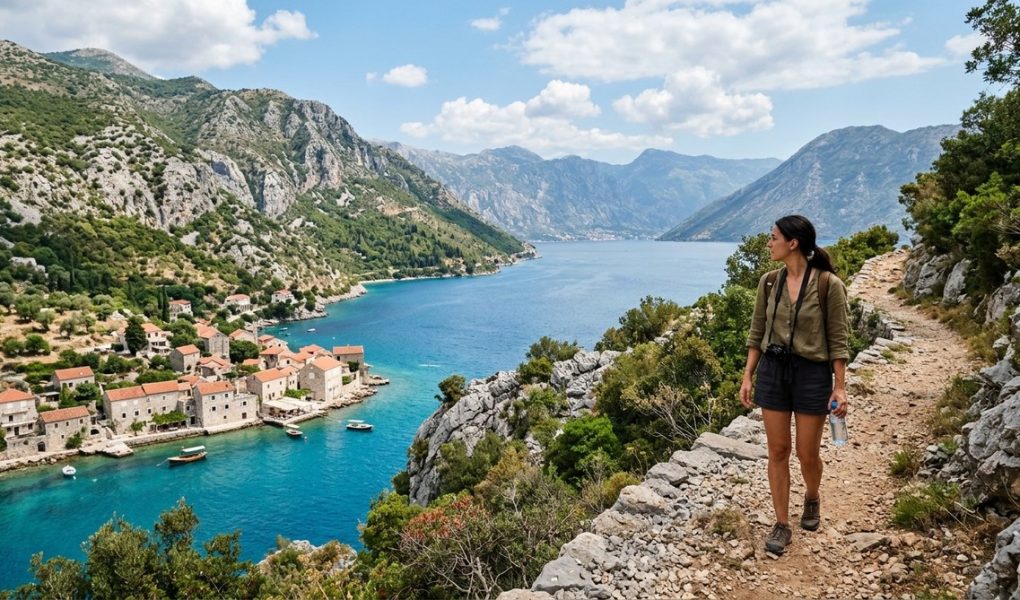
Montenegro’s Bay of Kotor rivals any Norwegian fjord for drama. Albania’s Riviera stretches for miles of undeveloped shoreline where you can find a beach to yourself on a Tuesday afternoon. The border crossing between the two countries takes about twenty minutes. You get two distinct cultures, two cuisines, and two sets of landscapes within a single trip.
This itinerary avoids the crowded cruise ship ports of Kotor’s old town during peak hours and skips the package-tour hotels on the Budva strip. Instead it focuses on quieter corners. Places like the fishing village of Bigova in Montenegro and the archaeological site of Butrint in Albania. Places where you still hear roosters in the morning and locals wave from their garden gates.
How to Get Around
Renting a car is the only sensible way to do this trip. Public buses exist but they run on Balkan time and will not stop at the viewpoint you spot from the road. A rental car gives you freedom to pull over for spontaneous swims and to reach the hilltop ruins that coaches cannot access.
Here is what you need to know for a smooth drive:
- Rent the car in Podgorica or Tivat airport. Both have major agencies. Book a vehicle with Balkan road insurance included.
- Download offline maps. Cell service is good along the coast but data drops in mountain tunnels.
- Carry euros. Montenegro uses the euro. Albania uses the lek but most places accept euros. Have small bills for tolls and parking.
- Expect narrow roads. The coastal highway between Bar and Ulcinj is winding. Drive during daylight.
- Cross the border at Hani i Hoti. It is the busiest crossing but also the most straightforward. Have your passport and car rental papers ready.
A car transforms this trip. Without one you miss the abandoned bunkers, the roadside olive groves, and the chance to stop at a beach just because the light looks right.
The 9-Day Albania Montenegro Itinerary
Day 1: Arrive in Podgorica and Drive to the Bay of Kotor
Land at Podgorica Airport, pick up your rental car, and drive straight toward the coast. The journey takes about ninety minutes. Do not rush. The road climbs over a mountain pass and then drops down into the Bay of Kotor. The first view of the bay from above is one of those moments that justifies the whole trip.
Base yourself in the town of Perast rather than Kotor itself. Perast is quieter. It sits on the edge of the bay with a row of stone palaces facing the water. From your hotel balcony you can watch the sun set behind the island of Our Lady of the Rocks.
Stay at the Hotel Palazzo Mudovic. It is a restored baroque palace with only a handful of rooms. The breakfast terrace overlooks the bay. Dinner at the restaurant Conte serves local mussels and grilled squid.
Day 2: Perast and the Bay’s Hidden Corners
Spend the morning on the water. Hire a private water taxi to take you to Our Lady of the Rocks and then across to the subterranean church at the bottom of the bay. The taxi driver will likely point out the abandoned submarine tunnels from the Yugoslav era. Those tunnels are worth a look.
In the afternoon drive to the hilltop village of Njegusi. The road is steep and narrow but the payoff is a traditional smokehouse lunch. Try the prsut (cured ham) and the local cheese. The view from the village looks back over the entire bay.
Drive back down before dark. The switchbacks are challenging at night. Have dinner at a konoba in the small village of Bigova. The restaurant Kolo serves grilled fish caught that morning.
Day 3: Drive the Coast to Sveti Stefan
Leave Perast after breakfast. Drive along the coast road toward Budva but do not stop in Budva itself. Keep going to the viewpoint above Sveti Stefan. The island hotel is famous but the real magic is the small beach just past the viewpoint. It is called Przno beach. Park at the top and walk down the stairs.
Spend the afternoon swimming and reading at a beachside cafe. The water here is calm and clear. For lunch walk up to the restaurant Jadran for a plate of black risotto.
Stay at the Hotel Adrovic in the nearby village of Rafailovici. It is family-run, affordable, and a two-minute walk from a pebble beach that sees almost no tourists.
Day 4: Cross into Albania and Reach the Albanian Riviera
Drive south from Rafailovici toward the border crossing at Hani i Hoti. The road follows the coast past the long beach of Ulcinj. Once you cross into Albania, the landscape changes. The mountains get closer to the water. The roads get rougher. The price of everything drops.
Your destination is the town of Himara. It sits on a hill above the Ionian Sea. The drive from the border takes about two hours. Check into the Hotel Butrinti. It is a converted communist-era resort that has been slowly renovated. The rooms are simple. The garden restaurant serves lamb roasted on a spit.
Spend the evening walking through the ruins of Butrint. The archaeological site is a twenty-minute drive from Himara. It is one of the most significant ancient cities in the Balkans and you will likely have it almost to yourself.
Day 5: Himara and the Blue Eye Spring
Drive inland to the Blue Eye Spring. It is a natural spring of impossibly blue water that bubbles up from a depth of more than fifty meters. The site is popular with Albanian families on weekends but on a weekday morning you will share it with only a handful of other travelers.
Return to the coast for lunch at the village of Ksamil. The beaches here are small and framed by olive trees. Order the grilled octopus and a glass of local white wine.
In the afternoon drive the Llogara Pass. The road climbs into the Ceraunian Mountains and offers views down the entire coast. At the top there is a restaurant with a terrace that seems to float above the sea. Stop for coffee and take the photograph.
Day 6: The Albanian Riviera South to Saranda
Drive south along the coast to the city of Saranda. The road hugs the shoreline for most of the way. Allow two hours with stops. Saranda is a working port city with a long promenade and a lively fish market. It is not polished. It is real.
Spend the morning at the market. Watch the fishermen unload their catch. Buy a bag of fresh figs from a street vendor. Walk up to the hilltop castle for a view of the bay.
Stay at the Hotel Buta. It is a socialist-era tower that has been renovated into a comfortable business hotel. The rooftop bar serves cocktails with a view of the harbor. Dinner at the restaurant Tradita prepares traditional Albanian dishes in a stone courtyard.
Day 7: The Island of Ksamil and the Blue Lagoon
Take a day trip to the islands off the coast of Ksamil. You can rent a small boat from the harbor for about forty euros. The boat comes with a captain who will take you to the Blue Lagoon, a protected bay with water so clear it looks like a swimming pool.
Pack a picnic. There are no restaurants on the islands. Bring water, sunscreen, and a towel. Spend the afternoon floating in the lagoon and reading on the rocks.
Return to Himara for the night. Try the restaurant Himele for dinner. The menu changes daily based on what is available at the market.
Day 8: The Venetian Castle of Porto Palermo and the Village of Dhermi
Drive north from Himara to the Porto Palermo castle. It sits on a small peninsula that juts into the sea. The castle was built by the Venetians and later used as a submarine base. You can walk through the tunnels and climb to the roof for a 360-degree view of the coast.
Continue north to the village of Dhermi. It is a hillside settlement of stone houses and narrow lanes. The beach below is one of the few sandy beaches on the Albanian Riviera. Spend the afternoon swimming and eating grilled corn from a beach vendor.
Stay at the Hotel Dhermi. It is a small family-run place with a garden full of lemon trees. The owner will likely invite you for a glass of raki in the evening.
Day 9: Drive Back to Podgorica and Depart
The drive from Dhermi back to Podgorica Airport takes about three hours. Leave early to allow time for the border crossing. The road goes through the interior of Albania, past fields of sunflowers and villages where horse carts still outnumber cars.
Stop at the town of Shkodra on the way. The castle there has a museum with artifacts from the Illyrian period. The old bazaar is a warren of cobblestone streets and craft shops. Buy a jar of local honey or a hand-woven rug.
Arrive at the airport two hours before your flight. Drop the car and head home with the feeling that you have just discovered something most people have not.
Where to Stay: A Comparison
Not every accommodation fits every traveler. Here is how the options break down.
| Type | Best For | Price Range (per night) | Example |
|---|---|---|---|
| Boutique hotel | Couples seeking charm | 120-200 euros | Hotel Palazzo Mudovic, Perast |
| Family-run guesthouse | Budget-conscious travelers | 50-80 euros | Hotel Adrovic, Rafailovici |
| Converted resort | History lovers | 60-100 euros | Hotel Butrinti, Himara |
| Socialist-era renovation | Urban explorers | 70-110 euros | Hotel Buta, Saranda |
| Beachside villa | Groups or families | 80-150 euros | Hotel Dhermi, Dhermi |
Book your accommodations at least two months in advance for summer travel. The best places fill up fast, especially in Montenegro.
What to Eat and Drink
Albanian and Montenegrin cuisines share roots in Ottoman and Mediterranean traditions. You will find grilled meats, fresh seafood, olive oil, and vegetables. But each country has its own specialties.
In Montenegro try the following:
– Njeguski prsut: dry-cured ham from the mountain village of Njegusi
– Buzara: mussels cooked in a tomato and white wine sauce
– Kajmak: a creamy dairy spread similar to clotted cream
– Vranac: a full-bodied red wine from the Cemovsko field
In Albania try these dishes:
– Tave kosi: baked lamb with yogurt and rice
– Byrek: flaky pastry filled with cheese or spinach
– Fergese: a skillet dish of peppers, tomatoes, and cheese
– Raki: distilled fruit brandy, usually grape or plum
“The best meal I had in Albania was at a roadside stand near Saranda. The woman running it did not speak English. I pointed at a pot of simmering fish stew. She ladled it into a bowl, added a piece of crusty bread, and charged me two euros. It was the freshest thing I have ever eaten.”
A traveler’s notebook entry, shared with permission
When to Go
May, June, and September are the ideal months. The weather is warm enough for swimming. The water temperature is pleasant. The crowds are thin. July and August bring heat and more people, especially to the Montenegrin coast. October is still good for hiking and sightseeing but the sea gets cool for swimming.
What to Pack
- Swim goggles for the clear water
- A light jacket for mountain evenings
- Comfortable walking shoes for cobblestone streets
- A universal power adapter (Albania and Montenegro use the European two-pin plug)
- Cash in small denominations
- A reusable water bottle (tap water is safe in both countries)
Leave behind anything you would wear to a beach club in Ibiza. This coast is casual. A linen shirt and sandals are dressy enough for any restaurant.
A Final Note on the Experience
This 9-day Albania Montenegro itinerary is not about ticking boxes. It is about slowing down. It is about sitting at a cafe for an extra hour because the sea looks particularly blue that afternoon. It is about accepting the invitation to see the family’s olive press. It is about driving a little further down a dirt road to see what is at the end.
The coastline between Kotor and Saranda holds secrets that no guidebook can fully capture. You have to go find them yourself. This route gives you the structure. The rest is up to you.
For more ideas on traveling to places that still feel undiscovered, read about why the Faroe Islands should be your next Nordic adventure or see 15 underrated European cities that rival Paris and Rome. If you want to stay in the region, hiking the accursed mountains before Albania gets too popular is a natural extension of this trip.
Pack your bag. Rent the car. Go before the secret gets out.