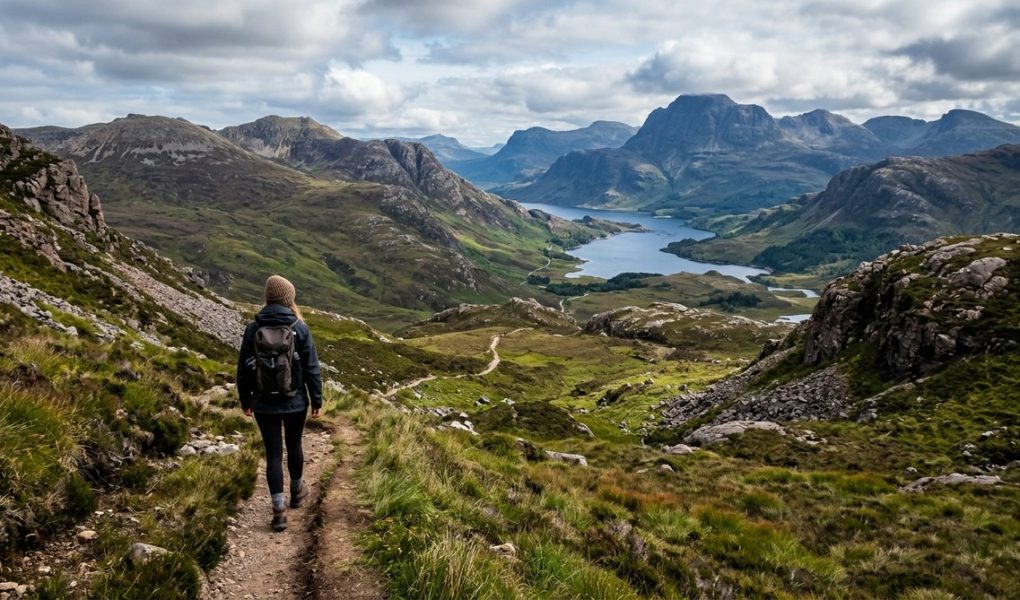
Picture this: you are standing on a ridge in the Scottish Highlands. The wind is clean. The only sound is a distant stream. There is no tour bus idling behind you. No selfie stick blocking the view. Just miles of heather, granite, and sky.
This is the version of Scotland most tourists never see. The one that rewards patience, early mornings, and a willingness to leave the guidebook behind. If you want to spend 10 days in Scottish Highlands without crowds, you need a plan that prioritizes solitude over photo ops. You need to know exactly where to go, when to go there, and which famous spots to skip entirely.
I have put together a route that does exactly that. It is built for independent travelers who want to move at their own pace, stay in places that feel remote, and experience the Highlands the way they were meant to be experienced: quietly.
This 10-day itinerary avoids the A82 corridor, skips the Fairy Pools at peak hours, and replaces crowded castles with lesser-known ruins. You will stay in small villages, hike trails that see a fraction of the traffic, and learn exactly when to visit iconic spots like Glen Coe and Loch Ness without sharing them with hundreds of other people.
Rethink Your Starting Point: Skip Edinburgh and Glasgow
Most itineraries begin in a city. That is a mistake if your goal is solitude. Edinburgh and Glasgow are fantastic, but they eat up two days of your trip before you even reach the Highlands. Instead, fly into Inverness. It is a small airport with direct flights from several UK and European hubs. You land, grab your rental car, and you are on the road to the real wilderness in under an hour.
If you must start in a city, spend one night in Inverness. Walk along the River Ness, visit Leakey’s Bookshop for a used novel, and get an early sleep. Your adventure starts at sunrise.
The 10-Day Route: Quiet Roads and Hidden Valleys
This loop takes you through the northwestern corner of the Highlands, where the landscape is dramatic and the crowds thin out. You will cover about 600 miles total. That sounds like a lot, but the driving is slow. Single-track roads, sheep crossings, and sudden photo stops will stretch each day. Plan for 3 to 4 hours of driving per day maximum.
Days 1-2: Glen Affric and the North
From Inverness, drive west toward Glen Affric. This is one of the most beautiful glens in Scotland, and it is often overlooked because it is not on the main tourist highway. Park at the Dog Falls car park and hike the trail along Loch Affric. You will see ancient Caledonian pine forest, waterfalls, and maybe a dozen other people all day.
Stay at a self-catering cottage near Cannich. There are a handful of stone-built holiday lets here that sit right on the river. Book through a local agency rather than a big booking site to get better rates and more flexibility.
On day two, drive north to the village of Ullapool. The road passes through Strath Bran and past Inverlael. Stop at the Falls of Measach if you want a short, dramatic waterfall walk. Ullapool itself is a working fishing port. Grab fish and chips from the takeaway near the pier and eat them on the waterfront bench watching the boats.
Days 3-4: Assynt and the Quiet Coast
This is where the trip shifts into something special. The Assynt region has some of the most dramatic geology in the UK, and it sees a fraction of the visitors that the Cairngorms or Isle of Skye attract. Hike up Stac Pollaidh. It is a short but steep climb with views across a patchwork of lochs and mountains. On a clear day, you can see the Summer Isles.
Stay at the Inchnadamph Lodge. It is a historic hunting lodge turned into simple accommodations. The bar serves real ale, and the staff can point you to hidden caves and sea stacks that do not appear on any map.
On day four, drive the coast road toward Durness. Stop at the Bone Caves, a series of limestone fissures that have yielded remains of Arctic foxes and reindeer from the last Ice Age. It is a short walk from the road, and most people drive right past it.
Days 5-6: The Far Northwest and a Bothy Night
The road from Durness to Cape Wrath is not for everyone. It is a single track with passing places, and the Cape Wrath lighthouse is only accessible by a passenger ferry across the Kyle of Durness. If you want true isolation, this is it. The beach at Sandwood Bay is a mile of white sand that you might have entirely to yourself.
Spend one night in a bothy if you are prepared. Bothies are basic stone shelters maintained by the Mountain Bothies Association. They are free to use, first come first served, and they sit in some of the most remote locations in Scotland. The bothy at Kearvaig is near the Cape Wrath cliffs. Bring a sleeping bag, a stove, and a headlamp. No phone signal, no electricity, no running water. Just the sound of the Atlantic.
“A bothy is not a hotel. It is a shelter. Leave it cleaner than you found it, take your rubbish out, and respect the silence of the place. That silence is the whole point.”
Days 7-8: Torridon and the Real Mountain Experience
Drive south through the Bealach na Ba pass. This road crosses a high moorland pass with views over the Torridon mountains. This is the heart of the Northwest Highlands Geopark. The hiking here is world class, and the crowds are thin because the terrain is demanding.
Hike the circuit around Liathach. It is a full day route, about 8 hours, with some scrambling sections. You need good boots, a map, and confidence in your navigation. If you are not comfortable with exposed ridges, walk the path along Loch Torridon instead. It is gentler and still stunning.
Stay at the Torridon Inn. It is a traditional pub with rooms. The food is excellent, and the locals are happy to share tips on where to find golden eagles and sea eagles.
Days 9-10: Glen Coe at Dawn and the Road Home
Glen Coe is the most famous valley in Scotland, and it is usually packed. The secret is simple: arrive at sunrise. Park at the Three Sisters viewpoint before 7:00 AM. You will have the place to yourself as the light hits the peaks. Walk the Lost Valley trail, a hidden glen used by the MacDonalds to hide their cattle. By the time the tour buses arrive at 10:00 AM, you will be finishing your coffee and heading out.
Spend your final night at a farm stay near Fort William. The town itself is touristy, but the surrounding farmland has quiet B&Bs with views of Ben Nevis. Walk the Steall Waterfall trail in the afternoon. It is a 30-minute walk from the car park, and the waterfall drops 120 meters into a gorge. Most people do not bother with the walk. They stay in the visitor center. Their loss.
When to Go for Maximum Solitude
Timing is everything. The window for good weather is May through September, but the crowds peak in July and August. If you can go in late May or early June, you get long daylight (sunset after 10:00 PM), fewer midges, and significantly fewer people.
September is also excellent. The heather turns purple, the light softens, and the school holidays are over. You trade a bit of warmth for a lot of quiet.
Avoid the last two weeks of August entirely. That is when the Edinburgh Festival draws massive crowds, and many of those visitors spill north into the Highlands.
Where to Stay: Choose Small and Local
Big hotels and chain lodges attract big groups. For this itinerary, focus on small guesthouses, self-catering cottages, and farm stays. Here is a table to help you compare your options:
| Accommodation Type | Best For | Typical Cost Per Night (USD) | Crowd Level |
|---|---|---|---|
| Self-catering cottage | Families or couples who want privacy | $120 to $200 | Very low |
| Farm stay B&B | Solo travelers wanting local tips | $80 to $130 | Low |
| Bothy | Adventurers on a budget | Free | None |
| Small inn or pub with rooms | Travelers who want a meal onsite | $100 to $180 | Low |
| Large hotel or lodge | Convenience and predictable service | $150 to $300 | High |
Stick to the top three options. They keep you away from the group tour circuit and give you a more authentic experience. For booking, try the VisitScotland website for local listings, or call the property directly. Many smaller places do not show up on major booking platforms.
What to Pack for a Crowd-Free Trip
Packing light is important, but so is being prepared for the specific conditions of the remote Highlands.
- A reliable waterproof jacket and pants. Not an umbrella. The wind will destroy it.
- Midge repellent. The Scottish midge is a tiny biting insect that appears in still, damp conditions. A repellent with 50% DEET works. A head net is even better.
- A paper map. Phone signals drop in the glens. Buy the Ordnance Survey map for the area you are hiking.
- A headlamp. Even in summer, a wrong turn can leave you walking out after dark.
- A flask. Hot tea on a cold summit is one of the great pleasures of the Highlands.
- Dry bags. The weather can change in minutes. Keep your spare clothes dry.
Three Mistakes That Will Ruin Your Solitude
Even with a good route, it is easy to accidentally end up in the middle of a crowd. Here are the most common mistakes and how to avoid them.
-
Relying on Google Maps for driving routes. Google will route you through the A82, the main tourist artery. Instead, use the Ordnance Survey maps app or a paper map to find the smaller roads. The B roads and single-track roads are slower but infinitely more rewarding.
-
Visiting popular spots at midday. The Fairy Pools on Skye, the car park at Glen Coe, and the Loch Ness visitor center are all overwhelmed between 11:00 AM and 3:00 PM. Visit at 7:00 AM or after 5:00 PM. You will have a completely different experience.
-
Trying to do too much in one day. The Highlands are not a checklist. If you try to drive from Inverness to Skye to Glen Coe in one day, you will spend six hours in the car and see nothing but the back of other vehicles. Pick one valley or one hike per day. Savor it.
How to Handle the Midges
The midge is the unofficial mascot of the Scottish Highlands. These tiny flies swarm in large numbers in still, damp conditions. They are worst at dawn and dusk, and they love overcast days.
The solution is not to stay indoors. It is to plan around them. Hike during the middle of the day when a breeze usually picks up. Avoid camping in low-lying boggy areas. Use a midge repellent called Smidge, which is developed in Scotland and works better than most international brands. If the midges are really bad, walk faster. They cannot keep up with you if you are moving.
A Final Word on the Spirit of This Trip
This itinerary is not about ticking off landmarks. It is about finding a version of the Highlands that feels personal. The best moments will not come from a famous viewpoint. They will come from a random turn onto a single-track road, a conversation with a farmer about the weather, or a sunset you watch alone from a hillside.
If you want a trip that feels like yours and not like everyone else’s, follow the quiet roads. Wake up early. Stay in small places. And leave the crowds behind.
For more inspiration on traveling without the tourist herds, check out our guide to https://touriosity.travel/15-underrated-european-cities-that-rival-paris-and-rome/ or our thoughts on Both share the same philosophy: go where the crowds are not.
Now go book that cottage in Cannich. The Highlands are waiting.