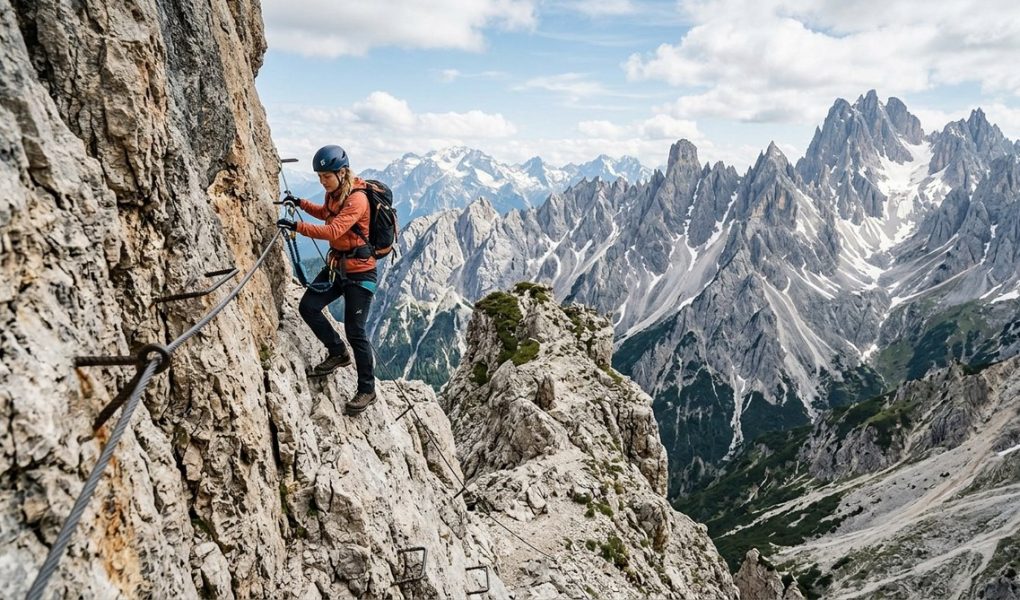
There’s something intoxicating about clipping into a steel cable and stepping out over a thousand-foot drop. Via ferratas transform vertical rock faces into accessible adventures, but the famous routes have become victim to their own success. Lines of climbers bottleneck at exposed sections. You spend more time waiting than climbing. The best via ferrata routes aren’t necessarily the most photographed or the easiest to reach. They’re the ones that deliver on the original promise of these iron paths: getting you into stunning alpine terrain where you can actually hear your own heartbeat.
The best via ferrata routes balance technical challenge with solitude and scenery. From Kosovo’s Panorama route to Oman’s desert cliffs, exceptional iron paths exist beyond the crowded Dolomites classics. Success requires matching your skill level to route difficulty, understanding exposure ratings, and timing your visit to avoid peak season bottlenecks while maximizing favorable weather windows.
What Makes a Via Ferrata Route Truly Outstanding
Not all iron paths are created equal. The best via ferrata routes share specific characteristics that separate memorable experiences from forgettable tourist traps.
Technical variety matters more than pure difficulty. A great route incorporates different movement styles: stemming up corners, traversing exposed faces, navigating suspension bridges, and tackling overhanging sections. This keeps your mind engaged and your muscles guessing.
Exposure creates the psychological challenge that makes via ferratas addictive. The best routes position you in spectacular locations where consequences feel real, even though you’re always clipped to bomber protection.
Approach and descent logistics separate good routes from great ones. Nobody wants to spend three hours hiking to a 30-minute climb, then another three hours bushwhacking down. The ideal ratio puts you on the iron within an hour and returns you to civilization before dark.
“The magic of via ferrata lies in accessing terrain that would otherwise require years of technical climbing experience. But the truly great routes also teach you about movement, exposure management, and mountain environments in ways that gym climbing never can.” – Marco Bianchi, IFMGA Mountain Guide
Routes That Redefine What Via Ferrata Can Be
Sentiero dei Fiori, Adamello Range, Italy
This multi-day expedition route follows World War I military paths through the Adamello massif. Unlike tourist-friendly Dolomite classics, Sentiero dei Fiori demands navigation skills, glacier travel experience, and genuine alpine competence.
The route crosses permanent snowfields, traverses knife-edge ridges, and passes through tunnels carved by Italian soldiers over a century ago. You’ll need to carry camping gear or book rifugio stays weeks in advance.
Best tackled in July or August when snow conditions stabilize. The technical sections rate K4 to K5 on the difficulty scale, with sustained exposure and minimal escape options once committed.
Panorama Via Ferrata, Peja, Kosovo
Few climbers think of the Balkans for via ferrata, which makes this route exceptional. The Panorama route in Kosovo’s Rugova Valley delivers 1,200 feet of vertical gain through limestone cliffs overlooking one of Europe’s deepest canyons.
The route sees maybe a dozen parties per week, even in peak season. Local guides maintain the hardware impeccably, and the technical crux involves a 60-foot overhanging section that separates casual climbers from committed ones.
Cultural immersion adds unexpected depth. The nearby town of Peja offers authentic Balkan hospitality, and you can combine via ferrata days with visits to medieval monasteries. If you’re interested in underrated European destinations, Kosovo deserves serious consideration.
Al Jabal Akhdar, Oman
Desert via ferrata sounds like an oxymoron until you clip into the cables above Oman’s Green Mountain. This route operates from October through March when temperatures drop to comfortable levels.
The limestone here forms pockets and jugs that feel like sport climbing holds. Exposure builds gradually as you ascend 900 feet of vertical terrain, with views extending across rust-colored wadis to distant peaks.
What sets this route apart is the luxury infrastructure. You can stay at Anantara Al Jabal Akhdar Resort and be on the route within 20 minutes. Guides provide all equipment and run small groups, maintaining the wilderness feel despite five-star amenities.
Daubenhorn, Leukerbad, Switzerland
Technical difficulty reaches its peak on the Daubenhorn route above Leukerbad. This K5-rated monster includes sustained overhanging climbing, exposed traverses with minimal footholds, and a final ridge that would count as serious alpine scrambling anywhere else.
The route gains 2,600 feet over approximately four hours of climbing. Upper sections cross permanent snow, requiring crampons and ice axe competence even in summer.
Only attempt Daubenhorn if you’re comfortable with genuine exposure and have the fitness to maintain focus through extended technical sections. The reward is arguably Switzerland’s finest via ferrata experience, with views across the Rhone Valley to the Bernese Alps.
Choosing Your Next Iron Path Adventure
Matching your skills to the right route prevents both boredom and terror. Use this framework to evaluate potential via ferratas.
| Rating | Technical Demands | Exposure Level | Fitness Required | Example Routes |
|---|---|---|---|---|
| K1-K2 | Basic cable use, mostly walking | Minimal, escape options frequent | Moderate hiking fitness | Eagle Cliff (New York), Les Prises de la Bastille (France) |
| K3 | Vertical sections, some overhangs | Sustained but manageable | Good cardiovascular base | Whistler Peak (Canada), Cala di Moli (Spain) |
| K4 | Technical climbing moves required | Serious, limited escapes | Strong fitness, multi-hour endurance | Panorama (Kosovo), Sentiero dei Fiori sections |
| K5 | Overhanging, sustained difficulty | Extreme, full commitment | Excellent fitness and mental game | Daubenhorn (Switzerland), certain Brenta routes |
Planning Your Via Ferrata Season
Timing separates crowded experiences from solitary ones. Most climbers default to July and August, creating bottlenecks on popular routes.
- Research shoulder season conditions for your target region. Many routes become accessible in late May or remain climbable through September.
- Check local weather patterns beyond basic temperature averages. Alpine thunderstorms peak in afternoon hours during summer months.
- Contact local guide services for current conditions even if you plan to climb independently. They have the most accurate beta on rockfall, cable condition, and actual crowds.
- Book accommodations before finalizing route choices. Limited lodging near remote via ferratas often dictates which routes you can realistically attempt.
- Build rest days into your itinerary. Back-to-back via ferrata days drain forearms and mental reserves faster than you expect.
Consider combining via ferrata objectives with other mountain activities. Multi-day hiking trails often pass near excellent iron paths, allowing you to mix climbing days with trekking recovery.
Essential Skills Beyond Clipping Carabiners
Via ferrata looks deceptively simple from the ground. Clip in, climb up, repeat. But the best via ferrata routes demand more nuanced skills.
Energy management separates finishers from those who bonk halfway up. Your forearms will fatigue before your cardiovascular system on technical routes. Practice resting positions where you hang from the cable rather than gripping it. Shake out each arm every 20 feet rather than waiting until you’re pumped.
Route reading matters even on bolted paths. The cable doesn’t always follow the easiest line. Look ahead to identify rest ledges, foot placement options, and sequences that minimize energy expenditure. Sometimes moving away from the cable momentarily gives you better holds.
Weather assessment becomes critical on long routes. Unlike sport climbing where you can bail after any pitch, via ferratas often commit you for hours. Learn to read cloud development, recognize signs of incoming storms, and understand how quickly conditions can deteriorate at altitude.
Group management prevents dangerous bottlenecks. If you encounter slower climbers, don’t crowd them at exposed sections. Wait at rest ledges where everyone has solid footing. Communicate clearly about passing intentions rather than creating pressure through proximity.
Gear That Actually Matters
Via ferrata-specific equipment has evolved significantly beyond basic climbing hardware. The right gear improves both safety and enjoyment.
Modern via ferrata sets use Y-shaped lanyards with shock absorbers designed specifically for steel cable falls. These differ fundamentally from climbing quickdraws or slings. The shock absorber tears progressively during a fall, limiting peak forces on your body.
Replace your via ferrata set every five years regardless of visible wear. The shock absorber mechanisms degrade with UV exposure and temperature cycling even without falls. This isn’t gear to buy used or inherit from friends.
Gloves remain controversial among via ferrata climbers. Thin approach gloves protect hands on rough cables and prevent the distinctive via ferrata palm blisters. Full-finger climbing gloves sacrifice too much dexterity. Fingerless cycling gloves offer a middle ground.
Helmet choice matters more than many climbers realize. Via ferrata routes often funnel multiple parties up the same line, creating rockfall hazards from climbers above. Choose helmets rated for both climbing falls and top impacts. Lightweight models reduce neck fatigue on long routes.
Common Mistakes That Ruin Otherwise Great Routes
Even experienced climbers make predictable errors on via ferrata routes. Recognizing these patterns helps you avoid them.
- Starting too late in the day. Alpine routes require early starts to avoid afternoon thunderstorms and ensure adequate daylight for descents.
- Underestimating approach times. Trail descriptions often assume unrealistic hiking speeds, especially at altitude with via ferrata gear.
- Skipping breakfast or bringing insufficient food. Technical climbing burns calories faster than hiking, and bonking at the crux section creates dangerous situations.
- Wearing approach shoes instead of climbing shoes on difficult routes. K4 and K5 routes often require precise footwork that approach shoes can’t deliver.
- Ignoring forearm pump until it becomes debilitating. Rest proactively rather than reactively.
- Trusting old cable hardware without inspection. Check for fraying, corrosion, and secure anchoring before weighting any cable.
Where Via Ferrata Culture Thrives
Certain regions have developed exceptional via ferrata infrastructure and expertise. Understanding these clusters helps with trip planning.
The Dolomites remain the spiritual home of via ferrata. Hundreds of routes span all difficulty levels. The rifugio system provides mountain lodging, and local guides offer courses from beginner to expert. Summer crowds can be intense, but the sheer variety means you can always find something climbable.
The French Alps offer technical routes with alpine character. French via ferratas tend toward the difficult end of the spectrum, with less emphasis on family-friendly tourism routes. Expect sustained exposure and genuine mountain environments.
Spain’s Costa Brava combines via ferrata with Mediterranean beach culture. Routes here often traverse sea cliffs with spectacular coastal views. The climate allows year-round climbing, though summer heat can be oppressive on south-facing routes.
North American via ferratas are expanding rapidly. Telluride, Colorado and Whistler, British Columbia offer world-class routes. The Ouray ice park area has developed multiple routes accessible without guides. Eastern options like New York’s Eagle Cliff bring via ferrata closer to major population centers.
Building Your Via Ferrata Progression
Smart climbers develop via ferrata skills systematically rather than jumping straight to extreme routes.
Start with guided experiences on moderate routes even if you have climbing experience. Via ferrata movement patterns differ from rock climbing, and guides teach efficient techniques that self-taught climbers often miss.
Progress difficulty gradually. The jump from K3 to K4 represents a significant step in both technical demands and psychological challenge. Give yourself time to adapt rather than pushing into terrain that exceeds your comfort zone.
Consider taking a formal via ferrata course if you plan to make iron paths a regular part of your mountain activities. These courses cover rescue techniques, cable inspection, group management, and route planning that generic climbing courses don’t address.
Document your experiences beyond simple summit photos. Note which techniques worked, where you struggled, and what you’d do differently. This builds a knowledge base that makes each subsequent route more enjoyable.
Combining Via Ferrata With Broader Mountain Goals
The best via ferrata routes integrate naturally into larger mountain adventures rather than existing as isolated objectives.
Many classic alpine routes incorporate via ferrata sections on approach or descent. Developing comfort on iron paths opens access to peaks that would otherwise require technical rock climbing skills. The normal route up Italy’s Marmolada, for example, uses via ferrata to bypass difficult rock bands.
Via ferratas provide excellent acclimatization objectives for higher altitude climbing goals. The sustained effort at moderate altitude prepares your body for thinner air without the complexity of glacier travel or technical climbing.
Consider via ferrata as part of a broader European mountain journey. You might spend a week in the Dolomites on iron paths, then shift to island hopping through Greece for recovery and cultural immersion before tackling another climbing objective.
When the Cable Ends and Real Mountains Begin
The best via ferrata routes don’t just deliver adrenaline and Instagram content. They teach you about mountain environments, exposure management, and your own capabilities under stress.
Pay attention to how your body responds to sustained exposure. Notice which mental strategies help you stay focused during difficult sections. Observe how weather develops in alpine environments and how quickly conditions can shift.
These lessons transfer directly to more serious mountain pursuits. Many alpinists credit via ferrata experience with developing the exposure tolerance and movement efficiency that later served them on technical peaks.
The iron path tradition started as military necessity during World War I, evolved into recreational infrastructure, and now represents a distinct mountain discipline. The best routes honor that heritage by demanding genuine skill, delivering authentic mountain experiences, and rewarding those who approach them with proper preparation and respect.
Your forearms will burn. Your calves will complain. You’ll question your decision-making at some exposed traverse. Then you’ll reach the summit anchor, unclip for the final time, and immediately start planning your next iron path adventure. That’s when you know you’ve found one of the truly great routes.