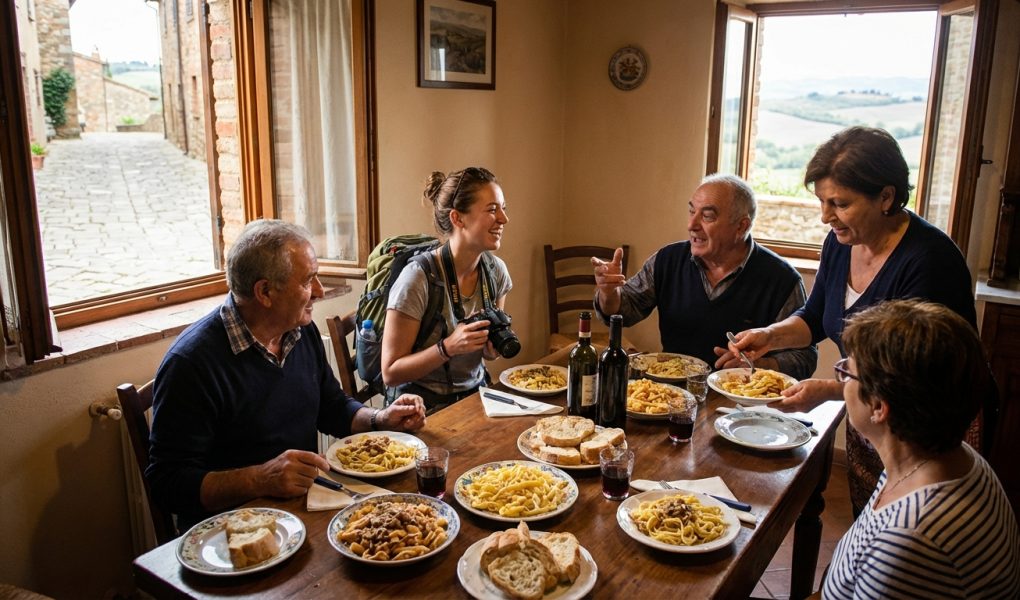
You’re wandering through a market in Marrakech when a vendor strikes up a conversation. Twenty minutes later, you’re invited to his sister’s wedding feast tomorrow evening. Your stomach flips between excitement and uncertainty.
These moments define travel differently than any guidebook ever could. Accepting dinner invitation from locals while traveling creates memories that outlast a thousand selfies at tourist landmarks. But the decision carries real weight. You need to balance openness with safety, cultural respect with personal boundaries.
Accepting spontaneous meal invitations from locals creates authentic travel experiences but requires careful judgment. Trust your instincts, verify the setting is public or includes multiple people, share your plans with someone, and research local customs beforehand. Genuine hospitality differs from uncomfortable situations through specific behavioral cues. Most dinner invitations stem from authentic [cultural traditions of welcoming strangers](https://en.wikipedia.org/wiki/Hospitality), especially in regions where hosting guests holds deep social significance.
Reading the situation before you commit
Not every invitation deserves the same response. Context matters enormously.
Public settings offer natural safety. A family running a food stall who invites you to join their meal after closing operates differently than a solo stranger approaching you on an empty street. The presence of other people, especially women and children, typically signals genuine hospitality rather than ulterior motives.
Time of day shifts the equation too. Lunch invitations in busy neighborhoods carry less risk than late-night dinner proposals in unfamiliar areas. Morning coffee with a shopkeeper you’ve chatted with over several days feels different than an immediate invitation from someone you just met.
Watch for these green flags:
- The invitation includes meeting their family or friends
- They suggest a specific restaurant or their family home
- Other locals vouch for the person or their family
- The conversation happened naturally over time, not rushed
- They respect your hesitation and offer alternatives
- You’ve seen them working in the same location multiple days
Red flags deserve your attention:
- Pressure to decide immediately without time to think
- Insistence on a private or isolated location
- Reluctance to provide specific details about where you’ll go
- Attempts to separate you from your travel companions
- Excessive flattery or romantic overtones if that’s not your intent
- Requests for money, purchases, or visiting shops first
How to accept safely without killing the magic
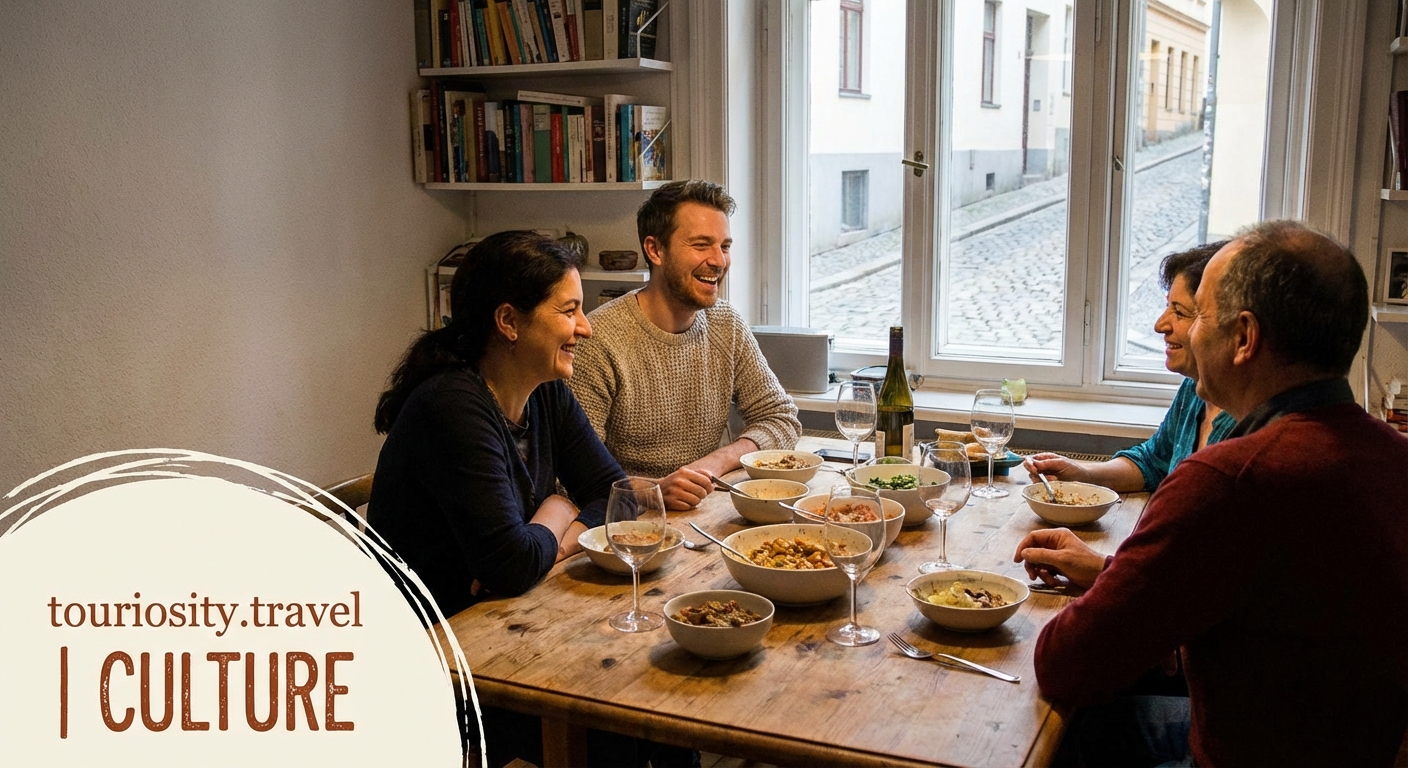
You can say yes while maintaining smart boundaries. These steps protect you without broadcasting distrust.
- Share your location and plans with someone you trust before going
- Arrange your own transportation to and from the location
- Keep your phone charged and accessible throughout
- Set a specific end time and stick to it
- Bring a small gift appropriate to the culture (fruit, sweets, flowers)
- Avoid excessive alcohol consumption in unfamiliar settings
- Keep valuables minimal and secured on your person
Tell a hostel mate, hotel staff, or friend back home exactly where you’re going. Send them the address, the host’s name, and when you expect to return. Set up a check-in time. This simple act dramatically improves your safety without insulting your host.
Arriving independently gives you control. You can leave whenever necessary without depending on someone else for a ride. This matters especially in rural areas or neighborhoods you don’t know well.
The predetermined end time solves multiple problems. It gives you an exit strategy if things feel wrong. It also respects your host’s time and prevents awkward lingering. “I need to leave by 9 PM to catch the last bus” works universally.
Cultural etiquette that shows respect
Different regions treat dinner guests with wildly different expectations. Your homework matters here.
Research gift-giving customs before you go. Some cultures consider arriving empty-handed rude. Others find certain gifts offensive. Alcohol makes a terrible gift in many Muslim households. White flowers symbolize death in several Asian countries. Why learning basic phrases transforms your travel experience applies equally to understanding these unwritten rules.
| Region | Common Expectations | Gifts to Avoid | Helpful Phrases |
|---|---|---|---|
| Middle East | Remove shoes, dress modestly, accept food offerings multiple times | Alcohol, pork products | “Shukran” (thank you) |
| Southeast Asia | Sit where directed, finish your plate, compliment the cook | Leather goods in Hindu homes, white flowers | “Terima kasih” (thank you) |
| Latin America | Arrive 15-30 minutes late, stay for conversation after eating | Yellow flowers, knives | “Muchas gracias” |
| Eastern Europe | Bring odd-numbered flowers, toast properly, try everything offered | Even-numbered flowers, cheap wine | “Spasibo” (thank you) |
Dress codes matter more than most backpackers expect. Your ripped travel shorts might work fine in hostels but show disrespect at someone’s dinner table. Pack one outfit suitable for these moments. Clean pants and a collared shirt solve most situations.
Table manners vary dramatically. Some cultures eat with hands, others consider it barbaric. Leaving food on your plate signals you’re full in some places, insults the cook in others. Finishing everything means you’re still hungry in certain regions, shows appreciation elsewhere. Ask questions. Most hosts happily explain their customs to genuinely curious guests.
“The families who invited me for meals in rural Iran taught me more about the country in three hours than a month of sightseeing ever could. But I researched Persian dining etiquette beforehand, brought appropriate gifts, and dressed conservatively. That preparation transformed potential awkwardness into genuine connection.” – Sarah Chen, solo traveler who spent six months crossing Central Asia
When hospitality becomes something else
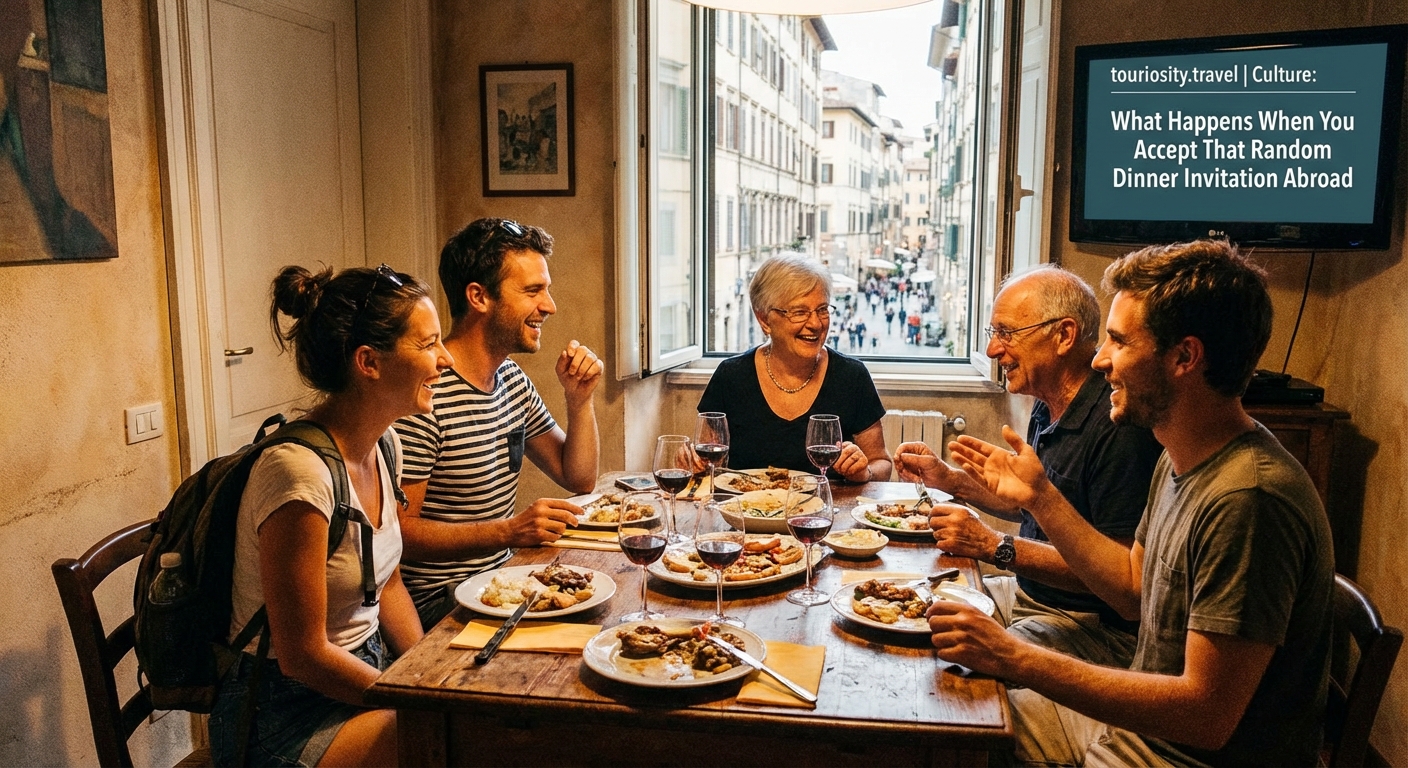
Trust your gut. That uncomfortable feeling exists for good reasons.
Legitimate dinner invitations focus on sharing food and conversation. They don’t come with strings attached. If someone starts pressuring you to buy things, visit their cousin’s shop, or participate in activities you didn’t agree to, the invitation wasn’t really about hospitality.
Romance complicates everything. Be crystal clear about your intentions and boundaries. If you’re not interested in anything beyond friendship, state that directly early in the conversation. Don’t accept dinner invitations from someone clearly pursuing you romantically unless you share that interest.
Exit strategies matter. Keep enough cash for a taxi. Know how to call for help in the local language. Have the address of your accommodation written down. These preparations let you leave immediately if needed.
Common manipulation tactics include:
- Gradually moving to more isolated locations
- Introducing unexpected people who make you uncomfortable
- Serving excessive alcohol while drinking little themselves
- Bringing up money, expensive gifts, or business opportunities
- Making you feel obligated through elaborate gestures
None of these reflect normal hospitality. Real hosts want you comfortable and happy. They respect your boundaries. They don’t create situations where you feel trapped or pressured.
The regions where dinner invitations happen most
Certain cultures prioritize guest hospitality as a core value. Understanding this context helps you recognize genuine invitations.
Iran stands out globally for this tradition. Taarof, the complex Persian system of etiquette, practically requires hosts to invite guests, sometimes strangers, for meals. Refusing once is expected. Accepting after the second or third invitation shows proper manners.
Rural Morocco, Turkey, and Jordan share similar traditions. Offering food and shelter to travelers carries religious and cultural significance. Many families consider hosting guests an honor that brings blessings to their home.
Parts of Southeast Asia, particularly Indonesia and the Philippines, treat unexpected guests as opportunities for connection rather than inconveniences. How to explore Japan beyond Tokyo and Kyoto reveals similar hospitality in smaller Japanese towns, though invitations tend to be more formal there.
Eastern European countries, especially Georgia, Armenia, and Poland, build social status partly on hosting abilities. Declining a dinner invitation can genuinely offend. The expectation includes abundant food, multiple toasts, and hours of conversation.
Latin American hospitality varies by country but generally emphasizes warmth and inclusion. Invitations often extend spontaneously, especially in smaller towns and rural areas. The perfect 7-day Moroccan desert adventure for first-time visitors mentions how Berber families frequently invite travelers for tea and meals.
What to do during the meal itself
You’ve accepted, you’ve arrived, now what?
Observe before acting. Watch how your hosts behave. Mirror their formality level, eating pace, and conversation style. This prevents most cultural missteps.
Ask questions about the food. Most cooks love explaining their dishes. This shows genuine interest and creates natural conversation. “What spices did you use?” or “Is this a traditional recipe?” works everywhere.
Compliment sincerely and specifically. “This is delicious” feels generic. “The way you cooked the lamb makes it so tender” shows you’re actually paying attention. Hosts remember genuine appreciation.
Offer to help, but don’t insist if declined. Many cultures consider guests working in the kitchen inappropriate. The offer itself shows respect. Accept their decision gracefully.
Share stories about your home. Hospitality flows both directions. Your hosts invited you partly because they’re curious about your life and country. Bring photos on your phone. Talk about your family, your work, your hometown. This exchange of perspectives creates real connection.
Reciprocating the kindness
You probably can’t invite your hosts to your home country for dinner. But you can show gratitude appropriately.
Send a photo later. After you return to your accommodation, message a picture from the evening with a thank you note. This simple gesture means more than most travelers realize. It confirms you valued the experience and considered them worth remembering.
Write about them positively if they have a business. Online reviews help small guesthouses, restaurants, and tour guides enormously. Mention the dinner invitation specifically. Future travelers benefit from knowing about genuine local hospitality.
Small gifts before you leave the country work well. If you’re staying in the area a few more days, bring something from your next destination. A local specialty from another region shows thoughtfulness.
Pay it forward when you return home. Host international travelers or students in your city. The kindness you received abroad can inspire how you treat visitors to your own community. Where locals actually eat: finding authentic food experiences in tourist-heavy cities often starts with this kind of cultural exchange.
Handling dietary restrictions and food safety
Accepting dinner invitation from locals while traveling gets complicated when you have allergies, dietary restrictions, or concerns about food safety.
Communicate restrictions clearly and early. Don’t wait until food appears on the table. Explain your needs when you accept the invitation. Learn how to say “I’m allergic to peanuts” or “I don’t eat pork” in the local language. Write it down if pronunciation is difficult.
Religious dietary laws deserve particular respect. If you keep kosher or halal, explain this when invited. Most hosts appreciate the honesty and will either accommodate you or admit they can’t, saving everyone awkwardness.
Vegetarians and vegans face challenges in meat-centric cultures. Some regions consider serving guests meat a sign of respect and wealth. Refusing can insult your host. Frame it positively: “I don’t eat meat, but I’d love to try your vegetable dishes and rice.” Focus on what you can eat rather than what you can’t.
The complete guide to street food safety for adventurous eaters applies to home cooking too. Watch for basic hygiene. Clean cooking spaces, fresh ingredients, and properly cooked meat matter everywhere. If something looks or smells wrong, trust that instinct.
Polite ways to decline specific dishes:
- “I’m so full from this amazing rice, I can’t eat another bite”
- “My stomach has been sensitive today, I should stick to simple foods”
- “This looks wonderful, but I’ll save room for dessert”
- “May I take some with me for tomorrow instead?”
The stories you’ll tell forever
The best travel memories rarely come from famous monuments. They come from unexpected human connections.
I’ve eaten more memorable meals in strangers’ homes than in Michelin-starred restaurants. The Kurdish family in southeastern Turkey who invited me to their son’s engagement party. The Vietnamese grandmother who taught me to make spring rolls in her tiny kitchen. The Argentinian couple who insisted I join their Sunday asado after chatting at a bus stop.
These experiences changed how I see the world. They replaced abstract ideas about foreign cultures with real faces, names, and stories. They proved that kindness crosses language barriers and that most people genuinely want to share their lives with curious visitors.
But every single one required a leap of faith. That moment of uncertainty before saying yes. The vulnerability of entering someone’s home in an unfamiliar country. The risk that things might go wrong.
They also required preparation and judgment. I didn’t accept every invitation. I researched customs beforehand. I took basic safety precautions. I respected my hosts’ traditions while maintaining my boundaries.
Making the call that feels right for you
Nobody else can tell you which invitations to accept. Your comfort level, travel experience, destination, and intuition all factor into each decision.
Start small if you’re nervous. Accept invitations to public restaurants before private homes. Join group meals before one-on-one dinners. Build confidence gradually.
Consider your travel style and goals. Some people prioritize safety and predictability. Others chase authentic experiences despite increased risk. Neither approach is wrong. They’re just different. How to build a travel budget that actually works for adventure seekers includes similar personal choices about risk and reward.
Talk to other travelers and locals about their experiences. Hostel common rooms overflow with stories about dinner invitations gone wonderfully right and occasionally wrong. Learn from both.
Remember that declining doesn’t make you closed-minded. Sometimes the timing is wrong. Sometimes your instincts say no. Sometimes you’re exhausted and need quiet time. All of these are valid reasons to politely refuse. Authentic travel doesn’t require accepting every opportunity.
The invitations that feel right will be obvious. The conversation flows naturally. The setting feels safe. Your curiosity outweighs your anxiety. When that alignment happens, say yes. Those moments justify every uncomfortable bus ride and questionable hostel bed. They’re why you travel in the first place.
Accepting dinner invitation from locals while traveling requires balancing openness with caution, spontaneity with preparation, and adventure with common sense. Get that balance right, and you’ll collect stories worth telling for decades.