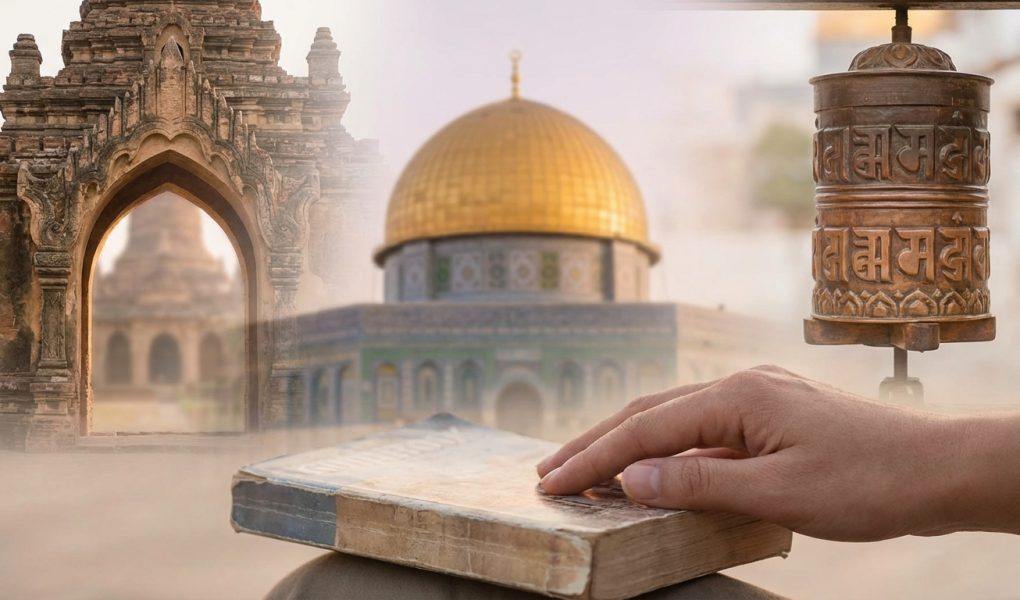
Standing barefoot on cool marble, you watch incense smoke curl toward gilded ceilings while monks chant in a language you don’t understand. You’re here because you want to experience something meaningful, but you’re also terrified of doing something wrong.
Visiting sacred sites can feel intimidating. One wrong move and you might offend worshippers, violate centuries-old traditions, or miss the spiritual significance entirely. But with the right preparation, these places become windows into cultures, histories, and belief systems that enrich your travels in ways museums never could.
Respectful sacred site visits require research before arrival, appropriate dress, understanding photography rules, and observing silence during worship. This guide covers essential etiquette for temples, mosques, churches, and shrines worldwide, helping you experience spiritual destinations meaningfully while honoring local customs and avoiding common mistakes that offend worshippers or violate sacred protocols.
Understanding Why Sacred Spaces Demand Special Respect
Religious sites aren’t tourist attractions in the traditional sense. They’re living spaces of worship where people come during their most vulnerable moments: grief, celebration, prayer, and seeking guidance.
When you visit a sacred site, you’re entering someone’s spiritual home. The same way you wouldn’t walk into a stranger’s house and start taking selfies in their bedroom, you shouldn’t treat holy places as backdrops for vacation photos.
Different faiths have different rules, but they all share one principle: these spaces exist for worship first, visitors second.
Some sites welcome tourists warmly. Others tolerate them. A few restrict access entirely during certain times or to certain areas. Your job is to figure out which category applies before you arrive.
Researching Before You Visit
Never show up at a sacred site unprepared. Spend at least 30 minutes researching before your visit.
Start with the official website if one exists. Look for visitor guidelines, dress codes, restricted areas, and photography policies. Many major religious sites now publish detailed visitor information in multiple languages.
Check recent reviews on travel forums. Other visitors will mention things official sites won’t: aggressive donation requests, unexpected closures, areas where guards strictly enforce rules, and cultural nuances that aren’t written down anywhere.
Contact local tour guides or cultural organizations. They can tell you about unwritten customs that matter just as much as formal rules.
“The biggest mistakes I see travelers make at sacred sites aren’t about dress codes or photography. They’re about timing. Showing up during active worship when you’re clearly there as a tourist creates tension. Come during designated visiting hours or hire a guide who knows when tourists are genuinely welcome.” – Cultural heritage consultant Maria Santos
Dress Codes That Actually Matter
Most sacred sites require modest clothing. Here’s what that means in practice across different faiths:
For temples and shrines:
– Cover shoulders completely
– Wear pants or skirts that reach below the knee
– Remove shoes before entering (bring socks for cold floors)
– Avoid tight or revealing clothing
– Keep hats off indoors
For mosques:
– Women must cover hair with a scarf
– Long sleeves and floor-length skirts or pants
– Some mosques provide robes for visitors
– Remove shoes at the entrance
– Men should wear long pants and shirts with sleeves
For churches and cathedrals:
– Cover shoulders and knees minimum
– Remove hats for men, optional for women depending on denomination
– Avoid beach wear, athletic clothing, or anything torn
– Some Orthodox churches require women to cover their heads
Pack a large scarf in your day bag. It works as a head covering, shoulder wrap, or makeshift long skirt when needed.
Bring slip-on shoes. You’ll remove them dozens of times at Asian temples, and fumbling with laces while people wait behind you is awkward for everyone.
The Seven Steps for a Respectful Visit
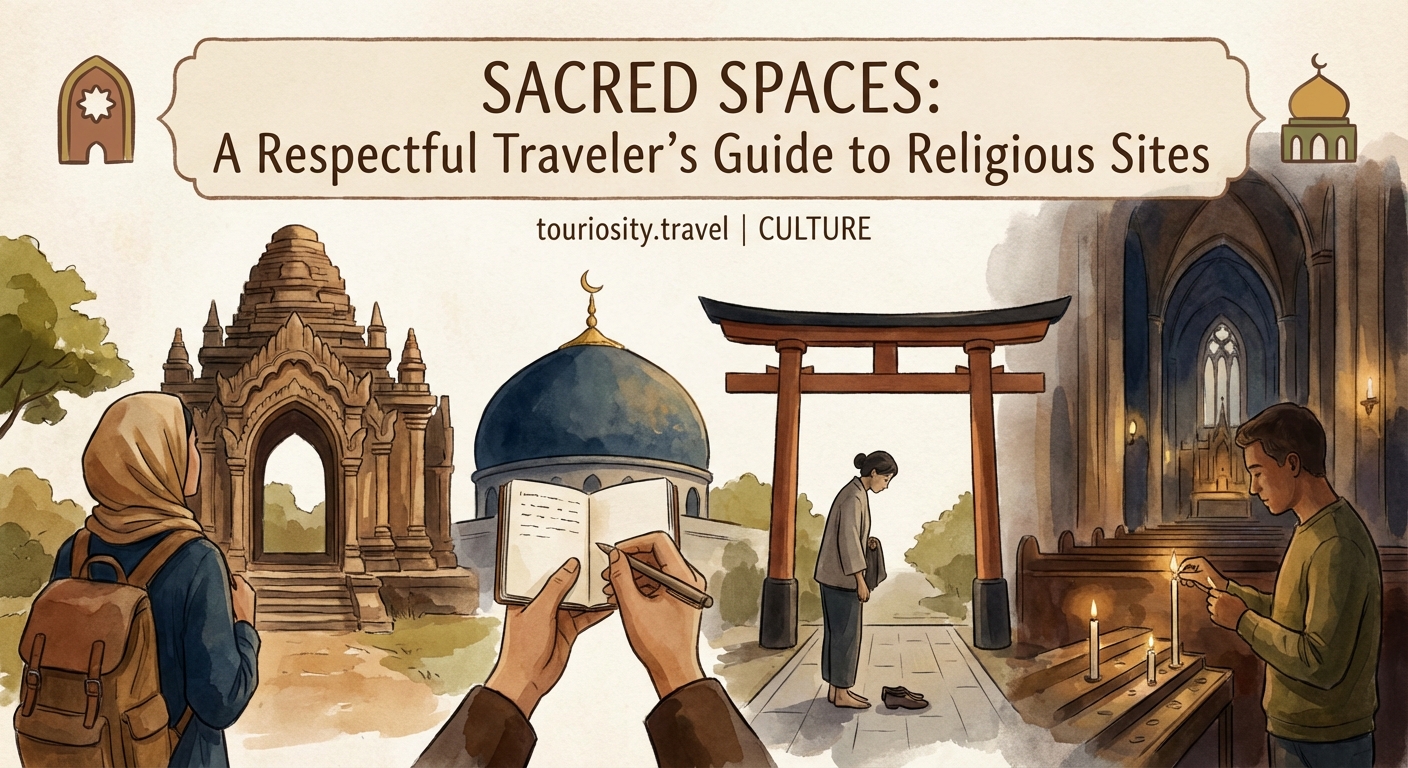
Follow this process at every sacred site:
-
Arrive during designated visiting hours. Active worship times are for worshippers, not tourists.
-
Observe before entering. Watch what others do. Where do they remove shoes? How do they greet clergy? What areas do they avoid?
-
Ask permission for photography. Even if signs don’t prohibit it, ask a staff member or guide first.
-
Move slowly and quietly. Rushing through a sacred space signals disrespect.
-
Stay in designated visitor areas. Don’t wander into spaces marked for clergy or active worshippers.
-
Silence your phone completely. Not vibrate. Off or silent mode.
-
Make a donation if requested. Many sites depend on visitor contributions for maintenance.
This systematic approach works whether you’re visiting a small village shrine or a famous cathedral.
Photography Rules and Why They Exist
Photography restrictions at sacred sites aren’t arbitrary. They exist for specific reasons:
Flash photography damages ancient artwork and textiles. The cumulative effect of thousands of camera flashes degrades pigments and fabrics that have survived centuries.
Photography during worship disrupts spiritual practice. Imagine trying to pray while tourists circle you with selfie sticks.
Some religious traditions forbid creating images of holy figures. Taking photos violates core beliefs.
Sacred objects and rituals aren’t meant for public consumption. Certain ceremonies are restricted to initiated members only.
| What to photograph | What to avoid |
|---|---|
| Exterior architecture during daylight | Interior spaces during active worship |
| Your own group in designated areas | Strangers praying or participating in rituals |
| Decorative elements with permission | Clergy without explicit consent |
| Landscapes and gardens | Sacred objects marked as restricted |
| General atmosphere shots from back | Close-ups of worshippers’ faces |
When photography is allowed, be strategic. Take a few meaningful photos rather than hundreds of rushed shots. Put your camera away and simply observe for most of your visit.
The art of attending local festivals without being that tourist applies equally to sacred sites where you’re witnessing something not performed for your benefit.
Common Mistakes and How to Avoid Them
Even well-intentioned travelers make errors at sacred sites. Here are the most common ones:
Treating worship like performance. When you encounter active religious ceremonies, you’re not watching a show. Sit or stand quietly in designated areas. Don’t applaud, comment, or move around.
Pointing feet at sacred objects. In Buddhist and Hindu traditions, feet are considered the lowest, dirtiest part of the body. Never point your feet toward Buddha statues, altars, or monks. Sit cross-legged or with feet tucked to the side.
Touching sacred objects without permission. That ancient statue isn’t there for you to rub for good luck. Oils from hands damage artifacts. Look, don’t touch.
Wearing shoes on sacred ground. If you see a pile of shoes, yours should join them. No exceptions for expensive sneakers or medical conditions. Plan accordingly.
Ignoring gender-specific rules. Some sacred sites have separate areas for men and women, or restrict certain areas by gender entirely. These aren’t suggestions.
Showing affection publicly. Many religious sites consider public displays of affection disrespectful. Save the couple photos for outside the gates.
Region-Specific Protocols Worth Knowing
Different parts of the world have unique expectations:
Southeast Asia: Remove shoes before entering any temple. Walk clockwise around stupas and sacred structures. Never climb on Buddha statues for photos. Dress modestly even in tropical heat. The guide to planning a Southeast Asia temple trail covers temple etiquette in detail for that region.
Middle East: Non-Muslims may be restricted from entering certain mosques entirely. Women should carry a headscarf at all times. Avoid visiting during prayer times unless you’re participating. Friday prayers are especially sacred.
Japan: Purify yourself at the water basin before entering shrines. Bow before passing through torii gates. Don’t walk in the center of paths (reserved for kami spirits). Toss coins gently into offering boxes rather than throwing them. Exploring Japan beyond the major cities often means visiting smaller shrines where these protocols matter even more.
Europe: Many churches charge entrance fees or request donations. This isn’t a scam; it funds preservation. Cover up even in summer. Silence is expected. Some cathedrals restrict tourists during services entirely.
India: Remove leather items before entering Jain temples. Cover your head in Sikh gurdwaras. Walk clockwise around Hindu temple sanctums. Accept prasad (blessed food) with your right hand only.
When to Hire a Guide
Some sacred sites benefit enormously from professional guidance:
- Complex sites with multiple buildings and unclear layouts
- Places where signage isn’t in languages you read
- Sites with active worship where timing matters
- Locations with strict protocols that aren’t obvious to outsiders
- Destinations where you want deeper understanding of symbolism and history
A good guide doesn’t just recite facts. They help you navigate cultural expectations, explain what you’re seeing in context, and facilitate respectful interaction with worshippers.
Look for guides who are members of the faith community when possible. Their insight goes deeper than guidebook knowledge.
Handling Donations and Money Requests
Many sacred sites request or require donations. Here’s how to handle money situations respectfully:
Entrance fees: Pay them without complaint. Preservation costs money.
Suggested donations: Give what you can afford. A few dollars goes further at a small village temple than at a famous cathedral.
Aggressive requests: Some sites have people who pressure tourists for donations. Polite but firm refusal is acceptable. “I’ve already donated” works well.
Offerings: If you want to make a religious offering (lighting candles, leaving flowers, etc.), ask about the appropriate way to do so. Don’t improvise.
Tipping guides: If a volunteer shows you around, offer a tip that reflects the time they spent and the value you received.
Keep small bills in local currency accessible. Fumbling with large bills or asking for change at a donation box is awkward.
What to Do When You Make a Mistake
You will mess up eventually. Everyone does.
If you realize you’ve violated a rule, apologize sincerely and immediately. “I’m sorry, I didn’t know” goes a long way.
If someone corrects you, thank them. Don’t get defensive or make excuses.
If you’re asked to leave, go quietly and respectfully.
Most religious communities are remarkably forgiving of honest mistakes from visitors who are clearly trying to be respectful. Intentional disrespect is what causes real offense.
Balancing Tourism and Worship
The tension between tourism and worship is real at popular sacred sites. Thousands of tourists can make it nearly impossible for local worshippers to use their own religious spaces.
You can help by:
- Visiting during off-peak hours when possible
- Keeping your visit brief if the site is crowded
- Prioritizing less-famous sacred sites where tourism hasn’t overwhelmed worship
- Supporting sites financially through donations and appropriate purchases
- Sharing your positive experiences to encourage others to visit respectfully
Some travelers choose to skip over-touristed sacred sites entirely. That’s valid. There’s something to be said for visiting a quiet village temple where you’re the only outsider rather than fighting crowds at a famous shrine.
Learning Basic Phrases
Learning basic phrases transforms your travel experience at sacred sites specifically. Knowing how to say these phrases in the local language shows respect:
- “May I take a photo?”
- “Where should I remove my shoes?”
- “Is this area open to visitors?”
- “Thank you for welcoming me”
- “I apologize, I didn’t understand”
You don’t need fluency. The effort matters more than perfect pronunciation.
Extending Respect Beyond the Visit
Respectful engagement with sacred sites doesn’t end when you leave:
Share photos thoughtfully on social media. Avoid captions that mock, trivialize, or misrepresent what you saw.
Write reviews that help other travelers visit respectfully. Mention dress codes, timing issues, and cultural protocols.
Support preservation efforts. Many sacred sites face funding challenges. Your donation or purchase from official gift shops helps.
Correct misinformation when you see other travelers planning disrespectful visits. A gentle “heads up, you’ll need to cover your shoulders there” prevents problems.
When Sacred Spaces Change How You Travel
Visiting sacred sites respectfully often shifts how you approach all travel. You start researching more. Moving slower. Observing before acting. Asking permission instead of assuming.
These habits make you a better traveler everywhere, not just at religious sites. The awareness you develop translates to better interactions with local communities, deeper cultural understanding, and richer travel experiences overall.
Sacred spaces offer something rare in modern travel: the chance to witness what matters most to people. Their fears, hopes, traditions, and beliefs are all on display in these places. Approaching them with genuine respect and curiosity opens doors that remain closed to tourists who treat them as just another photo opportunity.
Your next visit to a temple, mosque, church, or shrine can be transformative. Not because of architectural beauty or historical significance, but because you took the time to understand what makes these places sacred to the people who worship there. That understanding is the real souvenir worth bringing home.