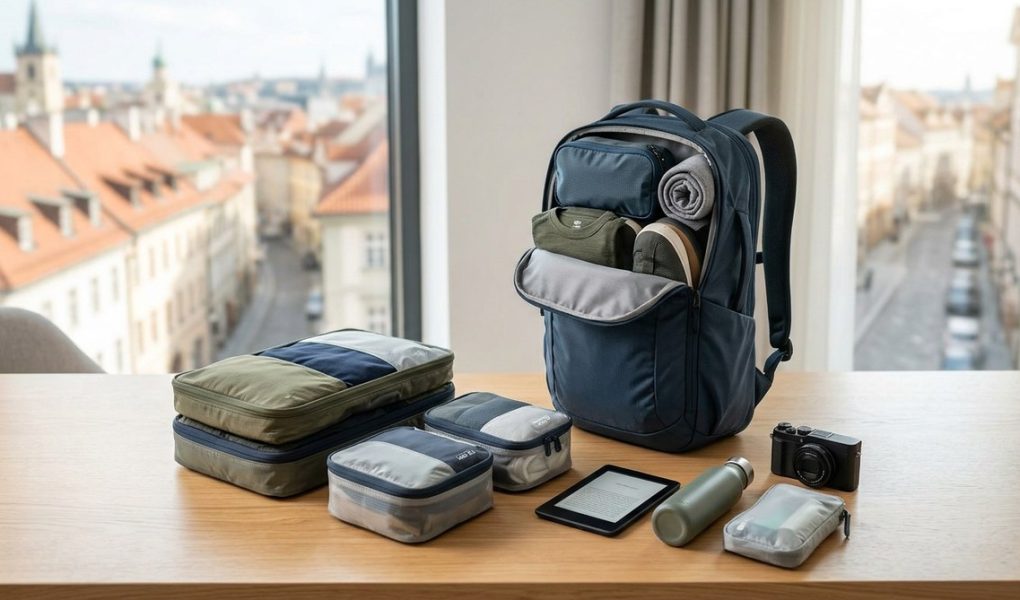
Standing in an airport check-in line watching someone wrestle a 70-pound suitcase onto the scale is a reminder that most travelers bring far more than they need. The truth is, you can travel for three weeks with less than you’d pack for a long weekend if you understand the fundamentals of minimalist packing.
Packing light for travel requires choosing versatile clothing pieces that layer well, limiting yourself to three pairs of shoes maximum, using packing cubes for compression, and adopting a wear-wash-repeat cycle. Most travelers can comfortably manage three weeks with a 40-liter bag by focusing on items that serve multiple purposes and eliminating duplicates.
Start with the right bag size
Your bag determines how much you’ll pack. It’s that simple.
A 40 to 45-liter backpack or carry-on sized roller forces you to make smart choices. Anything larger becomes an invitation to fill empty space with things you won’t use.
The bag should fit airline carry-on dimensions. That means roughly 22 x 14 x 9 inches for most carriers. Check your specific airline before buying, since budget carriers often have stricter limits.
Look for bags with external compression straps. These let you cinch down the volume as you pack, which keeps items from shifting and creates a more compact profile.
Internal organization matters too. A single cavernous space leads to chaos. Opt for bags with at least one zippered divider or mesh pocket to separate clean clothes from worn items.
Build a capsule wardrobe around three colors
Color coordination sounds boring until you realize it means every piece works with every other piece.
Choose one neutral base color like black, navy, or charcoal. Add two accent colors that complement each other and the base. Now everything in your bag coordinates automatically.
Here’s what a three-week wardrobe actually looks like:
- Four shirts (mix of short and long sleeve)
- Two pairs of pants (one casual, one slightly dressier)
- One pair of shorts or a skirt
- Seven pairs of underwear
- Five pairs of socks
- Two bras (if applicable)
- One light jacket or fleece
- One versatile dress or button-up shirt
That’s it. You’ll wear items multiple times between washes, which is completely normal when traveling.
The key is choosing fabrics that resist wrinkles and odors. Merino wool tops can be worn three or four times before washing. Synthetic hiking pants dry overnight and look presentable in casual restaurants.
Cotton feels comfortable but takes forever to dry and wrinkles easily. Save it for home.
Follow the three-pair shoe rule
Shoes eat up more space than any other category. They’re also the hardest items to compress.
Limit yourself to three pairs maximum:
- Walking shoes you can wear 8+ hours daily
- Sandals or lightweight slip-ons for evening
- Sport-specific shoes if your trip demands them (hiking boots, running shoes)
Wear your bulkiest pair on the plane. Pack the other two.
If you’re not planning serious hikes, skip the boots entirely. Modern trail runners provide enough support for most terrain and weigh half as much.
For weekend escapes that feel like week-long vacations, you can often get away with just two pairs by choosing versatile walking shoes that work in both urban and natural settings.
Master the art of rolling and folding
Packing cubes changed everything about how efficiently bags get filled.
These zippered fabric rectangles compress clothing and create organizational zones. You can grab your entire shirt collection without disturbing pants or underwear.
Use this system:
- One cube for tops
- One cube for bottoms
- One small cube for underwear and socks
- One cube for worn clothes waiting to be washed
Roll t-shirts and casual items. This minimizes wrinkles and lets you see everything at a glance.
Fold button-ups and dressier pieces flat. Place them in cubes last so they sit on top without getting crushed.
Stuff socks and underwear into shoes. This uses dead space and helps shoes keep their shape.
“I spent years overpacking until I started using the one-week rule. Pack for seven days regardless of trip length. You’ll do laundry anyway, so why carry three weeks of clothes?” – experienced minimalist traveler
Create a toiletry strategy that saves space
Full-size products are your enemy.
Transfer everything into 3-ounce bottles or smaller. Better yet, buy solid versions of products when possible. Solid shampoo bars, toothpaste tablets, and bar soap eliminate liquid restrictions and weigh almost nothing.
Share products across uses. A good face moisturizer can double as body lotion. One bar of soap handles both body and laundry needs.
Skip the items hotels provide. You don’t need to pack shampoo if you’re staying in accommodations that supply it. Research your lodging before deciding what to bring.
Keep a permanent toiletry kit packed with travel sizes. Refill bottles between trips instead of starting from scratch each time.
Your complete toiletry kit should fit in a quart-sized bag:
- Toothbrush and toothpaste
- Deodorant
- Shampoo and conditioner (or bar versions)
- Face wash and moisturizer
- Sunscreen
- Any prescription medications
- Contact solution (if needed)
Understand the wear-wash-repeat cycle
Doing laundry while traveling isn’t a burden. It’s freedom from overpacking.
Plan to wash clothes every four to five days. This lets you pack one week’s worth of clothing for any length trip.
Hand washing in a hotel sink takes 10 minutes. Use a small amount of liquid soap or a travel-sized detergent sheet. Wring items in a towel to remove excess water, then hang to dry overnight.
Many destinations have affordable laundry services. Drop off a bag in the morning, pick it up that evening. The cost is less than checked baggage fees.
For multi-day hiking trails or kayaking expeditions, technical fabrics become essential. They dry fast enough to wash in camp and wear the next day.
Eliminate common packing mistakes
Most overpacking happens because of fear, not need. Here’s what you can leave behind:
| Item Category | What People Pack | What You Actually Need |
|---|---|---|
| Books | 3-4 paperbacks | E-reader or phone app |
| Just in case clothes | Formal outfit, extra jacket | Nothing (buy locally if needed) |
| Towels | Full beach towel | Microfiber travel towel or none |
| Electronics | Laptop, tablet, e-reader, camera | Phone plus one other device max |
| Toiletries | Full-size everything | 3 oz bottles or solid versions |
The “just in case” category kills light packing attempts. That nice outfit for a fancy dinner you might attend. The extra jacket for weather that probably won’t happen. The backup shoes in case your main pair fails.
Here’s the reality: you can buy almost anything at your destination. Often for less than it costs at home.
Pack for the trip you’ve actually planned, not the imaginary scenarios in your head.
Digitize everything possible
Paper adds weight fast. Guidebooks, maps, printed confirmations, and travel journals all take up valuable space.
Store everything digital:
- Guidebooks: Use apps or phone-optimized websites
- Maps: Download offline versions in Google Maps
- Confirmations: Email or screenshot to your phone
- Journal: Type notes or use a voice recording app
- Photos: Your phone camera beats the point-and-shoot you used to pack
The exception is destinations with limited connectivity. Downloading offline maps and saving key documents as PDFs ensures you’re not stranded without information.
For places like Japan beyond the major cities or remote areas of Slovenia, having offline resources becomes more important than in well-connected urban centers.
Pack for your first 48 hours in your personal item
Airlines lose bags. Connections get missed. Having essentials in a personal item that never leaves your sight prevents disasters.
Your personal item should contain:
- One complete change of clothes
- Essential toiletries
- Medications
- Phone charger
- Important documents
- Valuable electronics
This bag goes under the seat in front of you. If your main bag gets delayed or lost, you can function normally while the airline sorts things out.
Choose a small backpack or large purse that fits under airplane seats. Stuffing a tote bag full of items makes security screening annoying and doesn’t protect your gear.
Apply the one-week test before you leave
Pack everything you think you need. Then remove it all and live out of that bag for a week at home.
You’ll immediately discover what you actually use versus what sits untouched. The extra pair of jeans you never wear. The backup phone charger when one is plenty. The third book when you barely opened the first.
Eliminate anything you didn’t touch during your home test. Be ruthless.
This practice run also reveals what you forgot. Better to discover you need a European outlet adapter while still at home than after landing in Greece.
Adjust for climate and activities
The core principles stay the same, but extreme weather requires modifications.
Cold weather destinations need:
- Layering system instead of one heavy coat
- Merino wool base layers that insulate when wet
- Packable down jacket for warmth without bulk
- Gloves, hat, and neck warmer
Hot weather destinations need:
- Lightweight, breathable fabrics
- Sun protection clothing with UPF rating
- Fewer layers overall
Chasing northern lights in Scandinavia requires serious cold weather gear, but you can still pack light by choosing technical pieces that compress well and layer effectively.
Adventure activities need specialized gear, but you can often rent instead of pack. Snorkel equipment, ski gear, and camping supplies are available at most adventure destinations.
Weigh everything to stay honest
Put your packed bag on a scale. If it’s over 15 pounds for a carry-on, you’ve packed too much.
Most people can get a three-week travel bag down to 12 to 14 pounds including the bag itself. That leaves room for souvenirs on the return trip without exceeding carry-on weight limits.
Heavy items to watch:
- Shoes (2-3 pounds per pair)
- Jeans (1.5 pounds per pair)
- Books (1 pound each)
- Full-size toiletries (0.5 pounds each)
Switching from jeans to lightweight hiking pants saves a pound per pair. Choosing a 2-pound bag over a 5-pound roller saves three pounds before you pack anything.
Every ounce matters when you’re carrying that bag through airports, train stations, and cobblestone streets.
Build your system over time
Your first attempt at packing light probably won’t be perfect. You’ll forget something important or bring items you never use.
That’s fine. Learn from each trip.
Keep a packing list on your phone. After each trip, note what you didn’t use and what you wished you’d brought. Refine the list over time until it matches your actual travel style.
Some people need more clothing options. Others prioritize camera gear. Your perfect packing list won’t match anyone else’s exactly.
The goal isn’t to match some arbitrary standard. It’s to carry only what enhances your trip while eliminating everything that weighs you down.
Whether you’re planning a temple trail through Southeast Asia or a desert adventure in Morocco, packing light gives you freedom to move spontaneously without being anchored to heavy luggage.
Why less luggage means better travel
Walking off a plane with just a carry-on while others wait at baggage claim feels like a superpower. You’re out of the airport and on your way while they’re still circling carousels.
But the real benefit goes deeper than saved time.
Light packing forces you to focus on experiences over possessions. You stop worrying about what you’re wearing and start noticing where you are. You can accept last-minute invitations without rearranging your entire bag. You move through destinations with ease instead of hauling dead weight.
Start with your next trip. Pack half of what you normally would. You’ll be surprised how little you actually miss those extra items and how much you appreciate the freedom of traveling light.