The aurora borealis dances across the Arctic sky in ribbons of green, purple, and pink. It’s one of nature’s most spectacular shows, and Scandinavia offers front-row seats. But timing is everything. Show up during the wrong season, and you’ll miss the spectacle entirely. Choose the right window, and you’ll witness something that changes how you see the world.
The best time to see northern lights in Scandinavia runs from late September through late March, with peak activity in December through February. Your success depends on three factors: dark skies, clear weather, and [solar activity](https://www.swpc.noaa.gov/phenomena/aurora). Northern Norway, Swedish Lapland, and Finnish Lapland offer the highest success rates, with some locations boasting visibility up to 200 nights per year.
The aurora season runs six months, not twelve
Forget summer trips. The midnight sun that makes Scandinavia famous in June and July also makes aurora viewing impossible. You need darkness, and lots of it.
The viewing season starts in late September and runs through late March. That’s your window. Outside these months, the nights simply aren’t dark enough, even in the Arctic Circle.
But not all months within this window are equal.
September and March sit at the edges. You’ll get some dark hours, but they’re limited. The sun still rises relatively early and sets relatively late. Your viewing window might only span four to six hours.
October through February delivers the goods. These months give you the longest nights and the most opportunities. In December and January, locations above the Arctic Circle experience polar night, where the sun barely rises at all. Some places get just a few hours of twilight around midday.
More darkness means more chances to see the lights.
Peak months deliver the highest success rates
December, January, and February stand out as the prime viewing months across all of Scandinavia. Here’s why they work so well.
The nights stretch longest during these months. In Tromsø, Norway, you’ll have darkness from around 1 PM to 11 AM in December. That’s nearly 22 hours of potential viewing time every single day.
Cold, crisp air tends to bring clearer skies. While you’ll still encounter cloudy nights, the statistical likelihood of clear conditions increases during deep winter.
Solar activity follows an 11-year cycle, and we’re currently in a period of increased activity. The sun’s magnetic field becomes more active during solar maximum, producing more frequent and intense auroras.
Here’s a practical breakdown of what each month offers:
| Month | Darkness Hours | Weather Conditions | Crowd Levels | Overall Rating |
|---|---|---|---|---|
| September | 8-12 hours | Mild, variable | Moderate | Good |
| October | 12-16 hours | Cooling, clearer | Lower | Very Good |
| November | 16-20 hours | Cold, stable | Low | Excellent |
| December | 20-24 hours | Very cold, clear | Moderate | Excellent |
| January | 20-24 hours | Very cold, clear | Lower | Excellent |
| February | 16-20 hours | Cold, stable | Moderate | Excellent |
| March | 12-16 hours | Warming, variable | Higher | Very Good |
Three factors determine your success rate
Seeing the aurora isn’t just about showing up during the right month. Three elements need to align.
Dark skies matter most. Light pollution kills aurora visibility. You need to get away from cities and towns. Even a small village can create enough ambient light to wash out fainter displays.
Clear weather makes or breaks your trip. Clouds block everything. You can have the most intense solar storm in decades happening overhead, and you’ll see nothing through overcast skies.
This is where location strategy becomes critical. Coastal areas like Tromsø get more precipitation. Inland locations like Abisko in Sweden or Inari in Finland tend to have more stable, clearer weather patterns.
Solar activity drives the show. The sun needs to be throwing charged particles toward Earth. During solar maximum, this happens more frequently. During solar minimum, you might wait several nights between significant displays.
You can’t control solar activity, but you can monitor it. Apps and websites provide real-time aurora forecasts based on solar wind data and the KP index, which measures geomagnetic activity.
“I’ve guided aurora tours for eight years, and I always tell first-timers the same thing: book at least four nights in the Arctic. Weather changes fast. Having multiple chances dramatically increases your odds of seeing a strong display.” — Lars Andersson, Northern Lights Guide, Abisko
Where to position yourself for maximum visibility
Scandinavia offers dozens of aurora viewing destinations, but some locations consistently outperform others.
Abisko, Sweden claims the title of Europe’s most reliable aurora spot. The area sits under a unique microclimate that produces clear skies even when surrounding regions are clouded over. The famous “blue hole of Abisko” refers to this weather phenomenon.
The Aurora Sky Station sits atop Mount Nuolja, accessible by chairlift. You’ll be above the valley fog and away from any light pollution. The station reports clear skies on approximately 70% of winter nights.
Tromsø, Norway combines accessibility with excellent viewing odds. It’s a proper city with an airport, hotels, and restaurants, but it sits 350 kilometers above the Arctic Circle. You can stay in town and still see auroras on clear nights, though heading out to surrounding fjords and islands increases your success rate.
Inari, Finland offers vast wilderness and exceptionally dark skies. Lake Inari, one of Finland’s largest lakes, provides an enormous dark viewing area with minimal light pollution. The region also has strong Sami cultural experiences, adding depth to your trip.
Lofoten Islands, Norway delivers dramatic landscapes that make aurora photography spectacular. The combination of mountains, fjords, and coastal scenery creates stunning foregrounds for aurora shots. Weather can be more variable here due to the coastal location.
Kiruna, Sweden hosts the famous Icehotel and provides easy access to wilderness areas. The town itself has some light pollution, but you’re never more than 20 minutes from complete darkness.
Planning your aurora hunt in five steps
Here’s how to structure your trip for the best possible outcome:
-
Choose your month based on priorities. Want the longest nights? Book December or January. Prefer milder weather and easier travel conditions? October or February work better. Traveling with kids on school holidays? Christmas break and February half-term are popular, but book accommodations early.
-
Select your base location using weather statistics. Check historical weather data for your target destinations. Abisko and Inari consistently show higher percentages of clear nights compared to coastal locations. If you’re flexible, consider booking accommodations with free cancellation and monitoring weather forecasts in the week before your trip.
-
Build in buffer nights. Three nights minimum, four or five nights ideal. This gives you multiple chances to encounter clear skies. Don’t fly in for a single night and expect guaranteed results.
-
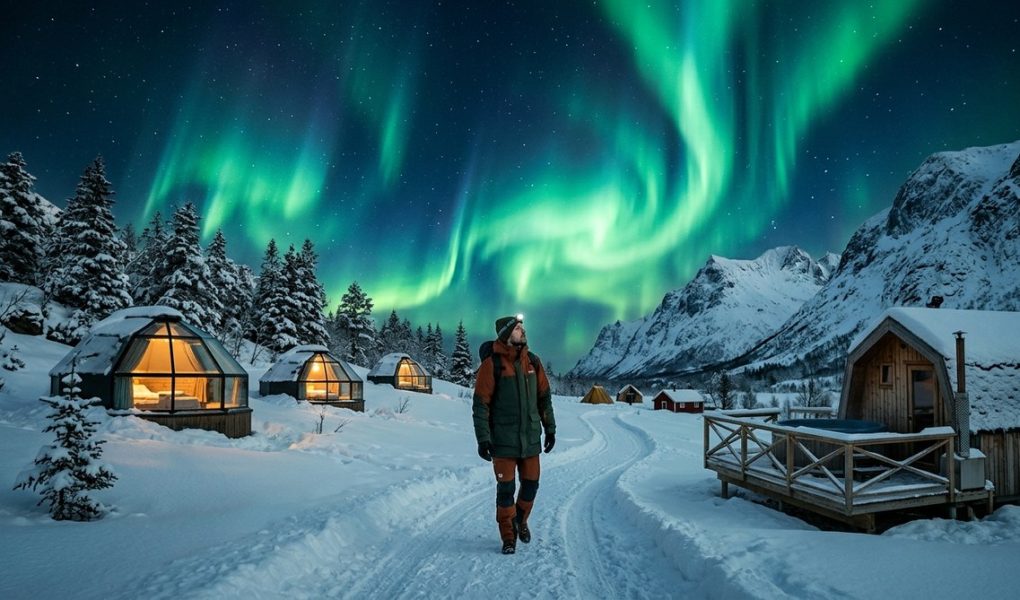
Book accommodations outside town centers. Glass igloos, wilderness lodges, and remote cabins eliminate the need to drive somewhere dark every night. You can simply step outside when the forecast looks promising. Many properties offer aurora wake-up calls, where staff will knock on your door if the lights appear.
-
Prepare for the cold. December and January bring extreme temperatures, often dropping to -20°C or colder. Layered clothing, insulated boots, and hand warmers aren’t optional. You’ll be standing outside for extended periods, often in the middle of the night.
Common mistakes that reduce your viewing chances
Even experienced travelers make these errors:
Booking too few nights. One or two nights leaves you vulnerable to bad weather. A single storm system can block the aurora for your entire stay.
Staying in city hotels. Urban light pollution significantly reduces what you can see. Even if the aurora is active, you might only catch faint green glows instead of the full display.
Ignoring moon phases. A full moon creates bright conditions that wash out fainter auroras. New moon periods offer the darkest skies and the best contrast for viewing and photography.
Expecting guaranteed sightings. No tour operator, location, or month can promise 100% success. Nature doesn’t work that way. Set realistic expectations and enjoy other Arctic experiences if the aurora doesn’t cooperate.
Skipping weather contingency plans. If clouds roll in, can you move to a different location? Having a rental car provides flexibility that organized tours can’t match. Some travelers book accommodations in two different regions and decide which to use based on forecasts.
What to do during the day while you wait for darkness
Aurora hunting means late nights and sleeping in. Most displays peak between 10 PM and 2 AM, though they can appear anytime after dark.
Structure your days around this schedule. Sleep until mid-morning. Have a late breakfast. Use afternoon hours for activities that don’t require early starts.
- Dog sledding tours typically run in afternoon slots
- Snowmobile safaris can be scheduled for midday
- Sami cultural experiences often happen around lunch
- Cross-country skiing works perfectly for late morning exercise
- Ice fishing provides a relaxed afternoon activity
Many aurora lodges offer daytime activities included in your package. This keeps you entertained while you wait for the main event after dark.
If you’re interested in exploring more of the Nordic region beyond the aurora season, why the Faroe Islands should be your next Nordic adventure offers compelling reasons to extend your Scandinavian travels.
Photography basics for capturing the aurora
You don’t need professional camera gear to photograph the northern lights, but phones won’t cut it. Here’s the minimum setup that works.
A camera with manual controls is essential. You need to adjust shutter speed, aperture, and ISO independently. Most mirrorless cameras and DSLRs handle this well.
A sturdy tripod prevents blur during long exposures. You’ll be shooting with shutter speeds between 5 and 25 seconds. Any camera movement ruins the shot.
A wide-angle lens captures more of the sky. Something between 14mm and 24mm works beautifully. The aurora often spreads across a large portion of the sky.
Basic settings to start with:
- ISO: 1600-3200
- Aperture: f/2.8 or as wide as your lens allows
- Shutter speed: 8-15 seconds
- Focus: Manual focus set to infinity
Adjust based on aurora brightness and movement. Fast-moving auroras need shorter exposures. Faint displays need longer exposures or higher ISO.
Bring extra batteries. Cold temperatures drain battery life rapidly. Keep spares in an inside pocket where your body heat keeps them warm.
Alternative viewing locations beyond the main tourist spots
The popular destinations work well, but lesser-known locations offer solitude and equally dark skies.
Kilpisjärvi, Finland sits in the far northwestern arm of Finland, where the country meets Sweden and Norway. It’s remote, small, and surrounded by wilderness. The Saana fell provides elevation for viewing above any valley fog.
Senja Island, Norway rivals Lofoten for dramatic scenery but sees far fewer visitors. The island offers fjords, mountains, and fishing villages with excellent aurora viewing from beaches and coastal viewpoints.
Jokkmokk, Sweden serves as the cultural heart of Swedish Sami territory. The town hosts the famous Jokkmokk Winter Market each February, combining aurora viewing with deep cultural immersion.
Lyngen Alps, Norway attracts ski touring enthusiasts but remains quieter than Tromsø despite being nearby. The mountains create spectacular foregrounds for aurora photography.
Combining aurora viewing with other winter experiences
Most visitors want more than just aurora hunting. Scandinavia’s winter landscape offers activities that complement the main event.
Husky sledding lets you drive your own team of dogs through snowy forests. Most tours run 2-4 hours and include basic mushing instruction. Some operators offer multi-day expeditions with overnight wilderness camping.
Reindeer sledding provides a gentler, more cultural experience. Sami herders often lead these tours, sharing stories about traditional life and reindeer husbandry.
Snowshoeing opens up terrain that’s impossible to reach otherwise. The learning curve is minimal, and you can access pristine wilderness within minutes of leaving town.
Ice fishing requires patience but offers a meditative break from more active pursuits. Drill a hole, drop a line, and wait. Local guides know where fish congregate and provide all necessary equipment.
For travelers who enjoy combining outdoor adventures with cultural depth, the ultimate guide to multi-day hiking trails that changed my perspective on travel explores how extended wilderness experiences transform your relationship with nature.
Practical considerations for Arctic winter travel
Traveling in the Arctic during winter demands preparation beyond typical vacation planning.
Transportation: Roads can be icy and snow-covered. If you’re renting a car, ensure it has winter tires (legally required) and that you’re comfortable driving in winter conditions. Many travelers opt for organized tours or airport transfers instead.
Clothing layers: Base layer (merino wool), insulating layer (fleece or down), outer layer (windproof and waterproof). Don’t forget a warm hat, gloves, and insulated boots rated for extreme cold.
Daylight hours: In December and January, you might only see a few hours of twilight. This can affect mood and energy levels. Some people love the extended darkness; others find it challenging.
Costs: Arctic Scandinavia is expensive. Budget accordingly for accommodations, meals, and activities. A week-long aurora trip typically costs $2,000-4,000 per person, including flights, depending on your accommodation choices.
Travel insurance: Winter weather can cause flight delays and cancellations. Comprehensive travel insurance that covers weather-related disruptions is worth the investment.
Understanding aurora intensity and what to expect
Not every aurora looks like the dramatic photos you’ve seen online. Understanding what’s realistic helps set appropriate expectations.
The KP index measures geomagnetic activity on a scale from 0 to 9. Here’s what different levels typically produce:
- KP 0-2: Faint green glows on the northern horizon, visible only in very dark locations
- KP 3-4: Clearly visible green bands and arcs, occasional movement
- KP 5-6: Strong displays with movement, dancing curtains, possible color variations
- KP 7-9: Intense displays covering much of the sky, rapid movement, multiple colors
Most nights during aurora season produce KP levels between 1 and 4. Strong displays (KP 5+) happen several times per month during active periods but aren’t nightly occurrences.
Your eyes see the aurora differently than cameras do. Cameras capture colors more vividly during long exposures. What appears as bright green bands in photos might look more like pale, whitish-green glows to your eyes, especially during weaker displays.
This doesn’t make the experience less magical. Seeing the aurora move and dance in real-time, even if it’s not as colorful as photos suggest, creates a sense of wonder that static images can’t capture.
When solar activity peaks and what it means for your trip
The sun follows an approximately 11-year cycle of activity. We’re currently in Solar Cycle 25, which began in December 2019 and is expected to peak around 2025-2026.
This timing is excellent for aurora hunters. Solar maximum produces more frequent coronal mass ejections and solar flares, which create stronger and more frequent auroras.
During solar maximum, you might see multiple strong displays per week. During solar minimum, you might wait weeks between significant shows.
However, even during solar minimum, auroras still appear regularly in the auroral oval, the ring-shaped zone around the magnetic poles where auroras are most common. Scandinavia sits directly under this oval, which is why locations like Abisko and Tromsø see auroras so frequently regardless of solar cycle phase.
You can check current solar activity through several resources:
- Space Weather Prediction Center (NOAA)
- Aurora forecast apps like My Aurora Forecast
- Local aurora alert services in Scandinavia
These tools provide 1-3 day forecasts based on solar wind data and predicted geomagnetic activity.
Making the most of cloudy nights
Even with perfect planning, you’ll probably encounter some cloudy nights. Here’s how to make the most of them.
Many hotels and lodges screen aurora documentaries or offer presentations about the science behind the lights. These sessions provide context that enriches your experience when you do see the real thing.
Saunas are central to Scandinavian culture and provide the perfect way to warm up after standing in the cold. Many accommodations have traditional smoke saunas or modern electric versions.
Indoor activities like visiting local museums, trying regional cuisine, or learning about Sami culture fill cloudy evenings productively.
Some tour operators offer “bad weather alternatives” like visits to planetariums with aurora simulations, though nothing compares to the real experience.
Stay flexible with your schedule. If the forecast shows clearing skies at 3 AM, set an alarm. The most dedicated aurora hunters check conditions multiple times throughout the night.
The science behind the lights makes them more meaningful
Understanding what creates the aurora adds depth to the experience. You’re not just watching pretty lights; you’re witnessing the interaction between solar wind and Earth’s magnetic field.
The sun constantly releases charged particles (mostly electrons and protons) in all directions. When these particles reach Earth, our magnetic field deflects most of them. But some particles funnel down toward the poles along magnetic field lines.
These particles collide with oxygen and nitrogen molecules in the upper atmosphere, around 100-300 kilometers above Earth’s surface. The collisions excite these molecules, causing them to emit light.
Different gases produce different colors:
- Oxygen produces green (most common) and red (rare, at very high altitudes)
- Nitrogen produces blue and purple (less common)
The aurora’s movement reflects changes in solar wind intensity and Earth’s magnetic field. When you see the lights dancing and pulsing, you’re watching real-time changes in space weather playing out in the atmosphere.
This connection to larger cosmic processes makes the aurora more than just a visual spectacle. It’s a tangible reminder of Earth’s place in the solar system and the constant interaction between our planet and the sun.
Your aurora adventure starts with realistic planning
Chasing the northern lights in Scandinavia requires flexibility, preparation, and realistic expectations. The aurora doesn’t follow schedules or guarantee appearances. But when conditions align and those green curtains start dancing overhead, you’ll understand why travelers return to the Arctic year after year.
Book your trip between October and March, with December through February offering the best combination of long nights and clear skies. Choose a location known for stable weather patterns. Build in enough nights to weather out cloudy periods. Dress for extreme cold. And remember that seeing the aurora, even a faint display, is a privilege that connects you to something far larger than yourself.
The lights are waiting. Your job is to show up during the right season, in the right place, with enough patience to let nature work on its own timeline.