You’ve checked off another European capital in three days, snapped the requisite photos, and moved on. But something feels hollow. The Instagram grid looks impressive, yet you can’t shake the feeling that you’ve merely skimmed the surface of places that deserve so much more attention.
Slow travel cultural immersion offers a radically different approach. Instead of racing through destinations, you plant roots for weeks or months. You shop at neighborhood markets. You learn the baker’s name. You understand the rhythm of a place beyond its tourist facade.
Slow travel cultural immersion means staying in one destination for extended periods, typically 30 days or longer, to build genuine relationships with locals and understand daily rhythms. This approach prioritizes depth over breadth, trading superficial sightseeing for meaningful cultural exchange through language learning, community participation, and residential living patterns that mirror local life rather than tourist itineraries.
What makes slow travel different from extended tourism
The distinction matters more than semantics suggest.
Extended tourism means staying longer but maintaining tourist behaviors. You’re still eating at restaurants recommended by guidebooks. Still visiting the major attractions. Just spreading them across more days.
Slow travel cultural immersion fundamentally shifts your role from observer to participant.
You’re not visiting. You’re temporarily living there.
This means renting an apartment instead of booking hotels. Shopping for groceries instead of dining out constantly. Developing routines that align with local schedules rather than tour bus timetables.
The psychological shift proves just as important as the logistical one. You stop asking “what should I see today?” and start asking “what do people who live here actually do?”
Building authentic connections takes intentional effort
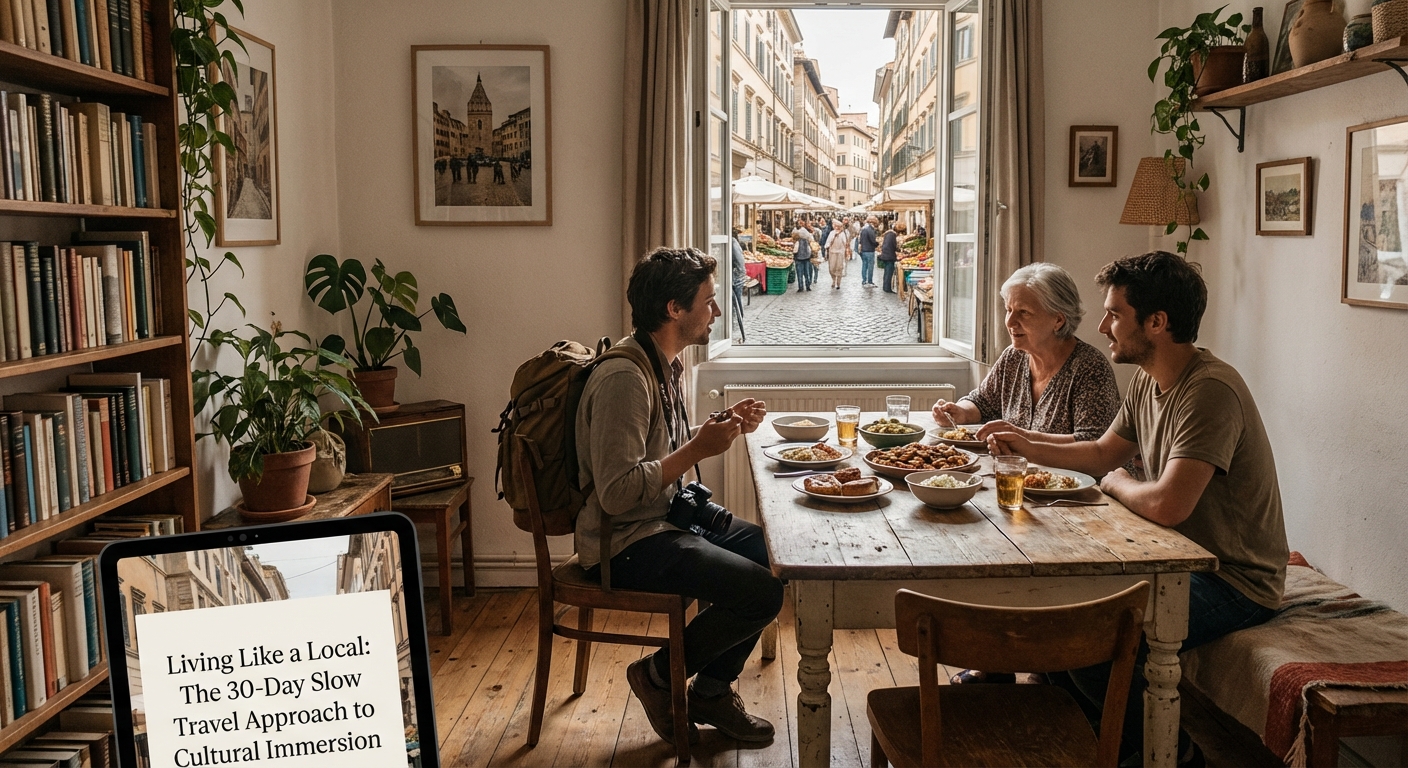
Cultural immersion doesn’t happen automatically just because you stay longer.
You need deliberate strategies to move beyond the expat bubble that often forms around long-term travelers.
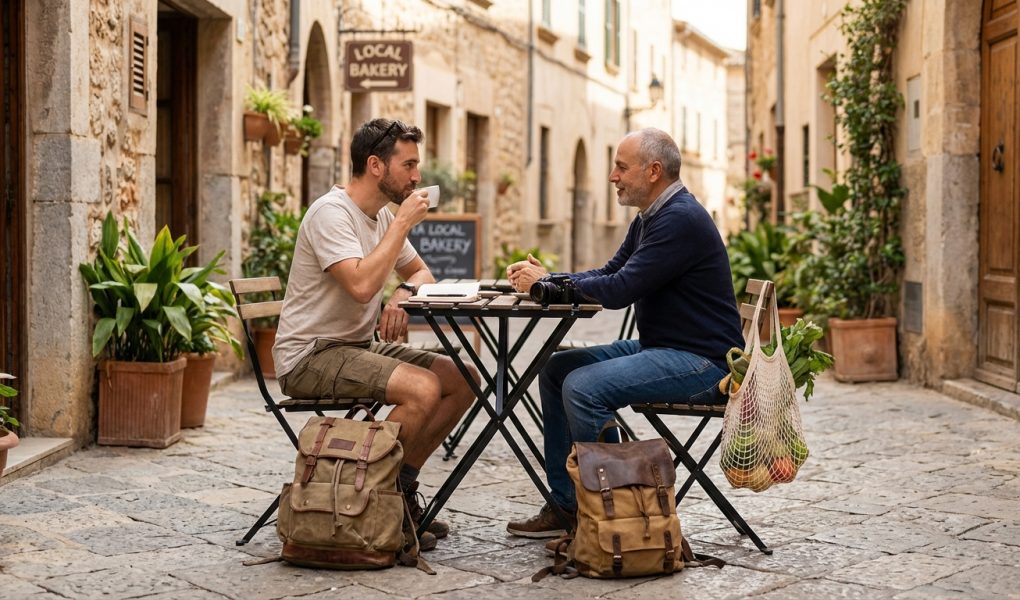
Start by choosing accommodations in residential neighborhoods rather than tourist districts. The extra fifteen minutes from major attractions pays dividends in authentic daily interactions. Your local café becomes the one where construction workers grab morning coffee, not the photogenic spot with English menus and inflated prices.
Learning basic phrases transforms superficial transactions into genuine exchanges. You don’t need fluency. Twenty phrases covering greetings, gratitude, and basic questions open doors that remain closed to English-only travelers.
Frequency matters as much as vocabulary. Return to the same establishments repeatedly. The fruit vendor who barely acknowledged you on day three will remember your name by week two. These recurring micro-interactions build the social fabric that defines actual community membership.
The practical framework for month-long immersive stays
Successful slow travel requires different planning than traditional trips.
1. Choose your base strategically
Pick destinations that support extended stays logistically and legally. Visa requirements become critical when you’re planning 30, 60, or 90-day stays. Many countries offer tourist visas allowing three months, but verify specifics before committing.
Size matters less than you’d expect. Small towns often provide richer immersion opportunities than major cities. Fewer English speakers means more language practice. Tighter communities mean faster integration.
Underrated European cities often provide better slow travel experiences than famous capitals precisely because tourist infrastructure hasn’t overwhelmed local culture.
2. Establish daily routines that mirror local life
Structure your days around community rhythms rather than sightseeing checklists.
If locals take afternoon breaks, you should too. If the neighborhood comes alive at 10 PM, adjust your schedule accordingly. This synchronization creates natural opportunities for interaction that tourist schedules miss entirely.
Join regular activities that locals attend. Fitness classes, language exchanges, volunteer opportunities, and hobby groups provide structured social settings where relationships develop naturally.
3. Prioritize quality interactions over quantity of experiences
Resist the urge to maximize activities.
The goal isn’t seeing everything. It’s understanding something deeply.
Spend three hours at a neighborhood festival instead of rushing through five tourist attractions. Have a two-hour conversation with your Airbnb host instead of booking another tour. These unstructured, unrushed interactions provide insights no guidebook captures.
“The traveler sees what he sees. The tourist sees what he has come to see.” This distinction, often attributed to G.K. Chesterton, captures why slow travel cultural immersion requires releasing predetermined expectations and remaining open to whatever unfolds.
Common mistakes that undermine cultural immersion
Even well-intentioned travelers fall into patterns that prevent genuine connection.
| Mistake | Why it matters | Better approach |
|---|---|---|
| Staying exclusively in expat communities | Creates comfort bubble that blocks local integration | Choose mixed neighborhoods; limit expat socializing to 25% of your time |
| Over-planning activities | Leaves no space for spontaneous local interactions | Schedule only 3-4 commitments weekly; leave days unstructured |
| Defaulting to English constantly | Signals you’re not investing in cultural exchange | Attempt local language first, even badly; apologize in their language before switching to English |
| Eating primarily at tourist restaurants | Misses crucial aspect of daily cultural life | Cook at home using local markets; eat where you see local families |
| Treating your stay as extended vacation | Maintains tourist mindset despite longer duration | Establish work routines, household responsibilities, and community obligations |
The eating-out trap deserves special attention. Restaurant meals feel like cultural experiences, but they’re performance versions of local food culture. The real learning happens in markets, at family tables, and through home cooking.
Measuring success beyond sightseeing metrics
Traditional travel measures success by attractions visited and photos captured.
Slow travel cultural immersion requires different metrics.
Can you navigate daily life without translation apps? Do locals invite you to personal events? Have you been inside someone’s home for a meal? Do you understand local jokes and references?
These qualitative markers indicate genuine integration that superficial tourism never achieves.
You’ll know you’ve succeeded when you stop comparing everything to home and start experiencing the destination on its own terms. When you catch yourself thinking in the local language. When you feel genuine sadness about leaving rather than excitement about the next destination.
Practical considerations for sustainable slow travel
Extended stays raise logistical questions that weekend trips never encounter.
Accommodation: Monthly apartment rentals typically cost 30-50% less than nightly rates. Negotiate directly with owners for stays exceeding 30 days. Include utilities, internet, and laundry access in your arrangements.
Healthcare: Secure travel insurance covering extended international stays. Locate nearby clinics and pharmacies within your first week. Understand how to access care before emergencies arise.
Financial management: Notify banks of extended international presence. Establish local payment methods to avoid constant conversion fees. Budget appropriately for the different cost structure of residential living versus tourist spending.
Work obligations: If maintaining employment, verify time zone compatibility and internet reliability. Test video call quality before committing to accommodations. Establish clear boundaries between work hours and immersion activities.
Social connections back home: Schedule regular check-ins with family and friends. Extended absence strains relationships if not managed intentionally. Share experiences through private updates rather than just social media performance.
Cultural sensitivity beyond basic etiquette
Immersion creates opportunities for cultural missteps that brief visits avoid.
You’re not just passing through. You’re temporarily joining a community. This elevated status brings increased responsibility.
Learn not just what’s polite, but what’s valued. What topics are appropriate for casual conversation? What questions feel intrusive? How do people handle disagreement or criticism? These nuanced understandings develop through observation and occasional awkward mistakes.
Attending local festivals requires particular sensitivity. Your presence as an outsider changes the dynamic. Position yourself as respectful participant rather than entitled observer.
Religious and political topics demand extra care. What seems like casual conversation to you might touch deeply sensitive subjects. Listen far more than you speak during your first few weeks.
Where slow travel works best for cultural immersion
Not all destinations support extended immersive stays equally well.
Look for places where:
- Tourism hasn’t completely displaced local culture
- Cost of living allows comfortable extended stays on your budget
- Visa policies permit long-term tourist presence
- Language barriers are manageable but present
- Local culture welcomes outsiders without catering exclusively to them
Japan beyond the major cities exemplifies ideal slow travel territory. Strong local culture, manageable costs outside Tokyo, straightforward visa policies, and communities curious about respectful foreigners.
Southeast Asian destinations offer affordability and warmth toward long-term visitors. The Faroe Islands provide the opposite appeal: isolation and tight-knit communities where your presence carries more weight.
Avoid destinations where tourism has become the primary economy. You’ll struggle to find authentic local culture when everyone you meet works in the tourism industry.
Balancing exploration with immersion
Month-long stays don’t mean never leaving your neighborhood.
The key is approaching exploration differently.
Instead of cramming famous sites into packed days, treat them as occasional excursions from your base. Visit the major attraction on a random Tuesday afternoon when locals might actually go, not during peak tourist hours.
Weekend escapes from your base provide variety without sacrificing the deep connections you’re building. Two-day trips to nearby towns let you maintain your primary community ties while satisfying the urge for new experiences.
This balanced approach prevents both the exhaustion of constant movement and the stagnation of never leaving your comfort zone.
The transformation that happens when you slow down
Something shifts when you stop performing travel and start living it.
You notice details that rushed visitors miss. The way light hits buildings at specific times. How traffic patterns change throughout the week. Which elderly residents sit on the same bench every afternoon.
These observations seem trivial until you realize they represent the actual texture of life in this place. This is what residents experience. This is the reality beneath the tourist veneer.
Your relationship with time transforms too. Days stop blurring together in an exhausting parade of new stimuli. Instead, they develop distinct character. You remember Tuesday differently from Friday because you were doing different things, seeing different people, participating in different rhythms.
The irony of slow travel cultural immersion is that by rushing less, you actually experience more. Not more destinations or attractions, but more depth, more understanding, more genuine connection.
Making it work with real-world constraints
Most people can’t take months off for extended travel.
But slow travel principles apply even to shorter trips.
A two-week stay approached with immersion mindset beats a month of tourist behavior. Choose one neighborhood instead of city-hopping. Return to the same café daily. Attempt the language. Shop at local markets. Establish small routines.
The duration matters less than the intention.
Remote work has expanded possibilities for extended stays. A month working from another country provides evenings and weekends for community integration while maintaining income. This hybrid approach makes slow travel accessible to people who couldn’t otherwise afford extended unpaid time off.
Even weekend trips benefit from slow travel principles. Stay in one neighborhood. Eat breakfast at the same local spot both mornings. Have one long conversation instead of five superficial ones.
Moving beyond consumption toward contribution
True cultural immersion eventually asks: what can you offer in return?
Tourism typically positions travelers as consumers. You pay for experiences, services, and access. The relationship remains transactional.
Slow travel creates space for reciprocity.
Maybe you teach informal English conversation at a community center. Perhaps you help a local business with their website. You might simply offer genuine friendship to someone practicing their English skills.
These contributions needn’t be grand. Small acts of reciprocity transform you from consumer to community member. The psychological shift matters more than the practical impact.
Finding where locals actually eat becomes easier when you’re offering something in return rather than just seeking authentic experiences for your own consumption.
When slow travel reveals uncomfortable truths
Immersion sometimes surfaces realities that brief visits comfortably avoid.
You’ll witness poverty, inequality, and social problems that tourist districts carefully hide. You’ll encounter attitudes and beliefs that challenge your values. You’ll see how your presence as a relatively wealthy foreigner affects local economies and social dynamics.
These uncomfortable observations are features, not bugs. They represent the complex reality of places that tourism marketing carefully obscures.
Sitting with this discomfort, rather than retreating to tourist bubbles or cutting your stay short, builds the kind of nuanced understanding that transforms how you see the world.
The ripple effects that follow you home
Slow travel cultural immersion doesn’t end when you board your flight home.
The relationships you’ve built continue through messaging apps and video calls. The perspectives you’ve gained inform how you see your own culture. The skills you’ve developed, from language basics to cross-cultural communication, remain useful.
Many slow travelers find themselves questioning assumptions about how life should be structured. Why do we eat dinner at 6 PM instead of 9 PM? Why do we prioritize individual achievement over community connection? Why do we move so fast?
These questions don’t have universal answers. But asking them, and recognizing they are questions rather than givens, represents the deepest value of cultural immersion.
Creating your own slow travel immersion experience
You don’t need permission or a perfect plan to start.
Pick a destination that intrigues you and where you can legally stay for at least a month. Find affordable accommodation in a residential neighborhood. Learn twenty phrases before you arrive. Then show up with genuine curiosity and minimal agenda.
The first week will feel awkward. You’ll make mistakes. You’ll feel lonely. You’ll question whether you should have just booked a normal vacation.
Push through. Week two brings the first genuine connections. Week three establishes routines. Week four reveals patterns you couldn’t have noticed earlier. By the end of a month, you’ll understand why people who try slow travel rarely go back to traditional tourism.
The world contains infinite destinations you could visit once. But the places you truly understand, where you’ve built real connections and gained genuine insight, those remain with you forever. Slow travel cultural immersion chooses depth over breadth, and in doing so, creates travel experiences that actually transform you rather than just entertaining you for a few days.
Start with one month in one place. Give yourself permission to stay put, to get bored, to struggle with language barriers, to feel uncomfortable. That discomfort is the space where real cultural exchange happens. That’s where tourism ends and genuine connection begins.