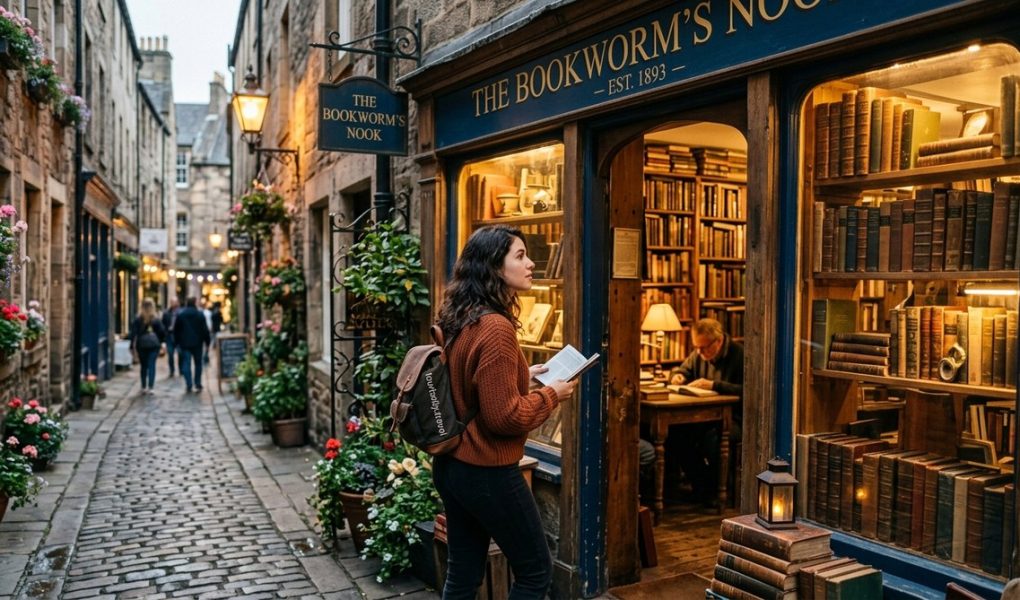
The best bookstores do not announce themselves with neon signs. They hide behind faded awnings, down narrow staircases, or on streets you would never think to walk down. You find them by accident, or you learn how to look. For travelers who crave the smell of old paper and the creak of wooden floors, finding hidden bookstores with genuine old-world charm is the closest thing to time travel. And the good news is that you can get better at finding them. Every city has at least one. You just need to train your eye, trust your instincts, and know where to point your feet.
Hidden bookstores with old-world charm exist in nearly every city. You just need to know how to find them. This guide shares a practical method for uncovering these gems, from reading neighborhood clues to asking the right questions. You will learn to spot the signs of a truly special shop and avoid traps that promise charm but deliver nothing. Your next literary adventure starts right here with techniques that work wherever you choose to travel.
What Makes a Bookstore Feel Like a Time Machine
A hidden bookstore does not need a grand facade to transport you. It needs atmosphere, history, and a sense that the place has been left alone for decades. The best ones feel like they belong to another century. The lighting is warm and uneven. The floorboards dip under your weight. The shelves are packed so tightly that you have to turn sideways to pass.
These shops survive because they refuse to change. They do not sell coffee mugs or literary candles. They do not have a Instagram wall. They have books, and the books have been there for a long time.
What sets a true hidden bookstore apart from a curated boutique is the absence of strategy. Nothing is arranged for a photo. The chaos is honest. You might find a first edition of a forgotten novel sitting next to a travel guide from 1972. That mix is the magic. It tells you that the shop has lived a life.
If you want to feel that shift in time, you have to look for places that have not been renovated, rebranded, or redesigned for the modern customer. You want the shop that looks exactly as it did when it opened forty years ago.
How to Find Hidden Bookstores in Any City
Finding hidden bookstores is a skill, and like any skill, it follows a repeatable process. Use these steps the next time you visit a new city, and you will walk into a place that feels yours alone.
-
Start with the oldest neighborhood in the city. New buildings host new shops. Old neighborhoods have old storefronts, and old storefronts sometimes still hold original tenants. Walk the streets that existed before the city grew around them. In Paris, that means the Left Bank. In London, it means Bloomsbury or the backstreets of Marylebone. In Boston, it means Beacon Hill. The age of the street is a clue.
-
Ask a local writer, librarian, or used book dealer. Do not ask a hotel concierge. They will send you to the most famous shop in town. Instead, find a local library and ask a librarian who has lived in the city for twenty years. Go to a university and ask a literature professor. Visit a used record store and ask the owner. People who love physical media always know where the good bookshops are hiding.
-
Search for specific terms instead of generic ones. When you open your phone, do not search “bookstore near me.” That pulls up chain stores and popular spots. Search for “used books,” “rare books,” “antiquarian books,” or “independent bookshop.” These terms filter for the kind of place you want. You can also search for “secondhand books” plus the name of the oldest neighborhood you identified in step one.
-
Walk streets that have no tourist attractions. This is the hardest step because it requires time. You have to wander without a destination. Look for streets with a single coffee shop, a barber shop, and a hardware store. Those streets still serve local life. A hidden bookstore often sits among them, unmarked, waiting for someone who is actually paying attention.
-
Go inside when you see a sign that looks hand painted. If the lettering is faded, the paint is chipped, and the window display has not been changed since the 1980s, push the door open. That sign is a signal. It means the owner does not care about trends. They care about books. That is exactly the kind of person who runs a shop you want to find.
Signs You Have Found a True Hidden Gem
Once you step inside a potential find, you will know within thirty seconds whether it is the real thing. Here are the signs that tell you the shop has genuine old-world character.
- The floor creaks in multiple places and the sound is not staged.
- Books are stacked on the floor, on windowsills, and on the steps of a staircase.
- The owner or clerk looks up when you enter but does not try to sell you anything.
- There is a cat. Not as a gimmick. Just a cat that lives there.
- The smell is a mix of paper dust, old cloth, and wood polish.
- You see titles you have never heard of by authors you have never read.
- The shop has a section labeled “Local History” that includes books from the 1800s.
- Lightbulbs are mismatched. Some fixtures are empty. The place is not trying to impress you.
If you check three of these, you have found a good spot. If you check five or more, you have found a place that will stay with you long after you leave.
Techniques to Use and Traps to Avoid
Even experienced book hunters can fall into common patterns that lead to disappointment. The table below separates the techniques that work from the mistakes that waste your time.
| Technique That Works | Mistake to Avoid |
|---|---|
| Ask locals for their favorite used bookstore | Asking for the “best” bookstore, which usually points to a tourist magnet |
| Walk through residential neighborhoods at midday | Sticking to main commercial streets where rent forces shops to go chain |
| Look for shops with no website or social media presence | Assuming a lack of online footprint means the shop is closed |
| Visit on weekday afternoons when owners are free to chat | Going on weekends when shops are packed and staff have no time |
| Talk to the owner and ask how long the shop has been open | Browsing silently and leaving without a conversation or a purchase |
The pattern here is clear. Hidden bookstores reward patience, curiosity, and a willingness to slow down. The more you treat the search as part of the experience, the better your results will be.
Insights from a Lifelong Book Hunter
I once met a man in Edinburgh who had been selling rare books from the same basement for forty seven years. His shop had no sign above ground. The only way to find it was through a narrow alleyway that most people walked past without noticing. I asked him how he stayed in business.
“People find me when they need to find me. I do not advertise because I do not want customers who are in a hurry. I want people who are willing to go down a dark staircase to find something they did not know they were looking for. That is the whole point of a bookshop.”
He told me that the best hidden bookstores are not hidden on purpose. They are hidden because the owner never thought about being found. They just opened a shop and stayed. That advice changed how I look for bookstores. I stopped searching for curated lists and started searching for owners who never left.
Making Time for Bookstore Hunting on Any Trip
You do not need a full day to find a great hidden bookstore. You just need to build the search into your existing plans.
Start your morning in an old neighborhood instead of a new one. Have coffee at a local cafe and then walk two blocks in any direction away from the main square. Give yourself thirty minutes to wander before you check your map. That unstructured time is when you will spot the hand painted sign or the basement window full of stacked books.
If you are traveling with a partner or family, make a game of it. Each person picks a street to walk. The first person to spot a promising shop gets to choose where you eat lunch. The stakes are low, but the motivation works.
You can also use the last hour of daylight. Shops that have been around for decades often have warm light spilling onto the sidewalk. That glow is easy to spot when the sun starts to go down. Follow it.
For more ideas on uncovering the kind of places that exist outside the guidebooks, take a look at our guide to finding forgotten historical sites before they go viral and our collection of secret urban oases you can actually visit. Both follow the same philosophy of looking where others do not.
What to Do When You Walk Inside
You found the shop. The door is heavy. The bell above it rings with a sound you have not heard in years. Now what?
Take a breath. Do not pull out your phone. Do not start photographing the shelves. The worst thing you can do is treat a hidden bookstore like a set piece.
Walk slowly. Run your finger along the spines. Pull out anything that catches your eye, even if the cover is ugly. Some of the best books have the worst covers.
When you are ready, talk to the person behind the counter. Tell them you are visiting from out of town. Ask them what they have been reading. Ask them if they have a favorite section. Most owners of hidden bookstores are hungry for real conversation. They spend their days surrounded by quiet. A genuine question can open a dialogue that leads to a recommendation you will remember for years.
Buy something. Even if it is a cheap paperback you will finish on the plane. The act of buying tells the owner that their shop matters. It also ensures the shop stays open for the next traveler who walks down that dark staircase.
Your Next Chapter Awaits
Hidden bookstores are not relics of the past. They are still open, still lit by warm bulbs, still waiting for someone to push through the door. The only thing that has changed is that fewer people know how to find them.
You now have the method. Start with the oldest neighborhood. Ask a local who reads. Search for the right terms. Walk the streets that have no reason to be walked. Look for faded signs and creaky floors. When you find the right shop, slow down and stay a while.
Pack a light bag, leave room in your suitcase for a few paperbacks, and make the search part of your trip. The shops are out there. They have been waiting longer than you know.