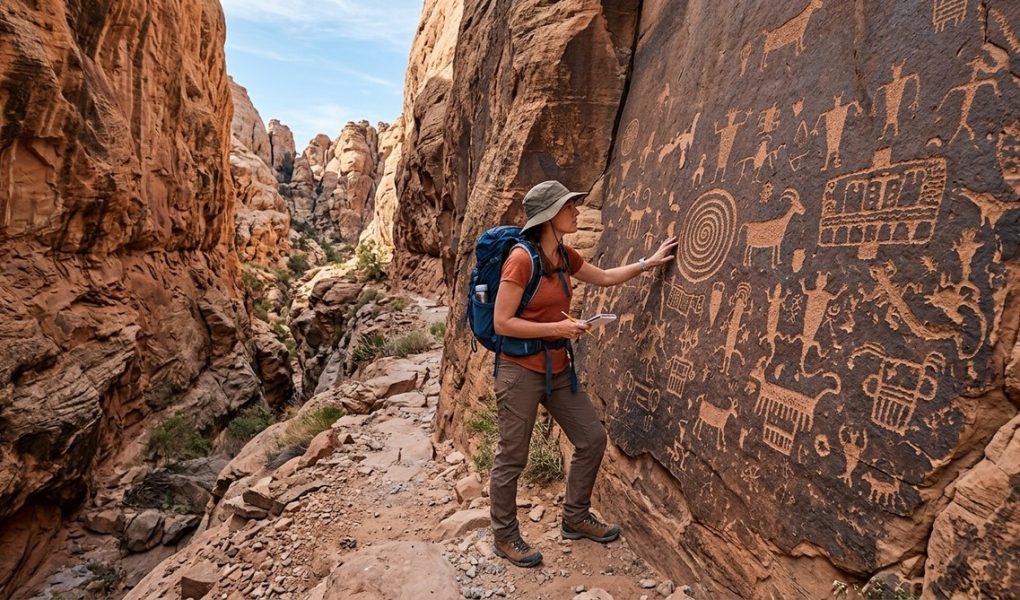
The sun hangs low over the red rock, casting long shadows across a canyon floor where no one else is hiking. You round a corner and there, on a dark varnished wall, a spiral, a bighorn sheep, a human figure with raised hands. These are ancient petroglyphs, carved by people who lived here a thousand years ago. Finding them in the most remote canyons of the American Southwest takes planning, patience, and respect. But the reward is a direct connection to the past.
Ancient petroglyphs hide in the Southwest’s most remote canyons, far from tourist crowds. Success requires good maps, proper gear, and a respectful approach. This guide walks you through how to find them safely, what to bring, and how to protect these fragile treasures so future hikers can enjoy them too.
Understanding the Ancient Art
Petroglyphs are images carved into rock by removing the dark desert varnish. They are different from pictographs, which are painted onto stone. The Ancestral Puebloans, Fremont, and other indigenous groups created these symbols for ceremonies, storytelling, and marking territories. In remote canyons, you will often see spirals, animals, handprints, and geometric patterns.
These sites are fragile. A single touch can accelerate erosion. Oils from your skin darken the rock and make the carvings harder to see over time. Treat every panel as if it were a museum piece, because it is.
How to Find Petroglyphs in Remote Canyons
Finding these ancient symbols requires more than a random hike. You need to know where to look and how to read the landscape. Here is a step by step process that will improve your chances of success.
-
Start with documented sites on public land. The Bureau of Land Management and National Park Service manage thousands of petroglyph sites across Utah, Arizona, New Mexico, and Colorado. Look for areas that are open to the public but off the main roads. Places like Nine Mile Canyon in Utah or the Puerco River area in Arizona have dense concentrations.
-
Use topo maps and satellite imagery. Remote canyons often have no trails. Study USGS quad maps and Google Earth to find canyon systems that lead to known rock art. Look for east or south facing walls. Ancient artists often chose surfaces that caught the morning or afternoon sun.
-
Walk the canyon bottoms and look for dark varnished panels. Petroglyphs are usually carved into vertical sandstone faces that have a dark reddish brown patina. Focus on areas near water sources, overhangs, or ledges where people might have camped. A pair of binoculars helps spot high panels.
-
Go during the golden hours. Early morning and late afternoon light makes carvings stand out. The low angle creates shadows that reveal the incised lines. Avoid hiking at noon when the sun flattens the contrast.
-
Ask at local ranger stations or visitor centers. Many remote sites are not marked on maps to prevent vandalism. Rangers can point you to less visited locations without blowing up the secret.
-
Travel with a partner. Remote canyons mean no cell service and limited rescue options. A hiking partner keeps you safe and adds another set of eyes for spotting art.
Essential Gear for the Search
Packing the right equipment makes the difference between a frustrating day and a successful hunt. Here is what you need.
- Lightweight daypack with water (at least one gallon per person for full day hikes).
- Topographic map and compass or GPS device. Phone batteries die in remote areas.
- Hiking poles for stability on loose talus slopes.
- Binoculars to inspect high cliff faces without climbing.
- Camera with zoom lens to document panels without touching them.
- Field guide to Southwest rock art styles for identifying symbols.
- Sun protection including hat, sunglasses, and long sleeve shirt.
- First aid kit and personal locator beacon for true wilderness.
Petroglyph Etiquette: Do’s and Don’ts
Respecting these cultural sites ensures they remain for future generations. The table below summarizes what to do and what to avoid.
| Do | Don’t |
|---|---|
| Keep a distance of at least 3 feet from the rock surface | Touch or lean against petroglyph panels |
| Photograph with natural light only | Use chalk, water, or rubbing to enhance visibility |
| Stay on established paths or dry washes | Climb on or near fragile rock art |
| Report vandalism to land management agencies | Move rocks or disturb archaeological debris |
| Leave the site exactly as you found it | Take souvenirs or make your own carvings |
Top Remote Canyons for Petroglyph Hunting
Not all canyons are created equal. Some offer high densities of rock art with fewer visitors. Here are a few that reward the adventurous.
- Nine Mile Canyon, Utah. This 46 mile long canyon holds thousands of panels. Many are visible from the main road, but the remote side canyons require hiking. The Fremont culture left extensive galleries here.
- Canyon del Muerto, Arizona. Part of Canyon de Chelly National Monument, this remote canyon requires a permit and a guide from the Navajo Nation. The petroglyphs line the cliffs near ancient dwellings.
- Comb Ridge, Utah. The Butler Wash area has a famous panel called the Procession Panel. The hike is short but the surroundings are isolated and stark.
- Puerco River Valley, New Mexico. The Galisteo Basin and nearby canyons hold thousands of petroglyphs from the Puebloan period. Many are on BLM land and see light traffic.
- Labyrinth Canyon, Utah. Deep in the San Rafael Swell, this canyon demands backcountry navigation skills. The reward is untouched rock art in a silent landscape.
“The most important thing is to go with an open mind and a sense of humility. These carvings are not decorations. They are messages from people who had a deep relationship with this land. Stand still and listen.” — Rick T., archaeologist and guide in Moab, Utah
Challenges You Will Face in Remote Canyons
Finding ancient petroglyphs in remote canyons is not a casual day trip. The terrain is rugged, the weather can change fast, and navigation is demanding. Flash floods in narrow canyons can be deadly. Check forecasts before you go and never hike if rain is predicted in the watershed. Summer heat in June, July, and August can exceed 100 degrees. Spring and fall offer the best conditions.
Another challenge is knowing when you have found a genuine site versus a modern imitation. Look for deep peck marks that have re patinated to match the surrounding rock. Authentic petroglyphs will feel part of the stone. If the carving looks fresh or has light colored edges, it is likely modern.
Preserving the Stories for Future Generations
Every time you step into a remote canyon, you become a steward of these ancient messages. The people who made these petroglyphs did not carve them for tourists. They carved them as expressions of their world. By treating the sites with care, you help keep that connection alive.
After your trip, consider sharing your experience with a local tribe or cultural center. Many tribes offer educational programs that explain the meanings behind the symbols. Your visit can also support conservation efforts through donations to organizations like the Archaeological Conservancy.
The canyons of the Southwest hold secrets that no book can capture. The only way to understand them is to walk the same paths, feel the same sun, and look up at the same stories written in stone. Pack your bag, grab a map, and go find those ancient petroglyphs in the remote canyons. The silence and the symbols are waiting.