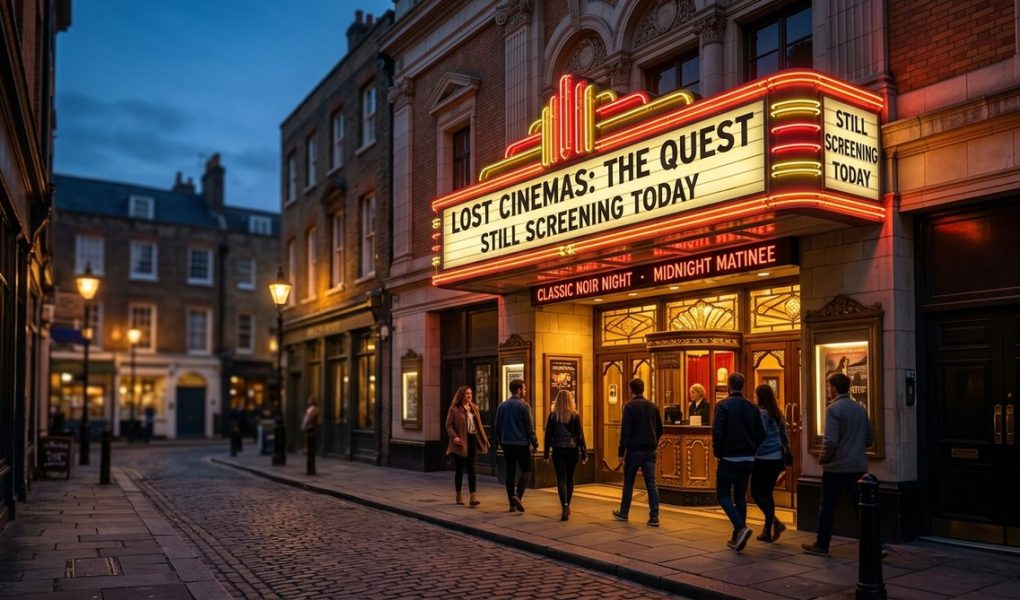
The smell of buttered popcorn hits you before you even reach the ticket booth. The marquee buzzes with hand-placed letters spelling out a double feature. Inside, red velvet curtains part as a Wurlitzer organ rises from the orchestra pit. This is not a museum. This is a movie theater that has been showing films continuously since 1926. And you can still buy a ticket tonight.
These places are vanishing faster than 35mm film stock. But a dedicated network of preservationists, small towns, and film lovers have kept the projectors rolling. For anyone who believes cinema is more than a streaming queue, tracking down these living relics has become a travel mission worth taking.
For film lovers and travelers who crave more than a multiplex experience, these historic theaters offer a tangible connection to cinema’s golden age. From restored movie palaces to neighborhood cinemas that never closed, each location preserves the ritual of watching films as it was meant to be. This guide helps you find, plan visits, and appreciate these surviving treasures before they fade away. Step back and enjoy the show.
Why These Theaters Matter More Than Ever
The average American movie theater today looks like a beige box with 14 screens and a sticky floor. But the vintage movie theaters still open across the country offer something a streaming service never can: a sense of occasion.
Walking into the Fox Theatre in Atlanta or the Castro Theatre in San Francisco feels like entering a cathedral built for storytelling. The architecture alone is worth the trip. Spanish Colonial Revival, Art Deco, Egyptian Revival. These buildings were designed to transport you before the film even started.
And they are not all grand palaces. Some are single-screen neighborhood houses that survived by showing second-run films for three dollars. Others became nonprofit art houses that screen obscure 35mm prints you will not find anywhere else.
What they share is a commitment to the communal experience of watching a movie with strangers in the dark.
Where to Find Them: A Snapshot of Living History
The best vintage movie theaters still open tend to cluster in three types of places: downtown districts that avoided urban renewal, college towns with strong preservation instincts, and small rural communities where the theater remains the only show in town.
Here is a sample of what is still running in 2026:
| Theater | Location | Year Built | What Makes It Special |
|---|---|---|---|
| Fox Theatre | Atlanta, GA | 1929 | Mighty Mo organ still rises for weekend shows |
| Castro Theatre | San Francisco, CA | 1922 | Spanish Colonial exterior, Wurlitzer, singalongs |
| Music Box Theatre | Chicago, IL | 1929 | Hand-painted ceiling, single-screen, 35mm series |
| Senator Theatre | Baltimore, MD | 1939 | Art Deco landmark, original marquee, nonprofit run |
| Hollywood Theatre | Portland, OR | 1926 | Restored neon, rare film prints, community owned |
| Tivoli Theatre | Downers Grove, IL | 1928 | French Renaissance style, balcony seating, live organ |
| Egypt Theatre | DeKalb, IL | 1929 | Egyptian Revival, original projectors, college town hub |
| Sunset Theatre | Asheboro, NC | 1929 | Small town survivor, still shows first-run for $5 |
Each of these locations runs regular screenings. You can check their schedules online and buy tickets the old fashioned way: at the box office.
How to Plan a Visit to a Vintage Theater
A trip to a historic cinema takes a little more thought than checking showtimes on your phone. Here is a practical process to make sure you get the full experience.
-
Check the calendar for special events. Many of these theaters host silent films with live organ accompaniment, 35mm festivals, or 70mm screenings. Those experiences are the real draw. A random Tuesday showing of a new release might not use the original projection equipment at all.
-
Arrive at least 30 minutes early. The magic is in the details. The lobby, the murals, the chandeliers, the usher uniforms. Give yourself time to walk around before the lights dim.
-
Sit in the balcony if one exists. The balcony offers the best view of both the screen and the architecture. In many old theaters, the ceiling paintings are only visible from above.
-
Ask about the projection booth. Some theaters offer tours before screenings. Others have small museum displays in the lobby. The staff at these places love talking about their equipment.
-
Buy a souvenir. A vintage-style poster, a bag of popcorn in a commemorative tin, or even a ticket stub from the original dispenser. These make great mementos of your visit.
If you are building a longer trip around these theaters, consider pairing them with other cultural stops. The same downtown districts that saved their old cinemas often have excellent diners, record stores, and independent bookshops within walking distance.
What to Look For in a True Vintage Experience
Not every old building that shows movies qualifies as a true vintage theater. Some have been gutted and retrofitted with modern multiplex seating and digital projectors. That is fine for comfort, but it is not what we are chasing.
Here are the signs you have found an authentic survivor:
- Original marquee with manual letter boards
- A single screen (or at most two)
- Fabric seats, not recliners with cupholders
- A balcony that is still in use
- Live organ performances before select shows
- 35mm or 70mm projection capability
- Historic neon signage outside
- An old school ticket booth
None of these features are required. But each one adds to the feeling that you have stepped into a different era.
Some theaters have been lovingly restored down to the last light fixture. Others show their age with peeling paint and worn carpet. Both versions have their own charm. The ones that look a little rough around the edges often feel the most honest.
The People Keeping the Projectors Running
“We are not just showing movies. We are keeping a ritual alive. When the lights go down and the curtain parts, the audience becomes part of something bigger than themselves. That feeling cannot be streamed.”
That is what a longtime projectionist at the Hollywood Theatre in Portland told me during a visit. He has been running film through that booth for over 25 years. He knows every splice, every cue mark, every spot where the print tends to jump.
These theaters survive because of people like him. Volunteers who restore old seats on weekends. Donors who fund new HVAC systems so the building can stay open. Local families who still make Friday night movies a tradition.
If you want to support them, the most direct way is to buy a ticket and show up. But you can also become a member, donate to restoration funds, or spread the word about their programming.
Many of these theaters are nonprofits. They operate on thin margins. A good season can keep them running for another year. A bad one can force them to close for good.
How to Spot Theaters Before They Disappear
Some of the best vintage movie theaters still open in 2026 were nearly demolished at least once. The Fox Theatre in Atlanta was slated for destruction in the 1970s before a preservation campaign saved it. The Senator Theatre in Baltimore filed for bankruptcy in 2019 and was rescued by a nonprofit.
Others are not so lucky. Hundreds of historic cinemas have already been converted into churches, gyms, or retail spaces. The clock is ticking on many that remain.
If you want to visit before they vanish, focus on these indicators:
- Theaters still showing film rather than all-digital
- Buildings listed on the National Register of Historic Places
- Locations that host annual film festivals or revival series
- Theaters operated by nonprofit preservation groups
- Small town cinemas that have been run by the same family for decades
When you find one of these, go soon. And when you go, bring someone who has never experienced it before.
Pairing a Theater Trip with a Broader Journey
A pilgrimage to a vintage cinema works well as the centerpiece of a larger travel route. Many of these theaters sit in downtowns that are worth exploring on their own.
Think about combining a visit to the Hollywood Theatre in Portland with a weekend spent walking through the city’s bookstores and food carts. Or plan a stop at the Fox Theatre in Atlanta on a road trip through the South.
For travelers looking for guidance on building a full itinerary around unique cultural destinations, check out our guide to finding forgotten historical sites before they go viral. The same instincts apply to movie theaters.
And if you are planning a longer trip, consider slow travel itineraries that let you spend real time in each place. Rushing between cities means missing the small town theaters that often hold the most character.
A Few More Gems Worth the Detour
Beyond the famous landmarks, there are smaller theaters that deserve attention:
-
The Sunset Theatre in Asheboro, North Carolina. Built in 1929, this single-screen theater still shows current releases for five dollars. The neon sign out front lights up Main Street every night.
-
The Egypt Theatre in DeKalb, Illinois. Operated by a nonprofit, this Egyptian Revival gem runs classic film series and live events. It is a perfect stop on a drive between Chicago and the Mississippi River.
-
The Tivoli Theatre in Downers Grove, Illinois. A French Renaissance style building with a full balcony and a working organ. It has been continuously operated as a movie theater since 1928.
-
The Music Box Theatre in Chicago. One of the last truly independent single-screen theaters in a major American city. They run 35mm series that film buffs travel across the country to attend.
Each of these locations has its own personality. The staff at the Music Box will talk your ear off about film grain and aspect ratios. The volunteers at the Egypt Theatre will show you the original projectors in the basement. The Sunset Theatre still sells candy from a glass case near the door.
Your Next Show Starts Soon
The vintage movie theaters still open today represent something fragile and worth protecting. They are not just buildings. They are gathering places where communities have laughed, cried, and gasped together for generations.
Pick one near you, or plan a trip around one farther away. Buy a ticket. Sit in a seat that has held thousands of people before you. Watch a movie the way it was meant to be seen: on a big screen, in a dark room, with strangers who all decided to leave their phones in their pockets for two hours.
The popcorn might be a little salty. The seats might creak. The print might have a scratch or two. That is the whole point.
Go see a movie tonight. At a place where movies still matter.