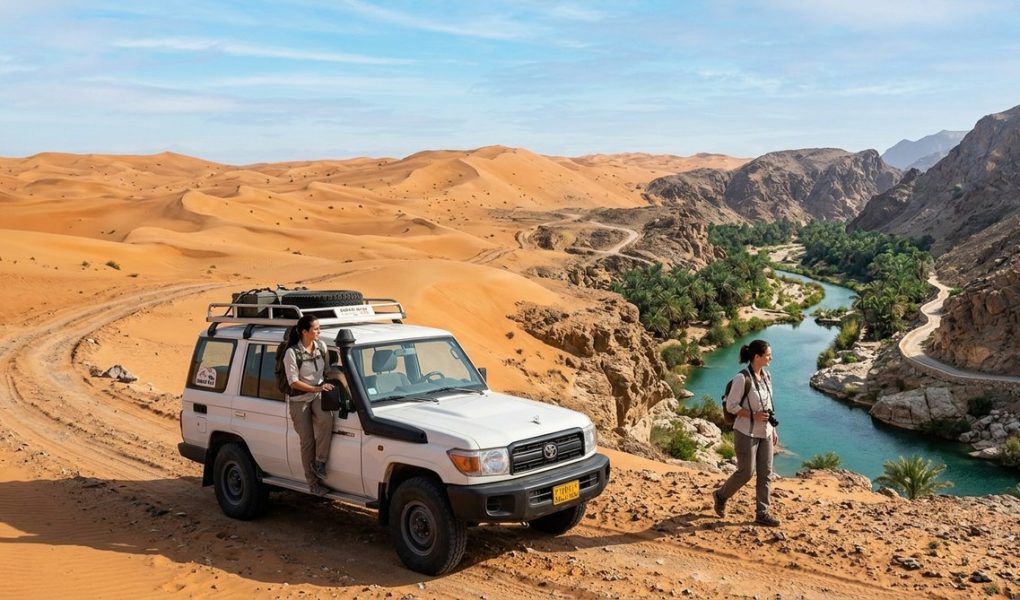
The first time I drove a 4×4 over a ripple of Omani sand, with the sun dropping like a copper coin behind the Wahiba Sands, I understood why so many travelers hire a guide. The desert is vast. The wadis twist into canyons that look identical on a map. But here is the truth: you do not need a tour group to experience the magic of Oman’s deserts and wadis. You need preparation, the right vehicle, and a willingness to slow down. I spent ten days driving myself across the country, got stuck in sand exactly once, and discovered swimming holes so hidden that even my offline map did not label them. This guide will show you exactly how to plan your own self-guided trip, save money, and stay safe while doing it.
Exploring Oman’s deserts and wadis without a tour group is not only possible, it is deeply rewarding. You will need a high-clearance 4×4, offline navigation apps, advance permits for certain wadis, and a solid understanding of flash flood safety. The payoff is total freedom: you choose your pace, camp under stars without a crowd, and discover places most package tours skip entirely.
Why Skip the Tour Group in Oman
Tour groups in Oman serve a purpose. They handle logistics, provide drivers, and keep you on a schedule. But they also limit your flexibility. A guided tour of Wahiba Sands usually stops at a commercial desert camp where dinner is served at 7 p.m. sharp and camels are tied to a post for photo ops. On your own, you can drive deeper into the dunes, find a quiet spot to lay out a blanket, and watch the stars without a single headlamp ruining your view.
The same applies to wadis. Group tours visit the famous ones like Wadi Shab and Wadi Bani Khalid. Those are stunning, no question. But independent travelers can reach lesser-known wadis like Wadi Tiwi or Wadi Damm, where the water is just as turquoise and the crowds are absent. Going without a tour group also cuts your daily cost by about 40 to 60 percent, depending on how you camp versus stay in hotels.
What You Need Before You Go
Before you point a rental car toward the desert, you need three things sorted: the right vehicle, the right permits, and the right mindset.
The Vehicle
Rent a 4×4 with high clearance. Not an SUV with all-wheel drive. A proper 4×4 like a Toyota Land Cruiser, Nissan Patrol, or a similar model with low-range gearing. Most rental agencies at Muscat International Airport offer these. Book in advance and confirm you are getting a true 4×4, not a crossover. I recommend checking reviews on sites like Rentalcars.com and looking for agencies that explicitly mention “desert-ready” vehicles. Avoid the cheapest option; a breakdown in the desert is expensive and stressful.
Permits and Regulations
Some wadis require permits. Wadi Shab, for example, now limits daily visitors and you must register online before arriving. Wadi Bani Khalid is open without a permit, but parking fees apply. For desert camping in Wahiba Sands, no permit is needed, but you must camp at least one kilometer away from any settlement or road. Always check the latest rules on the Oman Ministry of Tourism website before you go.
Navigation and Communication
Cell service is spotty in wadis and nonexistent in deep desert. Download offline maps on Google Maps or Maps.me before you leave Muscat. I also carry a Garmin inReach Mini for emergencies. It costs about $300 and the subscription is $12 a month, but it lets you send SOS signals and text messages from anywhere. For a budget option, share your itinerary with someone at home and check in at each town along the way.
How to Plan Your Self-Guided Oman Desert and Wadi Trip
Follow this five-step process to build a safe and memorable itinerary.
-
Choose a base city. Most independent travelers start in Muscat for the northern wadis or in Sur for eastern access to Wadi Shab and Wadi Tiwi. If you want desert first, fly into Muscat and drive south to Bidiyah, the gateway to Wahiba Sands.
-
Book your 4×4 rental for the entire trip. Do not switch cars mid-journey. The best deals come from booking one vehicle for 7 to 10 days. Agencies like Dollar, Thrifty, and local outfit Safari Rent a Car are reliable.
-
Plan your wadi visits in the morning. Water levels are highest in the morning, and the light is best for photos. Afternoon thunderstorms can trigger flash floods, so aim to leave any wadi by 1 p.m.
-
Reserve accommodations in advance during peak season. From October to March, hotels and desert camps fill up. For camping, bring your own tent or rent a bedouin camp upon arrival. Booking.com has a wide selection of desert camps starting at $40 per night.
-
Build in buffer days. Oman is slow. Roads wind through mountains, and a 100-mile drive can take three hours. Do not try to see everything. Three wadis and one desert region is a solid week-long trip.
The Best Deserts and Wadis for Independent Travelers
Here is a shortlist of locations that work well for self-guided trips. Each one is accessible with a 4×4 and does not require a guide.
Wahiba Sands (Sharqiya Sands)
This is the desert you picture when you think of Oman: rolling orange dunes that stretch for 120 miles. You can camp anywhere, but I recommend staying at one of the smaller camps like Sama al Wasil or Thousand Nights Camp. These are affordable, serve local food, and let you sleep under a canopy of stars. During the day, drive the dunes yourself. Keep momentum on soft sand and lower your tire pressure to 18 psi for better grip.
Wadi Shab
The most famous wadi in Oman, and for good reason. The hike takes about 45 minutes each way, and the final pool ends in a cave with a waterfall. You do need a permit now, but you can buy it online for about $13. Arrive by 7 a.m. to beat the crowds.
Wadi Bani Khalid
This wadi is less of a hike and more of a swim. The main pool is deep and cool, surrounded by date palms. There is a small parking fee of about $2. You can spend a whole morning here, then drive 20 minutes to the nearby sinkhole known as Bimmah Sinkhole.
Wadi Tiwi
Adjacent to Wadi Shab but far less visited. The trail is rough and requires some scrambling, but the reward is a series of pools that few tourists find. Bring water shoes and a sense of adventure.
Jebel Shams
Not a wadi, but the highest mountain in Oman and a must for canyon views. The drive up from Al Hamra is steep but paved. At the top, you can hike the Balcony Walk, a three-hour trail that hugs the rim of Wadi Ghul, the Grand Canyon of Arabia.
Essential Gear for a Self-Guided Trip
Pack these items before you leave home or buy them in Muscat at stores like Lulu Hypermarket or Carrefour.
- A full-size spare tire and jack (confirm your rental has these)
- A tire pressure gauge and portable air compressor
- 5 gallons of drinking water per person per day
- A first aid kit with blister care and rehydration salts
- A headlamp with extra batteries
- A paper road map of Oman (these are sold at the airport)
- A power bank for charging phones
- A sunshade for the windshield
- A light sleeping bag or blanket for desert nights
- A swimsuit and water shoes for wadi hikes
Common Mistakes and How to Avoid Them
| Mistake | Why It Happens | How to Fix It |
|---|---|---|
| Driving on soft sand with full tire pressure | You assume street pressure works everywhere | Lower to 18 psi before leaving pavement |
| Starting a wadi hike after 2 p.m. | You underestimate afternoon flash flood risk | Enter any wadi before 10 a.m.; leave by 1 p.m. |
| Relying on cell service for navigation | Google Maps works offline only if you download first | Download entire Oman region on Wi-Fi in Muscat |
| Booking the cheapest 4×4 rental | You save money upfront but risk a breakdown | Pay $10 more per day for a trusted agency |
| Camping too close to a road | You want convenience but lose the desert silence | Drive at least 15 minutes into the dunes before stopping |
Staying Safe: Flash Floods, Sand Driving, and Heat
“The number one rule in Oman’s wadis is simple: if you hear thunder, leave immediately. Do not wait to see water. A flash flood can travel from a storm miles away and fill a dry canyon in under two minutes.” This advice came from an Omani ranger I met at Wadi Shab, and it has stuck with me ever since.
Flash floods kill travelers every year in Oman. Check the weather forecast for the entire region before you enter any wadi. The Oman Directorate General of Meteorology publishes daily flood risk maps online. If the risk is moderate or high, skip the wadi and head to the desert instead.
Sand driving requires a light touch. Do not jerk the steering wheel. Do not slam the brakes. If you feel the wheels spinning, ease off the gas and steer straight. If you get stuck, dig the sand away from the tires with a small shovel (keep one in your trunk), place a traction mat or piece of carpet under the tires, and gently rock the car forward and backward.
Heat is a real concern from May to September. During those months, travel only in the early morning and late afternoon. Carry at least one gallon of water per person per day, more if you plan to hike. Wear a wide-brimmed hat and long sleeves, even if it feels hot. The sun in Oman is unforgiving.
A Sample 7-Day Self-Guided Itinerary
This route covers the best of both worlds: three wadis and two desert nights. It is paced for independent travelers who want to drive themselves without feeling rushed.
- Day 1: Arrive in Muscat. Pick up your 4×4 at the airport. Stock up on water and snacks at Lulu Hypermarket. Drive to the suburb of Al Khuwayr for dinner at a local grill.
- Day 2: Drive 90 minutes south to Wadi Shab. Arrive by 7 a.m. Hike and swim until noon. Then drive to Sur (45 minutes) and spend the night at Sur Hotel or a traditional dhow-building workshop.
- Day 3: Morning drive to Wadi Bani Khalid (1.5 hours). Swim and picnic. Afternoon drive to Bidiyah (1 hour) and check into a desert camp.
- Day 4: Full day in Wahiba Sands. Drive the dunes yourself, visit a bedouin family if invited, and camp at a different spot tonight.
- Day 5: Drive to Nizwa (2 hours). Visit the Nizwa Fort and the Friday livestock market if it is a Friday. Stay at a guesthouse in the old quarter.
- Day 6: Drive up to Jebel Shams (1.5 hours). Hike the Balcony Walk. Stay at the Jebel Shams Resort or camp near the rim.
- Day 7: Return to Muscat (2.5 hours). Stop at the Bimmah Sinkhole on the way. Drop off the rental car and fly out.
Your Omani Adventure Awaits
Planning your own Oman desert wadi without tour group takes a little extra work upfront. You need to research routes, check permits, and pack smarter than you would for a guided trip. But the reward is a journey that belongs entirely to you. You will swim in pools that tour buses cannot reach. You will sleep on sand that no headlights have touched. And you will drive away knowing you did it on your own terms.
If you are looking for more inspiration for independent travel, read our guide on how to plan a solo backpacking trip to the most remote US national parks or discover why learning basic phrases transforms your travel experience. For another desert adventure that does not require a tour group, check out the perfect 7-day Moroccan desert adventure for first-time visitors.
Now go book that 4×4. Pack your water shoes. And drive into the dunes with confidence.