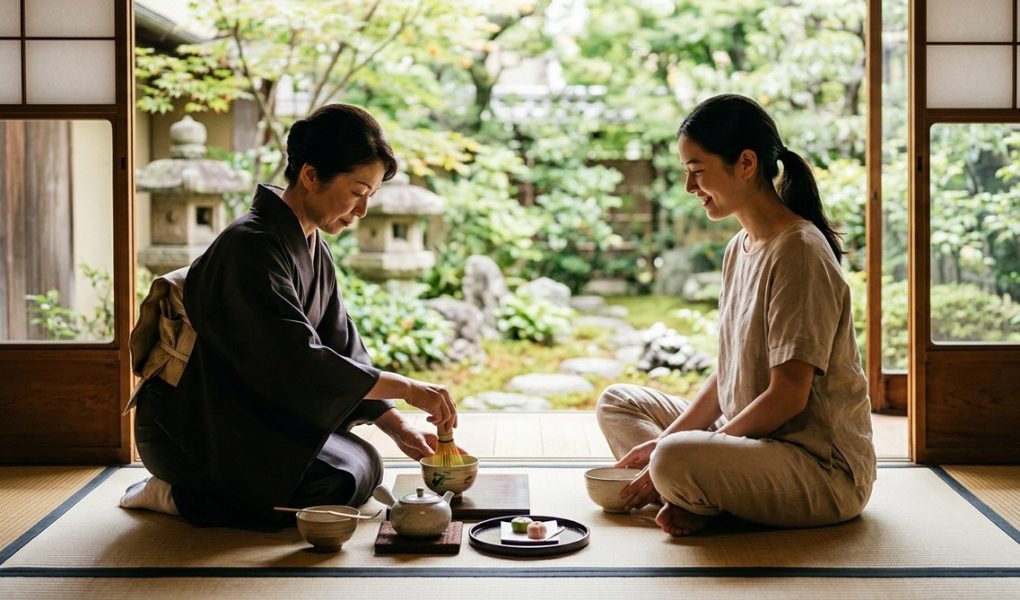
You have probably felt it. The irritation of a slow loading page. The urge to skip a song after 10 seconds. The way your leg bounces during a lull in conversation. Modern life trains us to speed up. But there is one ancient practice that calmly asks you to do the opposite. A traditional tea ceremony, whether Japanese chanoyu or Chinese gongfu cha, is a masterclass in patience. And the connection it creates with yourself and others might just be the antidote your busy mind needs.
A traditional tea ceremony is not about drinking tea. It is a deliberate practice of slowing down. By following precise, unhurried steps, you learn to sit with discomfort, notice small details, and truly be present. This patience opens the door to genuine human connection, because when you are not rushing, you can actually see the person across from you.
The Quiet Power of a Slower Pace
Think about the last time you sat with someone and did nothing else. No phones. No TV. No agenda. It feels awkward at first, right? That is because we have lost the muscle for stillness. A traditional tea ceremony rebuilds that muscle one deliberate movement at a time.
The Japanese tea ceremony, known as chanoyu, can last up to four hours for a formal gathering. The host uses a prescribed set of motions for everything. How to rinse the ladle. How to fold the cloth. How to whisk the matcha. Each action is intentional. Nothing is rushed. For someone used to multitasking, this can feel agonizingly slow. But as you surrender to the rhythm, something shifts. Your breathing steadies. Your thoughts quiet. You start to notice the warmth of the bowl, the scent of the tea, the soft light in the tearoom.
This is patience in its purest form. Not waiting for something to end, but actively participating in the moment as it unfolds.
What Happens During a Traditional Tea Ceremony?
If you attend a formal tea ceremony for the first time, you might feel lost. That is okay. The structure is designed to ground you, not confuse you. Here is a simplified version of the main stages, numbered to help you follow along:
-
Entering the tearoom: Guests enter through a low doorway called a nijiriguchi. This tiny entrance forces everyone to bow, leaving status and ego outside. You kneel on tatami mats and admire the scroll or flower arrangement placed in the alcove.
-
Purification: The host cleans the tea utensils in front of the guests using a silk cloth, a bamboo ladle, and a pottery water jar. Every wipe is slow and precise. This is not just hygiene. It is a meditation.
-
Preparing the tea: The host scoops matcha powder into the tea bowl, adds hot water from a cast-iron kettle, and whisks it in a brisk M or W motion until frothy. The host then rotates the bowl toward the guest.
-
Receiving the tea: The guest bows, takes the bowl with the right hand, places it in the left palm, and rotates it away from the lips before drinking. You sip slowly, three times, then wipe the rim and admire the bowl.
-
Returning the bowl: After finishing, you pass the bowl back, and the host cleans it again. The ceremony ends with a final bow.
Each step is a lesson in patience. You cannot skip ahead. You cannot check your phone. You cannot rush the host. You simply have to be there.
How Patience Becomes a Teacher
Sitting through a tea ceremony for the first time, you might feel a spike of restlessness. That is natural. But if you stay present, the restlessness begins to release. Here are a few specific lessons in patience that the ceremony teaches:
- Waiting without distraction: In a ceremony, you are not allowed to talk except at designated moments. You sit in silence and watch. That silence is where patience grows.
- Accepting imperfection: The tea bowl might be slightly asymmetrical. The whisk might click against the side. In chanoyu, these imperfections are celebrated as wabi-sabi. You learn to accept what is, instead of demanding flawless efficiency.
- Focusing on one thing at a time: The host never multitasks. They finish one movement before starting the next. You mirror that focus as an observer. This trains your brain to resist the urge to jump ahead.
- Letting go of control: When you are the guest, you have no say in how fast things happen. You surrender to the host’s timing. For a Type A personality, this is a very gentle form of surrender.
- Noticing small details: Patience is not passive. It is active attention. You start to see the pattern in the tatami edge, the steam rising from the kettle, the slight smile on the host’s face. That noticing is a reward in itself.
The Art of Connection: More Than Just Sharing Tea
Why does patience lead to deeper connection? Because connection requires presence. You cannot truly connect with someone when your mind is already on the next thing. The tea ceremony removes that barrier.
| Aspect | Typical social interaction | Tea ceremony interaction |
|---|---|---|
| Pace | Fast, often overlapping speech or multitasking | Slow, with deliberate pauses and silence |
| Attention | Divided between people and screens | Fully focused on the tea and the other person |
| Communication | Verbal, sometimes superficial | Nonverbal and ritualized: gestures, bows, shared appreciation |
| Outcome | Task completion or information exchange | Shared presence and mutual respect |
| Pressure on host | Expected to entertain or produce quick results | Encouraged to be unhurried and mindful |
In a tea ceremony, the host and guest exchange no words about the weather or work. Instead, they share the experience of a single bowl. The host shows care through every wipe and pour. The guest shows respect by observing and tasting fully. This is connection without chatter. It is a reminder that sometimes the deepest conversations happen in silence.
Common Mistakes Beginners Make
If you decide to try a tea ceremony, either as a participant or by learning to host a simple one at home, you will probably bump into a few of these pitfalls. The table below outlines the most common mistakes and how to handle them.
| Mistake | Why it happens | How to correct it |
|---|---|---|
| Fidgeting or shifting knees | Discomfort from seiza (kneeling) | Ask for a small cushion. It is okay to adjust slowly; just do it mindfully. |
| Grabbing the bowl with two hands | Habit of handling things quickly | Use the prescribed one-hand rotation. Practice at home with an empty bowl. |
| Drinking too fast | Thirst or nerves | Sip only three times, pausing between sips. Let the tea linger. |
| Checking the phone | Boredom or fear of missing something | Leave your phone outside the tearoom. If you must keep it, turn on silent and ignore it. |
| Talking too much | Urge to fill silence | Follow the host’s lead. Silence is part of the ceremony. Enjoy it. |
Expert Advice: What Longtime Practitioners Want You to Know
I spoke with Yuki Tanaka, a tea ceremony instructor in Kyoto who has been practicing for over 25 years. She shared this perspective on patience:
“Many people come to the tea ceremony thinking they will learn about tea. But what they actually learn is about themselves. The patience is not about waiting. It is about being willing to receive. When you rush, you close your hands. When you slow down, you open them. And that is when true connection happens. Do not try to understand everything the first time. Just let the ceremony hold you. The lessons will come.”
Her words echo something important. Patience is not a passive virtue. It is an active choice to remain open.
Bringing the Lessons Home
You do not need to travel to Kyoto to experience the benefits of tea ceremony patience. You can bring the spirit of the ceremony into your daily life. Here is a bulleted list of simple practices:
- Set a weekly tea ritual: Choose one day where you prepare tea without any other task. No music. No podcast. Just the water and the leaves.
- Practice the four principles: One guiding phrase in chanoyu is “ichi-go ichi-e,” meaning “one encounter, one opportunity.” Treat every interaction as unique and unrepeatable.
- Use a real bowl: Avoid disposable cups. The weight and feel of a ceramic bowl remind you to hold things with care.
- Wait before speaking: After someone finishes talking, count three breaths before you respond. This small pause creates space for deeper listening.
- Learn the correct whisking motion: If you use matcha, whisk in a gentle M shape, not a frantic circle. The motion itself teaches patience.
If you are planning a trip to Japan, consider attending a tea ceremony in a traditional tearoom. It is a more profound experience than a themed tour. And for that, you can look into our guide on how to explore Japan beyond Tokyo and Kyoto. You will find authentic tea experiences in places like Kanazawa, Uji, or even a rural machiya in Kyoto’s outskirts.
Another way to deepen your understanding is to integrate traditional practices into your travels. Our article on what can a local homestay teach you that no hotel can discusses how living with a local family often includes participation in daily rituals like tea. And if you are planning your first solo trip, your first solo trip to Japan includes suggestions for mindful cultural experiences.
The Lasting Gift of a Single Bowl of Tea
A traditional tea ceremony is not a performance. It is a shared act of patience. It reminds you that connection cannot be rushed. That the most valuable thing you can give someone is your full attention. And that a few minutes of slow, deliberate presence can change the entire tone of your day.
The next time you feel the urge to speed through a meal, a conversation, or even a quiet moment, remember the tea ceremony. Take a breath. Pick up your cup with both hands. Sip slowly. And see what opens up.