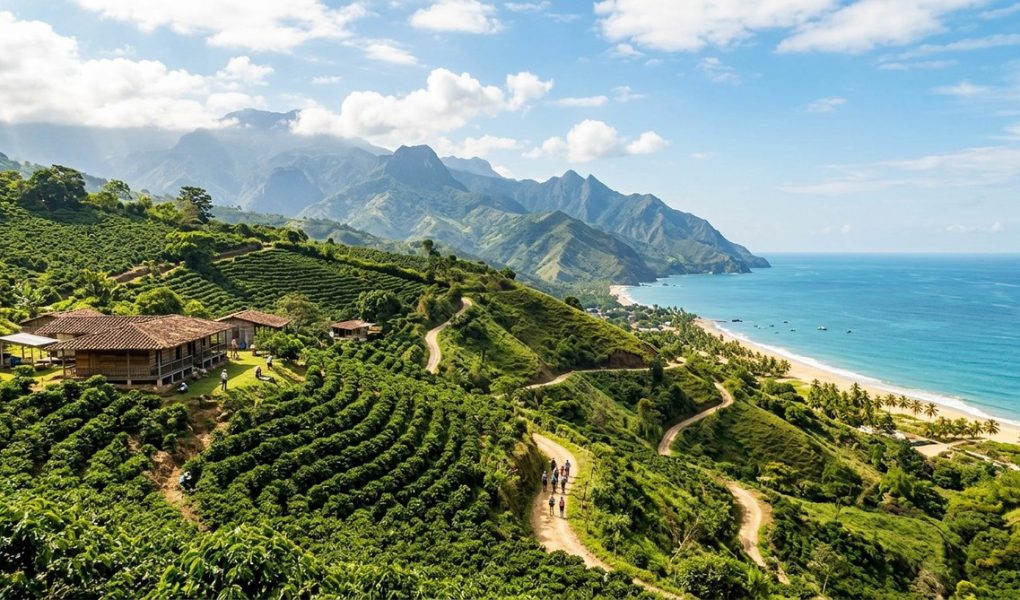
You want a trip that feels like two different countries in one vacation. One week you are hiking through misty green hillsides where coffee cherries ripen on the branch. The next you are floating in turquoise Caribbean water with a cocktail in hand. That is the magic of this Colombia 2 week itinerary Coffee Region Caribbean route. It gives you the cultural soul of the Andes and the laid back rhythm of the coast without feeling rushed.
This 14-day itinerary splits your time evenly between Colombia’s Coffee Axis and the Caribbean coast. Spend days 1 through 7 in the lush departments of Quindío and Risaralda, staying at working coffee fincas and exploring colonial Salento. Then fly from Armenia to Cartagena for days 8 through 14, splitting time between the walled city, the Rosario Islands, and the bohemian beach town of Palomino. Internal flights keep travel smooth and give you maximum time for experiences.
Why This Route Works So Well
Colombia is a country of dramatic contrasts. The Coffee Region (Eje Cafetero) sits at 4,000 to 6,000 feet elevation, where the temperature stays in the 60s and 70s year round. The Caribbean coast is hot, humid, and built for swimming. Trying to see both in one trip used to mean long bus rides. But with the new flight routes in 2026, you can fly from Armenia (AXM) to Cartagena (CTG) in about 90 minutes. That changes everything.
This itinerary is designed for travelers who want comfort without losing authenticity. You will stay at boutique fincas, eat at family run restaurants, and have enough buffer time to adapt to the pace of Colombian life.
Before You Go: Logistics and Planning
Here are the practical steps to lock in your trip before you leave home.
- Book your international flight into Bogota (BOG) or Medellin (MDE). Most US carriers fly direct to Bogota from Miami, Fort Lauderdale, New York, and Los Angeles. From Bogota, take a short 50-minute flight to Armenia.
- Reserve your internal flight from Armenia to Cartagena. Airlines like Avianca and Latam operate this route. Book at least 3 weeks ahead for the best fares.
- Arrange airport transfers in advance. Your finca or hotel can coordinate a private driver. It costs around $40 to $60 USD and saves you an hour of negotiation.
- Pack layers for the Coffee Region. Mornings can be chilly (50s), afternoons warm up (70s). Bring a light jacket and closed toe shoes for hiking.
- Download WhatsApp before you go. Every hotel, tour guide, and driver in Colombia uses it for communication.
Days 1 through 3: Salento and the Cocora Valley
Land in Armenia around midday. Your driver will take you 45 minutes up winding mountain roads to Salento, a colonial town that looks like a movie set. The streets are lined with colorful zócalos (painted baseboards) and wooden balconies overflowing with flowers.
Your home base should be a working coffee finca just outside town. Properties like Finca La Manuela or Finca La Divisa offer elegant rooms with views of the valley. You wake up to birdsong and the smell of roasting beans.
Spend your first afternoon wandering Calle Real, the main street. Stop at a roadside stand for a cup of coffee that costs less than a dollar. Visit the local market for handwoven mochilas (traditional bags) made by indigenous communities.
On day two, hire a jeep (a Willys) to take you up to the Cocora Valley. This is the land of the wax palms, Colombia’s national tree that grows up to 200 feet tall. The hike takes about 4 hours. You walk through cloud forest, cross swinging bridges, and emerge into an open valley where those impossibly tall palms stand against the sky.
“The Cocora Valley is one of those rare places where photos don’t do it justice. Stand at the base of a wax palm and look up. You will feel very small, in the best way.” — Local guide Maria Elena
For dinner, book a table at a farm to table restaurant like Brunch de Salento or a traditional trucha (trout) spot. The local specialty is trucha con patacones, fried trout with smashed plantain.
Days 4 through 5: Filandia and a Coffee Farm Experience
Many travelers skip Filandia and head straight from Salento to the next stop. Do not make that mistake. Filandia is smaller, quieter, and arguably more charming than Salento. It sits 30 minutes away by car and offers the same colonial beauty with half the crowds.
Spend a morning at a family run coffee farm. Look for a tour that takes you through the entire process, from picking the cherry to roasting the bean. You will learn why Colombian coffee is graded on a scale of 1 to 100 (specialty grade starts at 80). You will also taste the difference between a washed process bean and a natural process bean.
After the tour, climb the Filandia viewpoint tower for a panoramic view of the rolling green hills. The structure is shaped like a giant coffee cup. It sounds touristy, but the view is genuinely spectacular.
For lunch, try the local bandeja paisa, a hearty platter of rice, beans, plantain, avocado, ground beef, and a fried egg. It is the kind of meal that fuels you for the rest of the day.
Days 6 through 7: Pereira or Armenia and the Flight to the Coast
You have two options for your last days in the Coffee Region. You can stay in a luxurious finca near Pereira or spend a relaxed day in Armenia before your flight.
If you choose Pereira, book a room at a finca that offers spa services. The region is known for thermal hot springs, and some properties have pools fed by natural volcanic water. Spend your final afternoon soaking and watching the sun set over the mountains.
On day 7, take your short flight from Armenia to Cartagena. The contrast is immediate. You step off the plane into humid tropical air. The sky is bright blue. Palm trees line the roads.
Days 8 through 10: Cartagena’s Walled City and Getsemani
Cartagena deserves its reputation. The old walled city is a UNESCO World Heritage site, and walking its cobblestone streets feels like stepping into a Gabriel Garcia Marquez novel. Bougainvillea spills over balconies. Horse drawn carriages clip clop past colonial churches. Street vendors sell fresh mango slices with salt and lime.
Split your time between two neighborhoods. The old city (Centro) is polished and romantic. Getsemani is grittier, more artistic, and home to the best street food in town. You can walk between them in 10 minutes.
Spend day 8 on a guided walking tour. A good guide will show you the hidden plazas, explain the history of the Spanish Inquisition, and point you toward the best arepa stand in Getsemani. Tip: the arepas with egg and chicharrón at La Esquina del Pandebono are worth the line.
On day 9, take a boat trip to the Rosario Islands. These coral islands sit about an hour offshore. The water is impossibly clear, the sand is soft, and the vibe is pure relaxation. Some tour operators offer lunch at a private beach club. Others take you to a floating bar. Choose the option that matches your energy level.
For dinner on your last night in Cartagena, book at Celele or Carmen. Both restaurants serve modern Colombian cuisine that will change how you think about the country’s food.
Days 11 through 14: Palomino and the Caribbean Coast
Leave Cartagena behind and head east toward Palomino. The drive takes about 4 hours along the coast. You will pass through small fishing villages and see the Sierra Nevada de Santa Marta mountains rising in the distance.
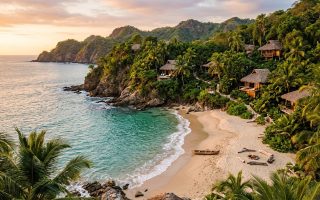
Palomino is not a resort town. It is a laid back beach village where hammocks outnumber hotel rooms. The vibe is barefoot and unhurried. You spend your days swimming in the river where it meets the sea (a phenomenon called desembocadura), taking surf lessons, or just reading on the sand.
Here is a sample breakdown of your final days:
| Activity | Best Time | Notes |
|---|---|---|
| River tubing on the Palomino River | Morning (9am) | Float through the jungle to the ocean |
| Surf lessons at Playa Palomino | Midday (11am) | Beginner friendly waves year round |
| Hammock time at a beachfront hostel | Afternoon (2pm) | Bring a book and plenty of sunscreen |
| Sunset dinner at a palapa restaurant | Evening (6pm) | Try the fried red snapper with coconut rice |
On your last full day, consider a day trip to Tayrona National Park. The park entrance is 30 minutes from Palomino. You can hike through jungle trails to pristine beaches like Cabo San Juan. The water here is powerful, so swim only in designated areas.
How to Handle Transportation Between Destinations
Getting around Colombia is easier than most travelers expect. Here is a comparison of your main options for this route.
| Route | Best Method | Cost (USD) | Time |
|---|---|---|---|
| Armenia Airport to Salento | Private transfer | $40 to $60 | 45 min |
| Salento to Filandia | Shared jeep or taxi | $15 to $25 | 30 min |
| Filandia to Armenia Airport | Private transfer | $35 to $50 | 40 min |
| Armenia to Cartagena | Flight (Avianca or Latam) | $80 to $150 | 90 min |
| Cartagena to Palomino | Private car or shared shuttle | $60 to $100 | 4 hours |
| Palomino to Santa Marta Airport | Private transfer | $50 to $80 | 1.5 hours |
Pro tip: Book your private transfers through your accommodation. Hotels and fincas have trusted drivers they work with regularly. It costs the same as Uber or a taxi, and you get a safer experience.
Where to Splurge and Where to Save
Your budget goes a long way in Colombia. Here is how to spend wisely.
Splurge on accommodation in the Coffee Region. A luxury finca costs between $150 and $250 per night, which is a steal compared to similar experiences in Costa Rica or Hawaii. You get a private room in a restored colonial house, farm to table breakfast, and often a coffee tour included.
Save on food in Palomino. Beachfront restaurants serve fresh fish for $8 to $12. Skip the fancy places in Cartagena for your day to day meals and save your dining budget for two special dinners in the walled city.
Splurge on the Rosario Islands tour. The budget tours pack 40 people onto a boat. Spend $20 more per person for a smaller group tour with better food and a more relaxed pace.
Save on souvenirs. Buy your coffee and mochilas in Salento or Filandia, not in Cartagena. Prices are lower in the Coffee Region and the quality is better.
A Note on Safety and Comfort
Colombia has changed dramatically in the last decade. Tourist areas are well policed and safe. Use common sense: do not flash expensive jewelry, keep your phone in your pocket in crowded areas, and stick to official taxis at night.
The biggest risk to your trip is actually the sun. The Caribbean coast is intense. Bring reef safe sunscreen, a wide brim hat, and a rash guard for swimming. Altitude sickness is not an issue in the Coffee Region (you top out at 6,000 feet), but the humidity on the coast can be draining. Drink water constantly.
If you are coming from the US, you do not need a visa for stays under 90 days. Your passport must be valid for at least 6 months from your entry date.
Your Packing List for Both Climates
Packing for two climates in one trip requires strategy. Here is what you actually need.
- A lightweight rain jacket (it rains in the Coffee Region year round)
- Hiking shoes or sturdy sneakers (for Cocora Valley and Tayrona)
- One pair of jeans or long pants (for evenings in Salento)
- Three pairs of shorts
- Five lightweight tops (linen or cotton)
- Two swimsuits
- A dress or nice shirt for dinner in Cartagena
- Sandals or flip flops
- A reusable water bottle with a filter
- Sunscreen and insect repellent
Leave the heavy hiking boots at home. You do not need them.
Why This Itinerary Beats a Single Region Trip
A lot of travelers spend their entire two weeks in just the Coffee Region or just the coast. That is fine, but you miss the full picture of Colombia. The country is not just mountains or beaches. It is the tension between those two worlds that makes it special.
The Coffee Region teaches you about patience and craft. The Caribbean coast teaches you about joy and flow. Experiencing both in one trip gives you a deeper understanding of Colombia than any single destination could.
If you are looking for more inspiration for your next adventure, check out our guide to https://touriosity.travel/the-complete-guide-to-exploring-patagonia-s-wild-frontier/ or read about https://touriosity.travel/hidden-coastal-retreats-in-central-america-you-need-to-discover/ for future trip ideas.
Ready to Book Your Colombia Adventure
The best time to visit is between December and March, when both regions have their driest weather. But honestly, the Coffee Region is beautiful in the rain, and the coast stays warm year round. Pick a window that works for your schedule and go.
Book your finca and your internal flight first. Those are the pieces that sell out. Everything else you can arrange once you arrive. Colombians are warm, helpful, and used to travelers asking questions.
Pack your bags, learn how to say “gracias” with a smile, and get ready for two weeks that will change how you think about travel. The coffee is strong, the water is warm, and the memories will last long after your tan fades.