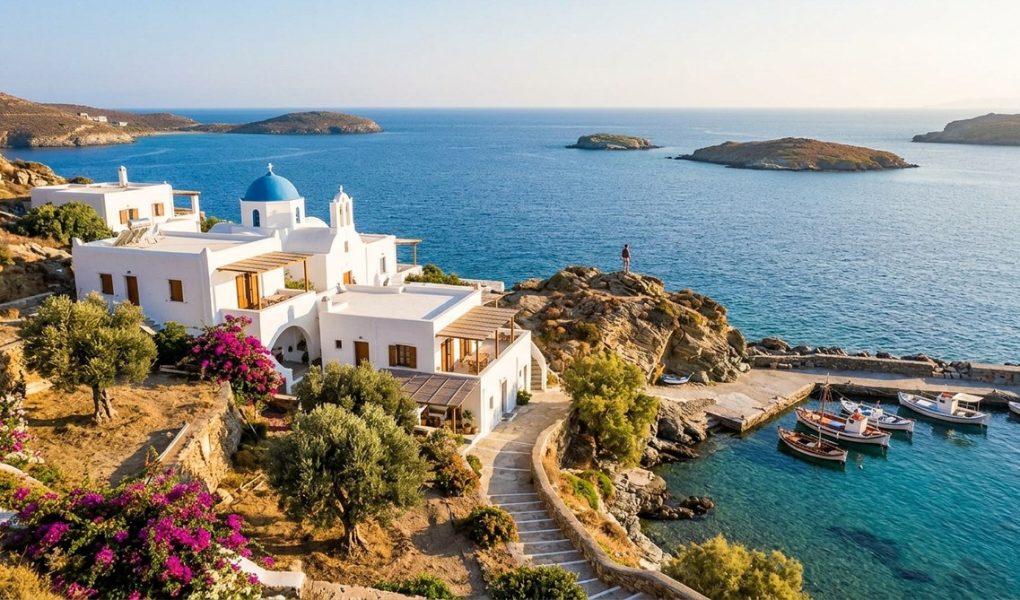
You love Santorini. Who does not? Those whitewashed villages tumbling down volcanic cliffs, sunsets that look like they were painted by a god, and the deep blue Aegean stretching to the horizon. But here is the problem everyone faces in 2026: Santorini has become a victim of its own fame. Cruise ships disgorge thousands of passengers daily. You wait 45 minutes for a photo at the famous blue domes. Restaurants require reservations weeks in advance. The magic is still there, but you have to fight for it.
What if you could have that same volcanic beauty, those same crystalline waters, and that same Greek island soul without the shoulder-to-shoulder crowds? You can. Greece holds hundreds of islands, and many of them rival Santorini in drama and charm. You just need to know where to look.
Ten Greek islands offer the same volcanic landscapes, whitewashed villages, and unforgettable sunsets as Santorini but without the overwhelming crowds. From Milos’ hidden sea caves to Folegandros’ dramatic cliffside Chora, each destination provides authentic local experiences, affordable accommodations, and genuine hospitality. Travelers can enjoy caldera views, thermal springs, and pristine beaches while spending less and connecting more with Greek culture.
Why Santorini’s Popularity Became a Problem
Santorini welcomed over 3.4 million visitors in 2024. That number is projected to climb again in 2026. The island has roughly 15,500 permanent residents. Do the math. During peak summer months, the narrow streets of Oia and Fira become nearly impassable. Local authorities have started discussing visitor caps, but those rules have not taken effect yet.
The frustration is real. You book a dream vacation, spend a small fortune on a caldera-view hotel, and end up sharing sunset with hundreds of strangers. The authentic Greece you imagined feels more like a theme park.
But here is the good news: Greece has more than 200 inhabited islands. Many of them share Santorini’s geological DNA. They sit in the same Cycladic archipelago, boast similar volcanic history, and offer that signature Greek aesthetic. They just have not been discovered by the masses yet.
How to Choose Your Alternative Island
Before we get into the list, here is a simple framework to help you pick the right island for your travel style.
- Decide your priority. Do you want volcanic beaches, hiking trails, nightlife, or total seclusion? Each island on this list excels at something different.
- Check ferry connections. Some islands require a longer journey. That extra travel time is exactly what keeps them uncrowded.
- Match the season to the island. Smaller islands feel perfect in May, June, or September. July and August can still get busy, but never Santorini-level busy.
- Look for direct flights or smart routes. A few of these islands have small airports. Others require a ferry from Athens or a neighboring island.
- Book accommodations early anyway. “Undiscovered” does not mean empty. The best villas and guesthouses fill up, especially from June through September.
The 10 Undiscovered Greek Islands That Rival Santorini
Milos: The Volcanic Beauty with Hidden Caves
Milos is Santorini’s quieter, more rugged cousin. It formed from the same volcanic activity, which means you get dramatic rock formations, hot springs, and over 75 beaches. The difference? Milos is massive by Greek island standards. Its coastline stretches for miles, so crowds spread out naturally.
The fishing village of Klima steals the show. Colorful boat houses called “syrmata” line the waterfront. Fishermen still use them today. You can rent one for the night and wake up to waves lapping at your doorstep.
Sarakiniko Beach looks like a lunar landscape. White volcanic rock forms smooth curves and tunnels that plunge into turquoise water. You can swim through sea caves and sunbathe on stone slabs. In Santorini, a spot like this would have a queue. Here, you might share it with ten other people.
| Island | Best For | Crowd Level (1-10) | Ferry from Athens |
|---|---|---|---|
| Milos | Beaches, sea caves | 5 | 3-4 hours |
| Folegandros | Cliffside views, hiking | 3 | 4-5 hours |
| Amorgos | Scuba diving, monasteries | 2 | 6-8 hours |
| Serifos | Untouched villages, mining history | 2 | 3-4 hours |
| Sifnos | Food scene, pottery | 4 | 3-4 hours |
| Anafi | Solitude, raw landscapes | 1 | 8-10 hours |
| Tinos | Art, pilgrimage, marble villages | 3 | 4-5 hours |
| Syros | Architecture, culture | 5 | 2-3 hours |
| Kimolos | Tiny beaches, slow pace | 1 | 3-4 hours (via Milos) |
| Astypalaia | Castle, butterfly-shaped island | 2 | 7-9 hours |
Folegandros: The Cliffside Marvel
Folegandros feels like Santorini before the crowds arrived. Its main town, Chora, sits perched on a 200-meter cliff. The view from the central square stretches across the Aegean to the island of Milos. Sunsets here rival anything in Oia.
The island has no cruise port. That alone keeps visitor numbers low. You reach Folegandros by ferry, and once you arrive, the pace slows down immediately. Walk the narrow alleys lined with bougainvillea. Eat at tavernas where the owner catches your fish that morning. Hike the path from Chora to the Church of Panagia, a 45-minute walk with panoramic views that will stop you in your tracks.
Beaches here are pebbly and wild. Agali and Karavostasis offer swimming without crowds. If you want sand, take a boat to the remote beach of Katergo.
Amorgos: The Island of the Big Blue
Film buffs might recognize Amorgos from the classic movie “The Big Blue.” The island has a rugged, almost mystical quality. Its coastline alternates between sheer cliffs and hidden coves.
The Monastery of Hozoviotissa is a must-see. This whitewashed structure clings to a cliff face 300 meters above the sea. Built in 1017, it houses precious icons and offers breathtaking views. The monks welcome visitors with a shot of rakı and a sweet spoon sweet.
Amorgos is a hiker’s paradise. Trails connect ancient footpaths between villages. You can walk from Chora to the coast, passing terraced fields and old windmills. The island also has excellent scuba diving. Underwater caves and clear visibility make it a top spot for divers.
Serifos: The Untouched Industrial Gem
Serifos has a split personality. The upper town, Hora, is a classic Cycladic maze of white houses and blue doors. The lower port, Livadi, has a relaxed beach vibe. What makes Serifos special is its mining history. Abandoned iron ore facilities dot the coastline, creating a surreal, rusty landscape against the blue sea.
The beach of Kalo Ammos sits right next to an old loading pier. You can swim in crystal water while looking at industrial ruins. It is strange and beautiful.
Serifos attracts a younger, more alternative crowd. Think backpackers and artists rather than luxury travelers. Accommodations are affordable. Tavernas serve honest, simple food. The island has no airport, so the ferry remains the only way in.
“Serifos is what Mykonos was 40 years ago. It has the same raw beauty, the same white villages, but zero attitude. You come here to relax, not to be seen.” – Maria Kostas, Greek travel writer and Serifos native
Sifnos: The Food Lover’s Paradise
If you care about what you eat, Sifnos should be your pick. This island has a culinary reputation that rivals any in Greece. The local specialty is chickpea soup, slow-cooked in a clay pot overnight. Almost every taverna serves it.
Sifnos is also known for its pottery. The village of Artemonas has workshops where you can watch artisans at work. The island’s architecture is elegant. White mansions with neoclassical details line the streets.
The hiking network here is excellent. Walk from Apollonia to the monastery of Panagia Chrissopigi. The trail follows the coast and offers stunning views. Beaches like Platis Gialos and Vathi have golden sand and calm water.
Sifnos is more developed than Serifos or Amorgos, but it still feels authentic. The crowds are manageable, especially outside July and August.
Anafi: The Escape from Everything
Anafi sits just east of Santorini. You can see the famous island from Anafi’s highest point. But the two worlds could not be more different. Anafi has one village, a handful of tavernas, and a population that drops to 150 in winter.
This is the island for total disconnection. The beach of Agios Nikolaos is a long stretch of sand with almost no one on it. The Kalamos mountain offers a challenging hike to a monastery with 360-degree views.
Anafi requires effort to reach. Ferries come a few times a week, and the journey takes 8 to 10 hours from Athens. That inconvenience is exactly what keeps it pure. If you want solitude and raw, untamed beauty, this is your island.
Tinos: The Island of Art and Faith
Tinos is famous for two things: the Church of Panagia Evangelistria, a major pilgrimage site for Greek Orthodox Christians, and its marble craftsmanship. The island’s villages are decorated with intricate marble dovecotes and fountains.
Tinos has a different energy than most Cycladic islands. It feels more grounded, more connected to tradition. The island has excellent museums, including the Museum of Marble Crafts and the Museum of Tinian Artists.
Beaches here are varied. Kolymbithra has twin sandy coves protected by rock formations. Agios Sostis is wild and undeveloped. The island also has a strong food scene, with local cheeses and cold cuts that rival any in Greece.
The pilgrimage brings visitors year-round, but they tend to stay near the church. The rest of the island remains peaceful.
Syros: The Elegant Capital
Syros is the administrative capital of the Cyclades. Its main town, Ermoupoli, is a masterpiece of neoclassical architecture. Marble streets, grand mansions, and a stunning opera house give it a refined feel.
But Syros also has beautiful beaches and a relaxed pace. The island combines culture and coastal life seamlessly. You can spend the morning at the Archaeological Museum and the afternoon swimming at Galissas Beach.
Syros has a ferry terminal with frequent connections. It is easier to reach than many other islands on this list. That convenience means it gets more visitors, but the island is large enough to absorb them. You never feel crowded.
Kimolos: The Tiny Neighbor of Milos
Kimolos is a speck of an island just a short ferry ride from Milos. It has one main village, a few beaches, and a wonderfully slow rhythm of life.
The beach of Prassa has white sand and turquoise water that rivals the Caribbean. Skiadi is a massive mushroom-shaped rock formation that makes for surreal photos. The island’s main village, Chorio, is a maze of narrow streets with colorful doors and windows.
Kimolos is perfect for a day trip from Milos or a two-night stay. There are no ATMs, so bring cash. The island has a handful of rooms to rent and a few tavernas. That is all you need.
Astypalaia: The Butterfly Island
Astypalaia has a unique shape. It looks like a butterfly with two wings connected by a narrow strip of land. The island’s castle sits on a hill overlooking the port, and the old town below is a tangle of white houses and blue domes.
The beach of Livadi is a long stretch of sand with shallow water. Kaminakia is a pebbly cove with excellent snorkeling. The island also has thermal springs at Vathi.
Astypalaia has an airport with flights from Athens. That makes it more accessible than many smaller islands. But the flight schedule is limited, so visitor numbers stay low.
How to Plan Your Island Hopping Route
Visiting just one of these islands is rewarding. But combining two or three makes for an unforgettable trip. Here is a suggested route that avoids backtracking.
- Start in Milos. Fly into Milos from Athens. Spend 3 days exploring beaches and sea caves.
- Ferry to Kimolos. Take the 20-minute ferry. Stay 1 or 2 nights.
- Ferry to Folegandros. The ferry takes about 2 hours. Spend 3 days hiking and enjoying cliffside views.
- Ferry to Sifnos. Another 2-hour ferry. Spend 2 days eating and relaxing.
- Ferry back to Athens. The final ferry takes 3 to 4 hours.
This route keeps travel times short. You see five islands in 10 to 12 days without feeling rushed.
Common Mistakes to Avoid
| Mistake | Why It Hurts Your Trip | What to Do Instead |
|---|---|---|
| Visiting in August | Peak heat and highest prices. Ferries sell out. | Go in June or September. |
| Relying on one ferry schedule | Ferries cancel due to wind. You get stranded. | Always have a backup plan. |
| Skipping local buses | Taxis are expensive and scarce. | Learn the bus timetable. It is reliable and cheap. |
| Eating in the main square | Prices are higher. Food is average. | Walk two streets inland. Find where locals eat. |
| Not bringing cash | Smaller islands have few ATMs. | Withdraw cash in Athens or the larger islands. |
The Best Time to Visit These Islands
May and June offer warm weather, blooming flowers, and empty beaches. The sea is still cool in May but warms up by June. September is ideal. The water is at its warmest, the crowds have thinned, and the light is golden.
July and August are hot and busy. Even the undiscovered islands see more visitors. If you must travel in peak season, book accommodations and ferry tickets at least two months in advance.
October can be lovely, but many tavernas and hotels close after the first week. Ferries also run less frequently.
Where to Stay on Each Island
- Milos: Rent a syrmata in Klima for a unique experience. Alternatively, stay in Adamas for easy access to ferries and restaurants.
- Folegandros: Book a room in Chora for the views. The Pension Fani offers simple rooms with balconies overlooking the sea.
- Amorgos: Stay in Aegiali for beach access or Chora for village atmosphere.
- Serifos: Livadi has the best selection of rooms and tavernas.
- Sifnos: Apollonia is the central hub. Kamares is near the port and a good beach.
- Anafi: The village of Chora has a few guesthouses. Book ahead.
- Tinos: Stay in Tinos Town for culture or in the villages for peace.
- Syros: Ermoupoli has beautiful hotels. The Vaporia neighborhood is especially charming.
- Kimolos: Chorio has a few rooms. Book through the local tourism office.
- Astypalaia: Skala has the most options. The old town near the castle is magical.
Why These Islands Matter More Than Ever
Travel in 2026 is about quality over quantity. You want experiences, not checklists. You want to connect with a place, not just photograph it. These islands offer that connection.
When you sit in a taverna in Serifos, eating grilled octopus caught that morning, watching the sun sink into the sea, you feel something real. That feeling is hard to find in Santorini anymore. It is not gone from Greece. It has just moved to smaller, quieter shores.
If you are planning a trip to Greece this year, consider a route that skips the famous names. Your wallet will thank you. Your sanity will thank you. And you will discover the Greece that locals still love.
For more ideas on how to travel differently, check out our guide to And if you are ready to explore beyond Greece entirely, our list of might inspire your next adventure.
Your Greek Island Adventure Awaits
The hardest part is choosing which island to visit first. After that, everything falls into place. Pack light. Bring a good pair of walking shoes. Learn to say “efharisto” (thank you) and “kalimera” (good morning). Greeks appreciate the effort.
Book your ferry tickets online in advance. Reserve your first night’s accommodation. Then leave the rest to spontaneity. Some of the best moments happen when you miss a ferry, take a wrong turn, or follow a sign to a beach you had never heard of.
That is the real magic of these islands. They still have room for discovery. They still have secrets to share. And they are waiting for you.