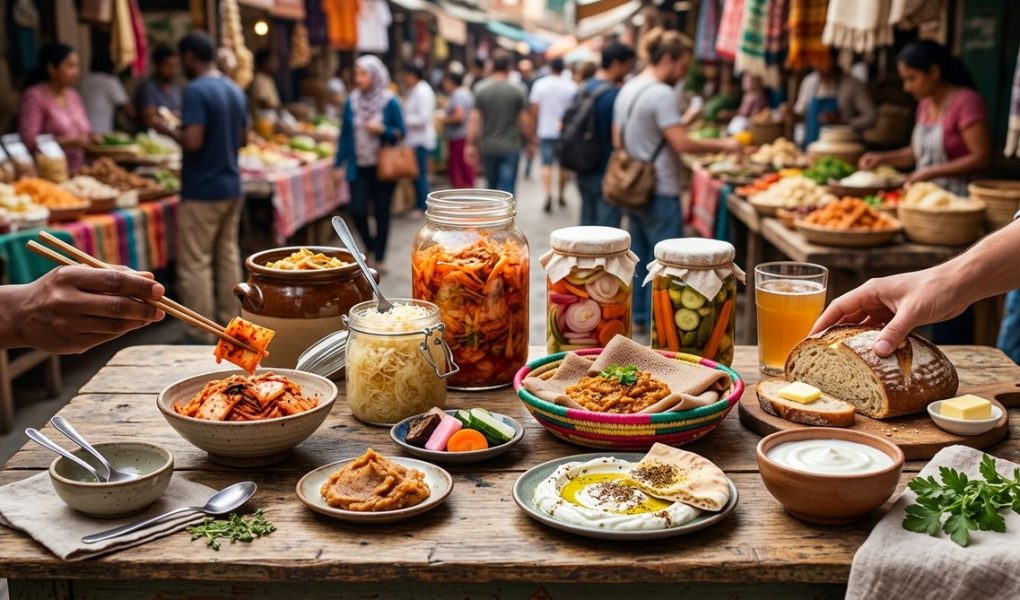
You know that tangy, fizzy, slightly funky bite of homemade sauerkraut or the way a good sourdough smells like a warm bakery in Paris? That is fermentation at work. It is one of the oldest food technologies on Earth, and every culture has its own version. Fermentation around the world is not just about pickling or preserving. It is about survival, community, and identity. When you taste a fermented food in its place of origin, you are tasting centuries of adaptation, climate, and creativity. This guide will take you through the global pantry of fermented foods, show you how to appreciate them like a local, and help you plan a trip around the flavors that define a region.
Fermentation is a universal language of flavor and preservation. From Korean kimchi to Ethiopian injera, every region uses microbes to transform simple ingredients into iconic foods. This article connects those traditions to travel, showing you where to taste them, how to respect the craft, and why seeking out fermented foods is one of the most authentic ways to understand a culture.
Why Fermentation Tastes Like Place
Fermentation is a direct conversation between a region’s climate, its native microbes, and the ingredients available. In Korea, the cold winters demanded a way to store vegetables for months. The answer was kimchi, a lacto-fermented cabbage dish seasoned with chili, garlic, and fish sauce. The specific strains of lactic acid bacteria that thrive in the Korean peninsula give kimchi a flavor you cannot replicate in New York. The same principle applies to miso in Japan, craft beer in Belgium, and sour cream in Eastern Europe. The microbes are part of the local ecosystem.
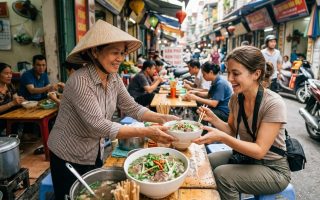
When you travel, you are not just eating a dish. You are consuming a living culture. That is why a bowl of pho in Hanoi tastes different from the one in your hometown. The nuoc cham, the fermented fish sauce that seasons the broth, carries the salt and sun of the Vietnamese coast. Every bite is a map.
The Global Fermentation Pantry
Let us take a tour. Here are some of the most iconic fermented foods and drinks you should seek out on your travels.
- Kimchi (South Korea): The national side dish. Over 200 varieties exist. Look for baechu kimchi (napa cabbage) or kkakdugi (radish). Eat it with every meal.
- Injera (Ethiopia): A spongy, sour flatbread made from teff flour. The fermentation gives it a unique tang and a porous texture perfect for scooping up stews.
- Kombucha (China, Russia, now global): A fermented tea. The original version is tart and slightly effervescent. Try it at a local market in Shanghai or Moscow.
- Sauerkraut (Germany): Shredded cabbage fermented with salt. It is a staple in Bavaria and pairs perfectly with pork and beer.
- Miso (Japan): A paste of fermented soybeans and koji mold. The darker the miso, the saltier and more intense the flavor. Try it in a traditional miso soup at a ryokan.
- Kefir (Caucasus Mountains): A fermented milk drink that is tangy and slightly fizzy. It originated in the North Caucasus and is still made in homes across Georgia and Russia.
- Tempeh (Indonesia): Fermented soybeans bound together by a fungus. It is nutty, firm, and high in protein. Eat it fried or in a sambal.
- Pulque (Mexico): A milky, slightly sour alcoholic drink made from the fermented sap of the maguey plant. It is ancient and deeply tied to Mexican identity.
- Surströmming (Sweden): Fermented herring. It is famously pungent. Only try this if you are truly adventurous. It is a rite of passage.
How to Taste Fermented Foods Like a Local
When you travel, you want to taste these foods in the right context. Here is a simple process to follow.
- Start with the basics. Before you travel, learn the name of the local fermented staple. Know what it is made from. This helps you order with confidence.
- Visit a market. Do not go to a restaurant first. Go to a wet market or a food hall. Watch how locals buy it. Notice the color, smell, and texture. Ask the vendor how it is made.
- Try it plain. Do not drown it in sauce or bread. Take a small bite on its own. Let the flavor sit on your tongue for a few seconds. What do you taste? Sour? Salty? Funky? Umami?
- Pair it with the local cuisine. Fermented foods are rarely eaten alone. Kimchi is eaten with rice and stew. Injera is the plate and the spoon. Miso is a soup base or a glaze. The pairing matters.
- Ask about the age. Some ferments are young and mild. Others are aged for months or years. The age changes the flavor dramatically. A six-month miso is sweet. A three-year miso is intense.
- Take a class. Many destinations offer fermentation workshops. In Seoul, you can learn to make kimchi. In Tokyo, a miso-making class. In Oaxaca, a pulque tasting. These are unforgettable experiences.
Common Mistakes Travelers Make with Fermented Foods
Not every fermented food is an instant hit. Here is a table to help you navigate the common pitfalls and how to avoid them.
| Mistake | What It Looks Like | How to Avoid It |
|---|---|---|
| Ordering the wrong level of spice | You ask for “mild” kimchi but get a fiery batch. | Learn the Korean words for spice level: maewoon (spicy) and an maewoon (not spicy). |
| Eating too much too fast | You devour a bowl of sauerkraut and feel bloated. | Start with a small portion. Fermented foods are potent. Your gut needs time to adjust. |
| Ignoring the smell | You recoil from surströmming or stinky tofu. | Smell is not flavor. Give it a try. The aroma is part of the experience. |
| Pairing it with the wrong drink | You drink milk with kimchi. | Pair with local drinks: soju with kimchi, beer with sauerkraut, tea with miso. |
| Not asking about freshness | You buy old, soggy tempeh from a tourist stall. | Look for firm, white tempeh with no black spots. Freshness matters. |
“Fermentation is the original slow food. It teaches patience, respect for ingredients, and a deep connection to place. When you travel, let fermented foods be your guide. They will lead you to the heart of the culture.” – Sandor Katz, fermentation author and expert.
Planning a Fermentation-Themed Trip
You can build an entire trip around fermented foods. Here is how to do it.
Step 1: Pick a region. Do you want to focus on East Asia (kimchi, miso, soy sauce), Europe (sauerkraut, cheese, beer), or the Americas (pulque, sourdough, hot sauce)? Each region has a deep well of traditions.
Step 2: Research the local ferments. Use resources like local food blogs, the Slow Food movement, or university extension programs. Look for terms like “traditional fermentation” or “artisanal.”
Step 3: Book a class or a tour. Many cities offer food tours focused on fermentation. For example, in Portland, Oregon, you can take a fermentation walking tour that visits kombucha breweries, pickle shops, and bakeries. In Tokyo, you can visit a miso brewery. In Berlin, a sauerkraut workshop.
Step 4: Stay in a place with a kitchen. If you are a home fermenter, staying in an Airbnb with a kitchen allows you to buy local ingredients and try making your own version. It is a hands-on way to learn.
Step 5: Keep a journal. Write down what you taste, the texture, the smell. Note the ingredients and the process. This turns your trip into a personal fermentation library.
For more inspiration on building a trip around a single dish, read our guide on how to plan an entire trip around a single dish. It will help you narrow your focus and make the most of your time.
Bringing Fermentation Home
The best part of a fermentation trip is that you can bring the tradition home. You can buy starter cultures, seeds, or even a jar of local brine. Many airlines allow solid foods in checked luggage. Check the rules for your destination. Once home, you can recreate the experience. Start a batch of kimchi using the technique you learned in Seoul. Bake a sourdough loaf using a starter from a bakery in San Francisco. Ferment your own vegetables using the salt ratio you saw in a German farmhouse.
This is not just about cooking. It is about keeping a piece of that place alive in your kitchen. Every time you open that jar, you will remember the market, the smell, the conversation with the vendor.
The Future of Fermented Travel
In 2026, fermentation tourism is growing. More travelers are seeking authentic, hands-on experiences. They want to understand where their food comes from and how it connects to the land. Destinations like South Korea, Japan, Ethiopia, and Mexico are investing in food tourism infrastructure. You can now find kimchi museums in Seoul, miso breweries open for tours in Kyoto, and pulque festivals in Mexico City.
This is a beautiful trend. It encourages slow travel, respect for tradition, and a deeper appreciation for the craft. It also supports local economies and small-scale producers.
If you are planning a longer trip, consider pairing your fermentation journey with other cultural experiences. For example, after a week in Tokyo learning about miso and soy sauce, you can take a train to Kyoto and explore the temples and tea houses. Or, after a few days in Berlin tasting sauerkraut and craft beer, head south to the Bavarian Alps for hiking and cheese making. The combination of food and place is powerful.
Your Next Bite Awaits
Fermentation around the world is a doorway into culture. It is a living, breathing record of how people adapted to their environment. The next time you travel, do not just look at the landmarks. Taste the place. Let the tang of kimchi, the fizz of kombucha, and the funk of miso tell you a story. Your gut will thank you, and your memory will hold onto that flavor longer than any photograph.
So pack a jar, book a class, and get ready to taste the world one bite at a time.