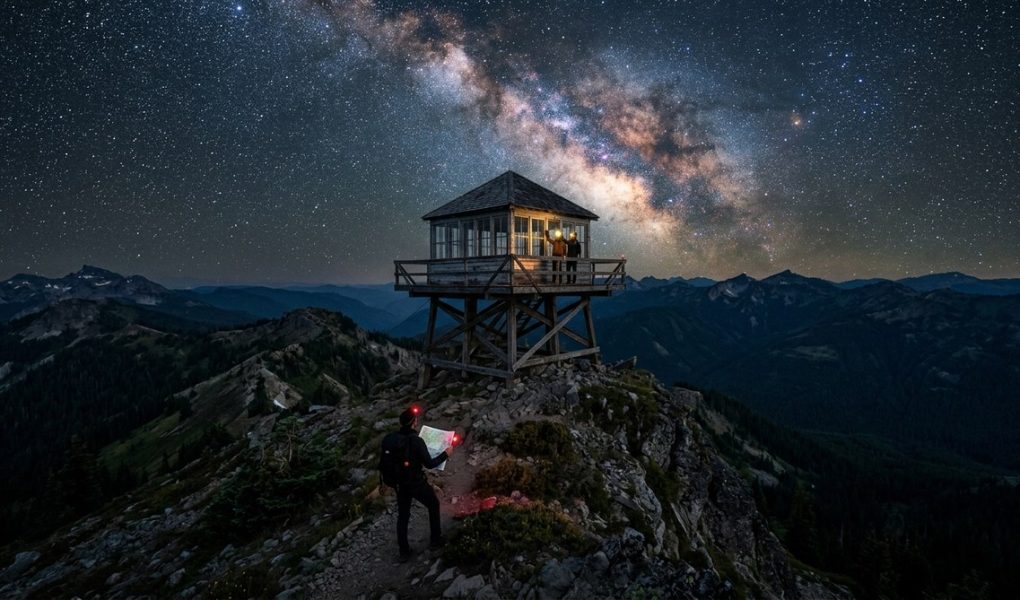
Picture this: you are standing on a wooden catwalk fifty feet above a silent forest. The last sliver of sunset has melted into the horizon, and above you the sky is a river of stars so thick it looks like someone spilled a bag of diamonds on black velvet. Below, no headlights, no porch lights, no glow from a distant strip mall. Just the wind in the pines and the slow creak of a retired fire lookout tower that has not seen a ranger in decades.
That is the promise of a night spent in an abandoned fire lookout tower. These old sentinels, scattered across national forests and mountain ranges in the United States, offer something that no campground or glamping dome can match: total isolation and a front row seat to the darkest skies you will ever see. For the adventurous solo traveler or a couple craving a truly off grid camping experience, it is hard to beat.
Finding and navigating an abandoned fire lookout tower for stargazing is not as simple as booking a hotel. You need to research public land records, check for rental programs on sites like Recreation.gov, pack for extreme conditions, and respect safety protocols. This guide walks you through every step from locating towers to sleeping under the Milky Way.
Why Fire Lookout Towers Are Perfect for Stargazing
Fire lookout towers were built for one reason: to give a person an unobstructed view of the surrounding landscape for miles. That same design makes them incredible stargazing locations. Most towers sit on high ridges or peaks, far from city lights, and the raised platform eliminates trees and terrain that block your view of the horizon.
The National Forest Service and Bureau of Land Management manage hundreds of these structures. Some are still active during fire season. Many others have been decommissioned and are now available for overnight rental, often for as little as thirty to fifty dollars a night. A handful are completely abandoned and open for first come first served use, though you will need to do some digging to find those.
If you want a truly wild experience, a night in a fire lookout tower beats any standard campsite. You are not sleeping on the ground. You are sleeping above the tree line, with a 360 degree view of the cosmos.
How to Find Abandoned Fire Lookout Towers
Finding a tower that is both safe to access and legal to stay in takes some work. Here is a step by step process to get you started.
-
Start with the Forest Service rental database. The most reliable source is Recreation.gov. Search for “fire lookout rentals” and you will find dozens of towers available for booking across states like Montana, Idaho, Oregon, Washington, and Colorado. These are not abandoned, but they are decommissioned and maintained for public use. They are your safest bet for a first trip.
-
Check with local ranger districts. Many towers are not listed on national websites. Call or email the ranger district for the national forest you want to visit. Ask if they have any decommissioned lookouts that are open for overnight use or if they know of any that are simply unlocked and available. Rangers are often happy to share information if you are polite and respectful.
-
Use mapping tools and old fire records. Websites like Peakbagger and the National Historic Lookout Register list thousands of towers, including many that are abandoned or in disrepair. Cross reference those locations with USGS topo maps and Google Earth to see if the access road or trail is still viable.
-
Join online communities. There are forums and Facebook groups dedicated to fire lookout enthusiasts. Members often share tips on which towers are open, which are closed, and which are worth the hike. Search for terms like “fire lookout camping” or “lookout tower rentals” to find these groups.
-
Look for towers in dark sky reserves. The International Dark Sky Association has designated several areas across the US as official dark sky parks. Some of these, like the Central Idaho Dark Sky Reserve, have fire lookout towers nearby that are available for rent. Pairing a tower stay with a dark sky designation guarantees exceptional stargazing.
What to Pack for a Night in a Fire Lookout Tower
Packing for a fire lookout tower is different from packing for a standard car camping trip. These structures are exposed to the elements, often lack running water, and can be accessed by rough dirt roads that require a high clearance vehicle. Here is a bulleted list of essentials.
- Sleeping bag rated for freezing or lower. Temperatures drop sharply after sunset, especially at elevation. A 20 degree bag is a safe minimum.
- Sleeping pad or inflatable mattress. Tower floors are bare wood and hard as rock.
- Headlamp with a red light mode. Red light preserves your night vision for stargazing.
- Camp stove and fuel. Most towers have no kitchen facilities. Bring your own cooking gear.
- Plenty of water. There is no tap. Bring at least one gallon per person per day.
- Warm layers and a windproof jacket. The catwalk can be brutally windy even on calm evenings.
- A star chart or stargazing app. Apps like SkySafari or Stellarium help you identify constellations and planets.
- A camera with a tripod. Long exposure shots of the Milky Way from a fire tower are stunning.
- Firewood or a campfire permit. Some towers have fire pits nearby. Check local fire restrictions before you go.
- A first aid kit and a satellite messenger. Cell service is often nonexistent. A device like a Garmin inReach can be a lifesaver.
Navigating Access and Safety
Getting to an abandoned fire lookout tower is half the adventure. The roads are often unmaintained, overgrown, and impassable after rain or snow. A standard sedan might not make it. A truck or SUV with good tires and four wheel drive is recommended.
Once you arrive, inspect the tower carefully before climbing. Look for rotting wood, missing stairs, or loose railings. Many abandoned towers have not been inspected in years. If the structure looks unsafe, do not go up. Your safety is more important than the view.
Here is a table that breaks down common mistakes and how to avoid them.
| Common Mistake | Why It Is Dangerous | How to Avoid It |
|---|---|---|
| Arriving after dark | You cannot see structural damage or road hazards. | Plan to arrive at least two hours before sunset. |
| Not checking fire restrictions | A camp stove or campfire could start a wildfire. | Call the ranger district before you leave. |
| Forgetting to bring water | Dehydration hits harder at elevation. | Pack more water than you think you need. |
| Leaving food in the tower | Bears and rodents will find it. | Store all food in a bear canister away from the tower. |
| Ignoring weather forecasts | Storms can roll in fast and trap you on the road. | Check NOAA forecasts for the exact peak elevation. |
“The best advice I can give someone new to fire tower camping is to treat it like a backcountry trip, not a car camping trip. You are exposed. You are remote. You are responsible for your own safety. But if you prepare properly, you will have one of the most magical nights of your life under the stars.” — Sarah K., volunteer fire lookout and author of the blog Lookout Life
Where to Go: Three Top Picks for 2026
If you are ready to plan your trip, here are three fire lookout towers that offer excellent stargazing and are available for overnight rental through official channels.
Evergreen Mountain Lookout, Washington
Located in the Mount Baker Snoqualmie National Forest, this tower sits at 4,800 feet and offers sweeping views of the Cascade Range. It is a short hike from the trailhead, so you do not need a high clearance vehicle. The tower is a classic L 4 cab style with a wood stove inside. Book it on Recreation.gov for about forty dollars a night.
Squaw Mountain Lookout, Colorado
This tower is in the Arapaho and Roosevelt National Forests near the town of Idaho Springs. It is accessible by a rough dirt road that requires four wheel drive. The elevation is over 10,000 feet, which means the air is thin and the skies are incredibly dark. It is a favorite among astrophotographers.
Gold Butte Lookout, Oregon
Gold Butte sits in the Willamette National Forest and is one of the most photogenic towers in the Pacific Northwest. The cab is perched on a tall timber frame, and the surrounding area has very little light pollution. It is a great choice for a couple looking for a romantic stargazing weekend.
If you want to go further off the grid, consider pairing your tower stay with a trip to one of the destinations we have written about, like how to plan a solo backpacking trip to the most remote US national parks. The combination of a high altitude lookout and a remote park makes for an unforgettable adventure.
When to Go for the Best Stargazing
Timing matters. The best months for stargazing from a fire lookout tower are late spring through early fall, typically June through September. During these months, the weather is more stable and the roads are mostly clear of snow. However, you should avoid the full moon. A bright moon washes out the Milky Way and fainter stars.
Check a lunar calendar and aim for a new moon or a crescent moon that sets early in the evening. The week before and after the new moon is prime time.
Also consider the time of year for specific constellations. Summer is ideal for the Milky Way core, which rises in the south and arches overhead. Autumn offers clearer air and earlier darkness, which is great for deep sky objects like the Andromeda Galaxy.
A Final Word on Leaving No Trace
Abandoned fire lookout towers are fragile pieces of history. Many are over a century old. Treat them with respect. Do not carve your name into the wood. Do not leave trash behind. Pack out everything you pack in, including toilet paper and food scraps.
If you find a tower that is clearly abandoned and unmaintained, consider reporting its condition to the local ranger district. They may not know it is falling apart, and your report could help preserve it for future stargazers.
Your Night Under the Stars Awaits
Sleeping in an abandoned fire lookout tower is not for everyone. It requires planning, a tolerance for discomfort, and a willingness to drive down roads that feel like they lead nowhere. But for those who go, the reward is a night of wild stargazing that no hotel or resort can replicate. You will fall asleep to the sound of wind and wake up to a sunrise that stretches across a hundred miles of untouched forest.
Start your research today. Pick a tower. Check the lunar calendar. Pack your bag. The stars are waiting.