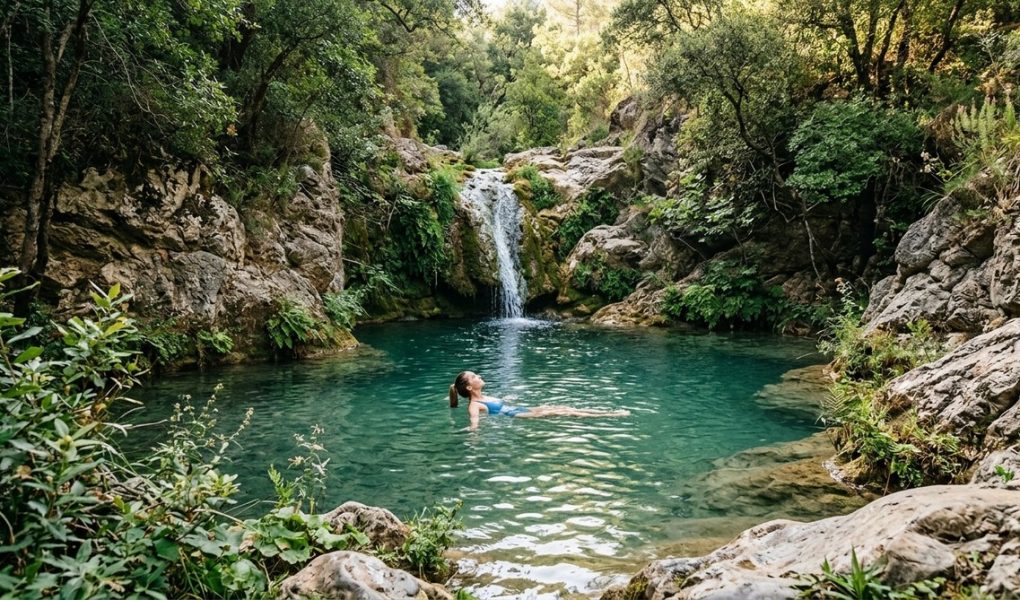
The heat of July hits hard, and the idea of sharing a crowded public pool with a hundred other people feels about as relaxing as a root canal. You want that perfect summer feeling: cool, clear water on your skin, the sound of wind in the trees, and zero chance of someone splashing your drink. That is where secret swimming holes come in. These are the spots that don’t show up on every Instagram feed, the places where locals have been cooling off for generations. Finding them is an art, but it is an art that pays off in the best way possible.
Finding a hidden swimming hole is about trading convenience for solitude. You will need to research public lands, check water conditions, and pack essentials like water shoes and a first-aid kit. The reward is a private slice of nature where you can swim, float, and relax without fighting for a spot on the towel line.
How to Find Your Own Secret Swimming Hole
The best secret swimming holes are rarely marked on standard road maps. You need a strategy that blends online research with old-fashioned local knowledge.
- Start with public lands. National forests, state parks, and Bureau of Land Management (BLM) areas are the best hunting grounds. These lands often contain creeks, rivers, and waterfalls that are open to the public but not heavily advertised. Use the US Forest Service website or the free app from the National Park Service to find recreation areas near you.
- Search for specific geographic features. Instead of typing “swimming holes near me,” search for “swimming holes in [National Forest name]” or “swimming holes along [River name].” Look for terms like “swimming hole,” “swimming spot,” “waterfall pool,” or “natural pool” in combination with the specific area you are targeting.
- Check local hiking forums and Facebook groups. Join a group for hikers or outdoor enthusiasts in your region. People often share photos and directions to lesser-known spots in these communities. Be respectful: ask for advice, not for exact coordinates. A good rule is to ask for the general area and then do your own legwork to find the exact spot.
- Follow the sound of water. This is the most old-school method. Once you are in a likely area, park your car and walk along a creek or river. Listen for the sound of falling water. A small waterfall often creates a deep pool at its base that is perfect for swimming. This method requires patience but rewards you with spots that are truly off the radar.
- Verify access and conditions. Before you go, check the local ranger station website or call the district office. Ask about current water levels, recent trail closures, and whether the area requires a parking pass or a permit. Water levels can change dramatically after a rainstorm, turning a calm pool into a dangerous torrent.
What You Need to Pack for a Swimming Hole Adventure
A trip to a secret swimming hole is not the same as a trip to a public beach. You are often hiking a mile or more over uneven terrain. Packing smart is the difference between a great day and a miserable one.
- Water shoes or sturdy sandals. The bottom of a natural pool can be rocky, slippery, or covered in sharp debris. Do not go barefoot.
- A dry bag or waterproof phone case. You will want to take photos, but your phone should stay dry. A small dry bag also keeps your car keys and snacks safe.
- Plenty of drinking water. You might not have access to a tap. Bring at least one liter per person for a half-day trip.
- Sunscreen and a hat. The sun reflects off the water, and you will burn faster than you think. Use a reef-safe sunscreen to protect the ecosystem.
- A small first-aid kit. Cuts and scrapes happen. Include bandages, antiseptic wipes, and tweezers for splinters.
- Snacks and a trash bag. Leave no trace. Pack out everything you bring in, including orange peels and apple cores.
Common Mistakes That Ruin a Swimming Hole Visit
Even experienced outdoor lovers make these errors. Avoid them to keep your trip safe and enjoyable.
| Mistake | Why It Is a Problem | What to Do Instead |
|---|---|---|
| Not checking water levels | Hidden currents or low water can be dangerous. | Call the ranger station or check the USGS river gauge online before you go. |
| Arriving at midday | This is when the spot is busiest and the sun is harshest. | Go early in the morning or on a weekday to have the place to yourself. |
| Ignoring private property signs | Many swimming holes are on private land. Trespassing is illegal and disrespectful. | Only visit spots that are clearly on public land. If you see a “No Trespassing” sign, turn around. |
| Leaving food or trash behind | Animals learn to associate people with food, and trash ruins the beauty. | Pack everything out. Use a trash bag for waste. |
| Swimming alone in remote areas | If you get hurt or cramp up, there is no one to help. | Always swim with at least one other person. |
How to Be a Responsible Visitor (Leave No Trace)
“The best way to keep a secret spot secret is to never tell anyone exactly where it is. Share the experience, not the coordinates.” This advice from a veteran ranger in the Pacific Northwest is worth its weight in gold. When you find a great swimming hole, treat it like a fragile gift.
The goal is to leave the spot exactly as you found it, or even better. That means no litter, no noise pollution, and no damage to the plants or rocks. Do not build cairns (stacked rocks) near the water. Do not play loud music. Do not pull up plants or break branches. If you see someone else being careless, politely remind them to pack out their trash or report the issue to the land management agency. The more people treat these places with respect, the longer they will stay open and beautiful for everyone.
When to Go for the Best Experience
Timing is everything when it comes to secret swimming holes. The ideal window varies by region, but there are some universal rules.
Best time of day: Early morning, around 8:00 AM to 10:00 AM. The water is cool, the light is soft, and you will have the spot to yourself. Late afternoon, after 4:00 PM, is also good, especially on weekdays.
Best day of the week: Tuesday, Wednesday, or Thursday. Weekends are a nightmare for solitude seekers. If you can only go on a weekend, aim for Sunday morning before 9:00 AM.
Best season: Late spring through early fall. In the South, that means May through September. In the North, June through August. Check local water temperatures before you go. Some mountain-fed pools stay freezing cold even in July.
Avoid these times: Right after a heavy rain (water is muddy and dangerous) and during hunting season in the fall (wear bright colors and stay on marked trails).
Where to Start Your Search Right Now
If you are ready to plan your first trip, here are some regions in the United States that are famous for their hidden swimming holes. Each area has its own character, from desert oases to forested creeks.
The Pacific Northwest: Look for swimming holes along the McKenzie River in Oregon or the South Fork of the American River in California. These spots are often surrounded by old-growth forests.
The Southeast: The Blue Ridge Mountains in North Carolina and Georgia are full of secret swimming holes. Places like the Chattahoochee National Forest or the Nantahala National Forest are prime hunting grounds.
The Southwest: Desert swimming holes are rare and precious. Look for areas near the Gila River in New Mexico or the Verde River in Arizona. These spots are often seasonal, so check conditions before you go.
The Northeast: The Adirondack Park in New York and the White Mountains in New Hampshire have countless swimming holes along their rivers. Try the Sacandaga River or the Pemigewasset River.
For more ideas on finding quiet, off-the-beaten-path adventures, check out our guide on how to find unmarked beaches that locals keep to themselves. If you want to plan a longer trip that avoids the crowds, our 10 undiscovered Greek islands that rival Santorini without the crowds might be the perfect next read.
Your Next Step Toward Solitude
The best secret swimming hole is the one you find yourself. It does not have to be famous. It does not have to be on a list. It just has to be quiet, clean, and yours for a few hours. Start with the research steps above, pick a nearby public forest or river, and go for a walk. Listen for the sound of water. Pack your bag, check the conditions, and treat the place with care. That first moment when you slip into cool, clear water and hear nothing but the breeze is worth every bit of effort. Go find it.