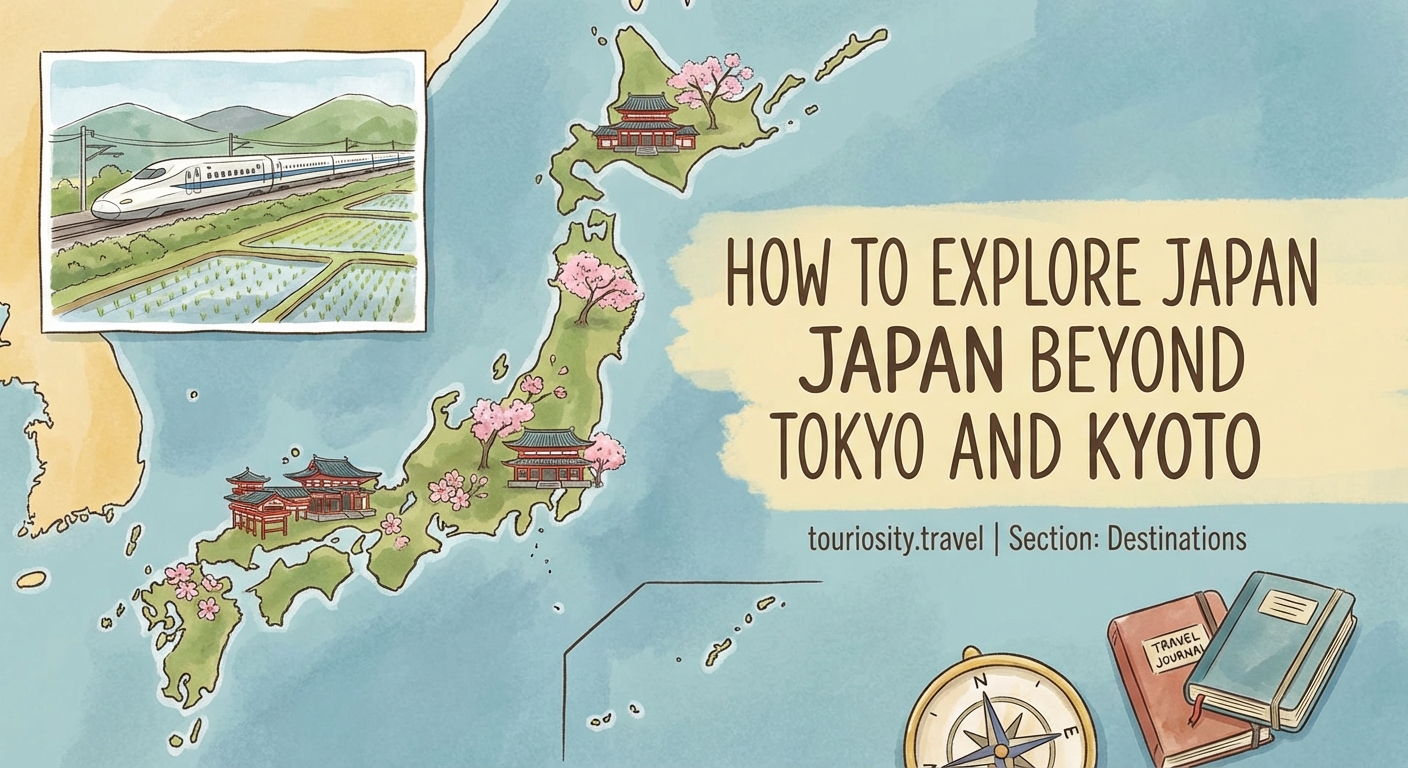
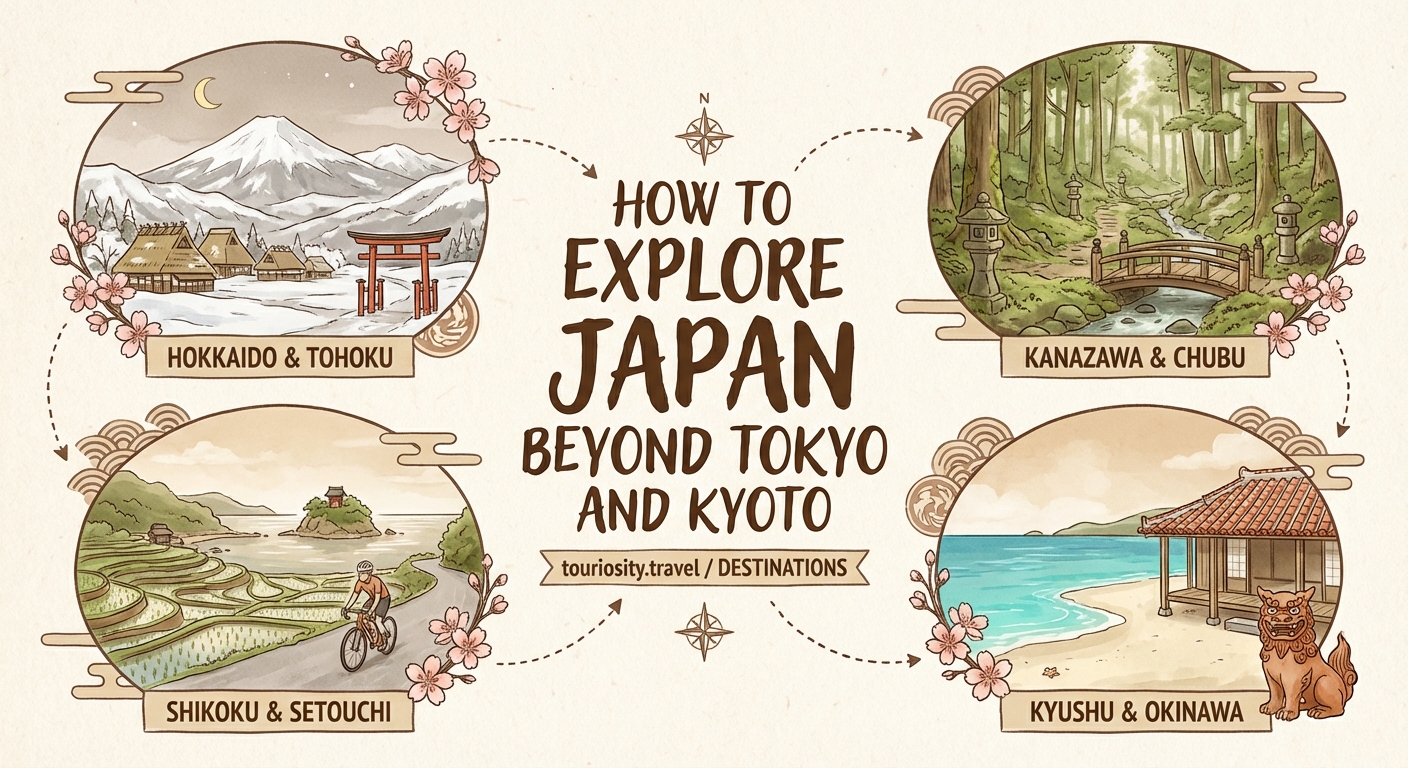
Japan’s most rewarding experiences often happen in places where tour buses don’t go. While Tokyo and Kyoto deserve their fame, the country’s real character emerges in fishing villages where grandmothers still dive for abalone, mountain towns where thatched-roof farmhouses have stood for centuries, and islands where contemporary art installations sit beside ancient shrines.
Japan offers countless destinations beyond Tokyo and Kyoto that provide authentic cultural experiences without the crowds. From Hokkaido’s wilderness and Kanazawa’s preserved geisha districts to Naoshima’s art museums and Takayama’s historic streets, these lesser-known locations let you experience traditional crafts, regional cuisine, and local hospitality. Most are accessible by [Japan Rail Pass](https://www.japan.travel/en/), making them practical additions to any itinerary.
Kanazawa Preserves What Kyoto Once Was
Kanazawa escaped World War II bombing, leaving its samurai and geisha districts intact. The city feels like Kyoto did thirty years ago, before the crowds arrived.
Kenrokuen Garden ranks among Japan’s three most beautiful landscapes. Visit early morning when mist rises from the ponds and gardeners tend to centuries-old pine trees.
The Higashi Chaya geisha district maintains active teahouses where geiko still entertain clients. You can’t just walk into these establishments, but several historic buildings now operate as cafes and museums where you can see the latticed windows and tatami rooms that defined Edo-period entertainment.
Kanazawa’s Omicho Market has served locals for 280 years. Vendors sell Kaga vegetables you won’t find elsewhere in Japan, along with seafood pulled from the Sea of Japan that morning. Try nodoguro (blackthroat seaperch), a local delicacy that costs a fraction of what Tokyo charges.
The 21st Century Museum of Contemporary Art provides contrast to the historical sites. Its circular design has no front or back, and several installations are free to view, including Leandro Erlich’s famous swimming pool that you can see from above and below.
Getting there takes 2.5 hours from Tokyo on the Hokuriku Shinkansen. The Japan Rail Pass covers the journey.
Takayama Shows Mountain Life Unchanged
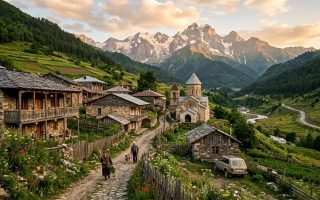
This mountain town in the Japan Alps preserved its merchant district so well that walking through feels like time travel. Two-story wooden buildings from the Edo period still house sake breweries, miso makers, and family shops.
Morning markets run daily along the Miyagawa River. Farmers from surrounding villages sell mountain vegetables, handmade pickles, and crafts. The atmosphere stays relaxed and local, unlike tourist markets in bigger cities.
Takayama’s spring and autumn festivals rank among Japan’s most spectacular. Elaborate floats from the 1600s parade through streets, some featuring mechanical puppets that still work. If you can’t visit during festival season, the Takayama Festival Floats Exhibition Hall displays several year-round.
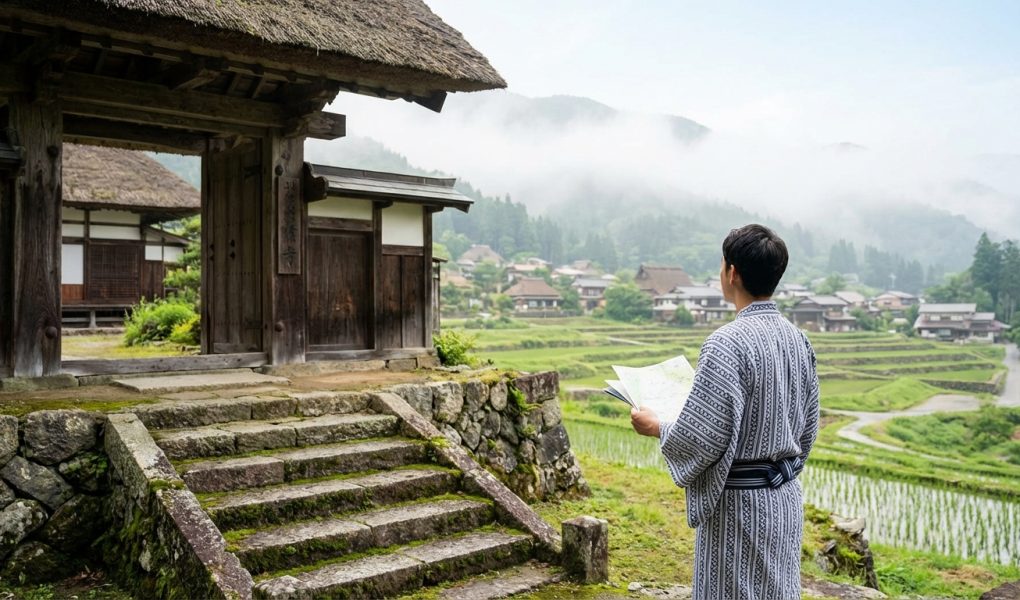
The Hida Folk Village preserves traditional gassho-zukuri farmhouses relocated from surrounding mountains. These steep-thatched roofs were designed to shed heavy snow. You can enter the buildings and see how families lived, with irori hearths still in the center of main rooms.
Local Hida beef rivals Kobe’s reputation at lower prices. Small restaurants throughout town serve it grilled over charcoal or as sushi.
From Takayama, you can reach Shirakawa-go, a UNESCO World Heritage village of gassho-zukuri houses still inhabited by families. Stay overnight in a farmhouse to experience rural hospitality and wake to mountain views.
The journey from Tokyo takes about 4.5 hours, changing trains in Nagoya.
Naoshima Turned an Island Into Art
This small island in the Seto Inland Sea became an unlikely art destination through vision and investment. Yayoi Kusama’s yellow pumpkin sits on a pier. Tadao Ando designed museums built into hillsides. Contemporary installations appear in abandoned houses and along beaches.
The Chichu Art Museum houses permanent works by Claude Monet, James Turrell, and Walter De Maria in spaces designed specifically for each piece. Natural light changes how you see the art throughout the day. Book tickets in advance as they limit daily visitors.
The Art House Project transformed seven abandoned structures in Honmura village into art installations. Artist Hiroshi Sugimoto converted a 200-year-old wooden house into a shrine to the Shinto god of performing arts. Another building contains a pool of numbers by Japanese artist Tatsuo Miyajima.
Benesse House combines museum and hotel. Staying there gives you after-hours access to galleries and outdoor sculptures. Rooms overlook the Seto Inland Sea.
The island works best as a two-day visit, though many attempt it as a day trip from Okayama or Takamatsu. Ferries run regularly from Uno Port, which connects to Okayama by train.
Similar to how planning temple visits requires avoiding peak crowds, visiting on weekdays provides a more contemplative experience with the installations.
Hokkaido Offers Space and Wildness
Japan’s northernmost island feels different from the rest of the country. Indigenous Ainu culture predates Japanese settlement. Russian influence appears in architecture. The landscape stretches wider, with fewer people and more wildlife.
Sapporo serves as the regional hub, famous for beer, ramen, and the February Snow Festival. But the real reasons to visit Hokkaido lie outside the city.
Furano and Biei present flower fields and rolling hills that look like European countryside. Visit in July when lavender blooms purple across the landscape. Farm restaurants serve dishes made from vegetables grown steps away.
Shiretoko National Park on the eastern peninsula remains one of Japan’s wildest places. Brown bears fish for salmon in rivers. Eagles nest in coastal cliffs. Boat tours from Utoro let you see the coastline’s waterfalls and wildlife from the sea.
Hakodate’s morning market starts at 5 AM with vendors selling king crab, sea urchin, and squid so fresh it still moves on your plate. The city’s star-shaped fort and night views from Mount Hakodate make it worth a stop between Tokyo and Sapporo.
Winter brings world-class powder snow to Niseko, though it’s no longer a secret. For less crowded skiing, try Furano or Rusutsu.
Hokkaido’s scale requires more time than most Japan itineraries allow. Budget at least four days to see multiple areas without rushing.
Hiroshima Teaches Essential History
The Peace Memorial Museum and Atomic Bomb Dome confront you with history that shaped the modern world. The museum doesn’t sensationalize. It documents what happened on August 6, 1945, through artifacts, photographs, and survivor testimonies.
The experience stays with you. It should.
But Hiroshima today thrives as a modern city famous for okonomiyaki (savory pancakes layered with noodles, cabbage, and your choice of toppings). Okonomimura houses 24 small restaurants, each serving their family’s version.
From Hiroshima, ferries reach Miyajima Island in 30 minutes. The floating torii gate of Itsukushima Shrine appears in countless photographs, but seeing it in person, especially at high tide when it seems to hover on water, justifies the trip.
Miyajima’s main street gets crowded, but hiking Mount Misen takes you above the tour groups. The trail passes through forest to summit views over the Seto Inland Sea. Temples and stone lanterns line the path, some dating back over 1,000 years.
Wild deer roam freely on Miyajima, though they’re less aggressive than Nara’s famous herd.
Hiroshima sits on the Tokaido-Sanyo Shinkansen line, making it an easy stop between Kyoto and destinations in western Japan.
Kiso Valley Preserves the Old Nakasendo Trail
The Nakasendo was one of five routes connecting Tokyo and Kyoto during the Edo period. While most of the old highway disappeared under modern roads, the Kiso Valley section between Magome and Tsumago remains walkable through forest and farmland.
The hike takes about three hours at a relaxed pace. Stone paths wind through cedar forest. Rest houses offer tea and snacks. The trail feels remarkably peaceful given how close it runs to civilization.
Tsumago banned telephone poles and modern facades in 1968, preserving its appearance as a post town where travelers once stopped for the night. Wooden buildings house small museums, craft shops, and minshuku (family-run guesthouses).
Staying overnight in a traditional inn lets you experience the town after day visitors leave. Dinner arrives on lacquered trays with local mountain vegetables and river fish. In the morning, you can watch mist fill the valley before the first tour bus arrives.
Magome, the other end of the trail, sits on a hillside with stone steps connecting the upper and lower parts of town. It sees more tourists than Tsumago but maintains its historical character.
The nearest major station is Nagoya, about two hours away by limited express train and bus.
Matsumoto Guards Its Original Castle
Most Japanese castles are concrete reconstructions. Matsumoto Castle is the real thing, built in 1594 and never destroyed. Its black exterior earned it the nickname “Crow Castle.”
Climbing the steep wooden stairs inside takes you through six floors to views over the Japan Alps. The castle’s design prioritized defense, with hidden floors for soldiers and openings for dropping stones on attackers.
The castle town around it maintains traditional merchant houses and sake breweries. Nawate Street runs along a canal lined with frog-themed decorations and small shops selling crafts and snacks.
Matsumoto serves as a base for exploring the Northern Japan Alps. The Kamikochi valley offers some of Japan’s best mountain hiking, with trails ranging from easy riverside walks to challenging peak climbs.
The town also houses the Japan Ukiyo-e Museum, holding one of the world’s largest collections of woodblock prints, though you need to arrange a visit in advance.
From Tokyo, the journey takes about three hours by limited express train.
Ise Protects Japan’s Most Sacred Shrine
Ise Jingu has been rebuilt every 20 years for over 1,300 years, following Shinto beliefs about renewal and impermanence. The current buildings date from 2013, but they look ancient because craftsmen use the same techniques and materials as the originals.
The shrine complex spreads across forest, with the inner shrine (Naiku) dedicated to Amaterasu, the sun goddess and mythical ancestor of the imperial family. You can’t enter the innermost sanctum, but standing at the gate watching priests in white robes perform rituals connects you to traditions older than most religions.
Oharai-machi and Okage-yokocho streets near the shrine recreate Edo-period architecture. Shops sell akafuku mochi, a local sweet made from rice cake and red bean paste that pilgrims have eaten here for 300 years.
Ise sits on the Shima Peninsula, where ama (female divers) still collect abalone and sea urchin using techniques passed down for 2,000 years. Several villages offer the chance to meet ama divers and eat seafood they’ve caught, grilled over charcoal in simple huts.
The journey from Nagoya takes about 90 minutes by limited express train.
Beppu Steams With Natural Hot Springs
This city on Kyushu island sits on volcanic vents that produce more hot spring water than anywhere else in Japan. Steam rises from manholes. Public bathhouses occupy every neighborhood. The whole town smells faintly of sulfur.
The “hells” (jigoku) are boiling hot springs too hot for bathing, each with different colors from minerals in the water. Umi Jigoku glows cobalt blue. Chinoike Jigoku bubbles red like blood. They’re touristy but genuinely impressive.
For actual bathing, Beppu offers everything from simple neighborhood baths to elaborate spa resorts. Takegawara Onsen has provided sand baths since 1879, where attendants bury you in naturally heated sand for 10 minutes of intense sweating.
The ropeway up Mount Tsurumi takes you above the city for views over Beppu Bay and access to hiking trails through volcanic landscape.
Beppu’s location on Kyushu makes it easy to combine with other destinations on the island. Yufuin, 30 minutes away, offers a more refined hot spring experience with art galleries and boutique shops.
From Fukuoka, the journey takes about two hours by limited express train.
Planning Your Route Beyond the Tourist Trail
Most of these destinations connect easily by Japan Rail Pass, making them practical additions to a longer itinerary. The pass covers most trains, including many shinkansen lines, plus some ferries.
Consider these approaches for building an itinerary:
-
Choose a region to focus on rather than trying to see everything. Northern areas (Kanazawa, Takayama, Matsumoto) work well together. Western destinations (Hiroshima, Naoshima, Beppu) form another logical route.
-
Mix famous and lesser-known stops to balance your trip. Spend three days in Tokyo, then head to Takayama for a different pace before continuing to Kyoto.
-
Stay overnight in smaller towns to experience them after day-trippers leave. Many places transform in the evening when tour buses depart.
-
Book accommodations early in popular areas, especially during cherry blossom season (late March to early April) and autumn foliage (November).
-
Learn basic phrases to navigate smaller towns where English is less common. A few words of Japanese open doors that remain closed to tourists who expect everyone to speak English.
| Destination | Best Season | Days Needed | Main Draw |
|---|---|---|---|
| Kanazawa | Year-round | 2 | Preserved districts, gardens, crafts |
| Takayama | Spring/Fall | 2-3 | Mountain culture, festivals, traditional architecture |
| Naoshima | Spring/Fall | 2 | Contemporary art, museums, island atmosphere |
| Hokkaido | Summer/Winter | 4+ | Nature, space, winter sports, Ainu culture |
| Hiroshima | Year-round | 2 | History, Miyajima Island, local food |
| Kiso Valley | Spring/Fall | 1-2 | Historic trail walking, post towns |
| Matsumoto | Spring/Fall | 1-2 | Original castle, Alps access |
| Ise | Year-round | 1-2 | Sacred shrine, coastal culture |
| Beppu | Year-round | 1-2 | Hot springs, volcanic features |
“The best way to understand Japan is to leave the cities where everyone speaks English and visit places where you have to figure things out. That’s where you meet people who want to share their culture, not just sell you something.” — Regional travel guide who has led tours throughout Japan for 15 years
Finding Authentic Experiences Off the Main Routes
Smaller destinations often provide better opportunities to connect with local culture. Restaurant owners have time to explain dishes. Shop keepers demonstrate traditional crafts. You’re not just another tourist in a stream of thousands.
Finding where locals actually eat becomes easier in towns where tourism doesn’t dominate the economy. The best ramen shop in Takayama serves construction workers and office staff, not just visitors.
Regional festivals happen throughout the year in smaller cities. These aren’t performances for tourists. They’re community events where neighborhoods compete with elaborate floats, children learn traditional dances, and everyone gathers for celebration.
Craft traditions survive in places where artisans can afford workshop space and find local customers. Kanazawa’s gold leaf craftsmen, Takayama’s wood carvers, and Matsumoto’s lacquerware makers welcome visitors to their studios.
Transportation between smaller destinations sometimes requires more planning than hopping on a shinkansen. Local trains run less frequently. Buses might not have English announcements. But that slight inconvenience filters out crowds and rewards you with experiences that feel personal rather than packaged.
Budget considerations matter too. Building a realistic travel budget for these destinations often reveals they cost less than staying in Tokyo or Kyoto. Accommodations run cheaper. Meals at local restaurants cost half what tourist areas charge. Entry fees for attractions tend to be lower.
Common Mistakes to Avoid
Trying to see too much too fast tops the list of planning errors. Japan’s efficient trains make it tempting to visit a different city every day, but you’ll spend more time traveling than experiencing places.
Skipping smaller destinations entirely because they require an extra train change or don’t have as many Instagram-famous spots means missing what makes Japan special beyond the highlights.
Visiting only during cherry blossom season creates crowds and inflated prices everywhere. Late May through June offers green landscapes and fewer tourists. September and October bring autumn colors without the cherry blossom chaos.
Assuming everywhere will be crowded like Tokyo and Kyoto leads people to rush through destinations that actually allow for relaxed exploration.
Not reserving seats on popular train routes during peak seasons can mean standing for hours. The Japan Rail Pass doesn’t automatically include seat reservations, which cost extra but are worth it.
Here are practical tips that make a difference:
- Start your day early to see popular sites before crowds arrive, especially at gardens and outdoor attractions.
- Eat dinner early (6-7 PM) to avoid waits at popular restaurants, or go late (after 9 PM) when the rush subsides.
- Carry cash since many smaller towns have limited ATMs and some businesses don’t accept cards.
- Download offline maps because cell service can be spotty in mountain areas.
- Pack light because you’ll likely carry your luggage on trains and through stations without elevators.
Weather and Seasonal Considerations
Japan’s climate varies dramatically from north to south. Hokkaido gets heavy snow from December through March, while Kyushu stays relatively mild. Summer brings heat and humidity everywhere, with typhoon season running June through October.
Spring (March to May) draws the biggest crowds for cherry blossoms but offers comfortable temperatures and clear skies. Book accommodations months in advance.
Summer (June to August) means hot, humid weather and rainy season in June. Mountain destinations like Takayama and Kamikochi provide cooler alternatives. Hokkaido stays pleasant while the rest of Japan swelters.
Fall (September to November) rivals spring for beauty without quite the same crowds. Autumn leaves peak at different times depending on latitude and elevation, giving you a longer window than cherry blossoms.
Winter (December to February) brings snow to northern and mountain areas, making them spectacular for winter sports or snowy landscapes. Southern destinations stay mild and see far fewer tourists.
Each season changes how you experience destinations. Kanazawa under snow looks completely different from Kanazawa in cherry blossom season. Naoshima’s outdoor art installations feel different in summer heat versus autumn cool.
Transportation Beyond the Shinkansen
The Japan Rail Pass covers most of your transportation needs, but understanding the rail network helps you plan better routes.
Shinkansen lines connect major cities at high speed. The Tokaido-Sanyo line runs from Tokyo through Kyoto and Hiroshima to Fukuoka. The Hokuriku line reaches Kanazawa. The Tohoku line heads north.
Limited express trains serve regional routes at lower speeds but with reserved seating and comfort similar to shinkansen. These connect smaller cities to the main network.
Local trains stop at every station and move slowly, but they reach places shinkansen don’t. The journey becomes part of the experience, passing through rice fields and small towns.
Buses fill gaps where trains don’t go. Highway buses connect cities overnight, saving a night’s accommodation. Local buses reach mountain villages and rural areas.
Ferries serve islands and coastal routes. Some are covered by the Japan Rail Pass. Others require separate tickets but offer scenic journeys.
Renting a car makes sense for some destinations, particularly rural Hokkaido or the Ise-Shima Peninsula. Japanese roads are well-maintained and signage includes English in most areas. Just remember they drive on the left.
Making the Most of Limited Time
If you only have a week or two, you can still venture beyond Tokyo and Kyoto by choosing destinations strategically.
One week sample: Tokyo (3 days), Takayama (2 days), Kyoto (2 days). This gives you big city energy, mountain culture, and historical sites without excessive travel time.
Two week sample: Tokyo (3 days), Kanazawa (2 days), Takayama (2 days), Kyoto (2 days), Hiroshima and Miyajima (2 days), Naoshima (2 days). This covers multiple regions while keeping travel days manageable.
Northern focus: Tokyo (2 days), Matsumoto (1 day), Takayama (2 days), Kanazawa (2 days), back to Tokyo. This concentrates on the Japan Alps and Hokuriku region.
Western route: Kyoto (3 days), Hiroshima (2 days), Naoshima (2 days), Beppu (2 days), back through Kyoto to Tokyo. This emphasizes western Honshu and northern Kyushu.
Each approach offers a different perspective on Japan while including destinations where you can experience local culture without fighting crowds.
The key is accepting you can’t see everything in one trip. Choose a few destinations to experience properly rather than trying to check every box.
Your Japan Beyond the Guidebook
The destinations that stick with you often aren’t the most famous ones. They’re the places where a shopkeeper took time to explain how to eat a local sweet, where you watched the sun set over mountains from a hot spring, where you got slightly lost and found something unexpected.
Japan rewards travelers who venture beyond the established circuit. The country is safe, transportation is reliable, and people genuinely want to help even when language barriers exist. That combination makes it easier to visit lesser-known destinations than in most countries.
Start planning your route by choosing one or two places from this list that genuinely interest you. Research them properly. Book accommodations early. Learn a few phrases. Then go see a side of Japan that most visitors miss.
The trains will get you there. The experiences will bring you back.