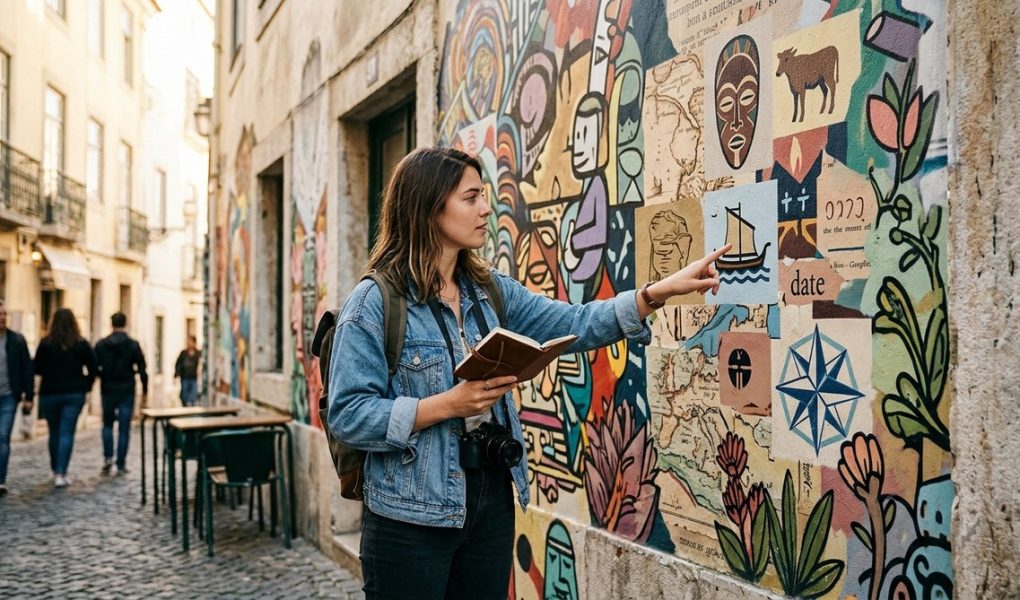
A massive mural of a young girl holding a balloon catches your eye as you round a corner in a foreign city. The colors are vivid. The style feels familiar. But what is the artist actually saying? Street art is more than decoration. It is a conversation between the artist and the community. Once you learn to read the visual language, every wall becomes a window into local politics, history, and identity. This street art meanings guide will teach you how to decode those messages on your next trip.
Street art functions as a public diary for cities. By learning to identify common symbols, signature styles, and placement choices, you can read the true story behind any mural. This guide gives you a simple framework to decode murals anywhere in the world, turning a casual walk into a cultural deep dive.
Why Street Art Speaks Louder Than Souvenirs
Museums curate a sanitized version of a place. Street art shows you the raw, unfiltered pulse of a neighborhood. In cities like Berlin, Buenos Aires, and Melbourne, murals document protest movements, celebrate local heroes, and reclaim public space. A government might not fund a statue of a controversial activist, but a spray can costs very little. That is why street art often tells the truth that official narratives leave out.
When you travel, looking at murals helps you understand what people actually care about. A wall covered in portraits of missing indigenous women in a South American city tells you about a crisis the tourism board will never mention. A cheerful mural of a fisherman in a Portuguese town celebrates a livelihood that is disappearing. These are not random images. They are deliberate statements.
The Three Layers of Any Mural
To decode a piece of street art, you need to look at three things working together: the subject, the style, and the setting. Each layer adds meaning.
Subject is the obvious one. Who or what is depicted? A political figure, an animal, an abstract shape. The subject is the entry point. But do not stop there.
Style reveals the artist’s influences and intentions. Realistic portraits often demand respect for the person shown. Cartoonish characters can add humor or irony. Abstract splashes of color might represent chaos or energy. A mural painted in the style of indigenous textile patterns is making a statement about cultural heritage.
Setting is where location does most of the work. A mural on a destroyed building in a war zone means something different than the same image on a trendy cafe wall. Look at what is around the mural. Is it in a wealthy district or a marginalized one? Is it on a government building or a private home? The context changes the story.
A Practical System for Reading Murals
Use this numbered process the next time you stop in front of a wall. It takes less than two minutes.
-
Identify the dominant color palette first. Warm colors like red and orange often signal urgency, passion, or danger. Cool blues and greens suggest calm, sadness, or nature. A mural with mostly black and white might be making a serious political point. Color sets the emotional tone before you even process the image.
-
Look for recurring symbols in the city. Many cities have visual motifs that appear across multiple works. In Valparaiso, Chile, you see lots of fish and sea creatures because the port city identity is central. In Belfast, murals feature specific flags, initials, and historical figures tied to the Troubles. If you see the same symbol three times in one afternoon, it is probably a local shorthand.
-
Check for a signature or tag. Street artists often leave a stylized name. Look in the bottom corner, behind a drainpipe, or hidden inside the image itself. Once you know an artist’s tag, you can look up their body of work online. That context will unlock the meaning of everything else they have painted in the city.
-
Read the wall for wear and layering. Is the mural fresh or faded? Are there stickers or smaller tags layered on top of it? Street art is a conversation that happens over time. A newer mural painted over an older one might be a response or a correction. The layers tell a story of competing voices.
Common Visual Symbols and Their Meanings
Some symbols appear in street art all over the world. Here is a starting guide.
| Symbol | Common Meaning | Example City |
|---|---|---|
| Dove or bird | Peace, freedom, or escape | Berlin, Germany |
| Crown | Power, respect, or defiance | New York, USA |
| Skull | Mortality, rebellion, or warning | Mexico City, Mexico |
| Key | Access, secrets, or opportunity | Lisbon, Portugal |
| Heart | Love, community, or protest | Paris, France |
| Mask | Hidden identity or social critique | London, UK |
| Broken chains | Liberation or overcoming oppression | Cape Town, South Africa |
These meanings shift depending on context. A crown in a wealthy neighborhood might be ironic. A crown in a low-income community might represent earned respect. Always check the setting.
What to Avoid When Interpreting Murals
It is easy to misinterpret street art if you are not careful. Here are the most common mistakes travelers make.
- Assuming all street art is political. Some murals are purely decorative or commissioned by businesses. Not every wall carries a protest message.
- Ignoring the legal status. A mural painted with permission (a mural) and a piece painted illegally (a tag or graffiti) carry different weight. Illegal work often takes more risk and therefore makes a bolder statement.
- Using Western symbols everywhere. A symbol you recognize from home might mean something completely different in another culture. Do not project your own assumptions onto a local artwork.
- Forgetting about the artist’s safety. In some countries, street artists face arrest or violence. If a mural is critical of the government, the message is even more significant because of the danger involved.
“Street art is the closest thing we have to a global visual language. But like any language, you have to learn the local dialect before you can understand what is being said.”
Caleb Neelon, co-author of Street Art World
How to Find the Best Street Art in Any City
You do not need a tour guide to find meaningful murals. Use these tips to build your own route.
- Look for neighborhoods undergoing change. Areas near gentrification often have the most street art because artists are drawn to cheap rent and empty walls. East London, Williamsburg in Brooklyn, and the 13th Arrondissement in Paris are classic examples.
- Search for “street art [city name]” on Instagram before you go. Local artists often tag their locations. Save the posts and build a map.
- Follow the train tracks. Railway corridors, underpasses, and industrial zones are prime canvas spaces in most cities.
- Visit during daylight first. Scout a neighborhood in the morning, then return in the evening when the light makes the colors pop for photos.
If you want a structured approach, many cities now offer self-guided walking tours. But the real magic happens when you wander without a plan and let the walls guide you.
Connecting Street Art to Deeper Travel
Understanding murals changes how you experience a place. When you can read a wall, you stop being a passive observer. You start having a conversation with the city itself. That mural of the girl with the balloon? In the right context, it might be about lost childhood, economic hope, or a specific local tragedy. You will only know if you look closely.
This skill pairs well with other forms of cultural immersion. Once you learn to read visual stories on walls, you will start noticing the same layered storytelling in local markets, food stalls, and festivals. The same curiosity that helps you decode a mural will help you understand why a certain dish matters or why a festival happens on a specific date.
For more ways to travel with intention, check out our guide on how traditional craftsmanship reveals a destination’s soul. It follows the same principle of looking deeper at what is already in front of you.
Your Next Steps as a Street Art Traveler
Before your next trip, spend twenty minutes learning about the local political climate. Read a recent news article about the city you are visiting. Knowing what people are angry or hopeful about will make the murals ten times more meaningful. Pack a small notebook. Write down the symbols you see and where you saw them. By the end of the trip, you will have a map of the city’s emotional landscape.
Street art is not just for Instagram. It is a record of what real people think and feel. Learning to read it makes you a better traveler, a more empathetic observer, and a sharper thinker. The next time you see a wall covered in paint, stop. Look at the colors. Look at the symbols. Ask yourself what the artist wanted to say. Then listen. The wall will tell you.