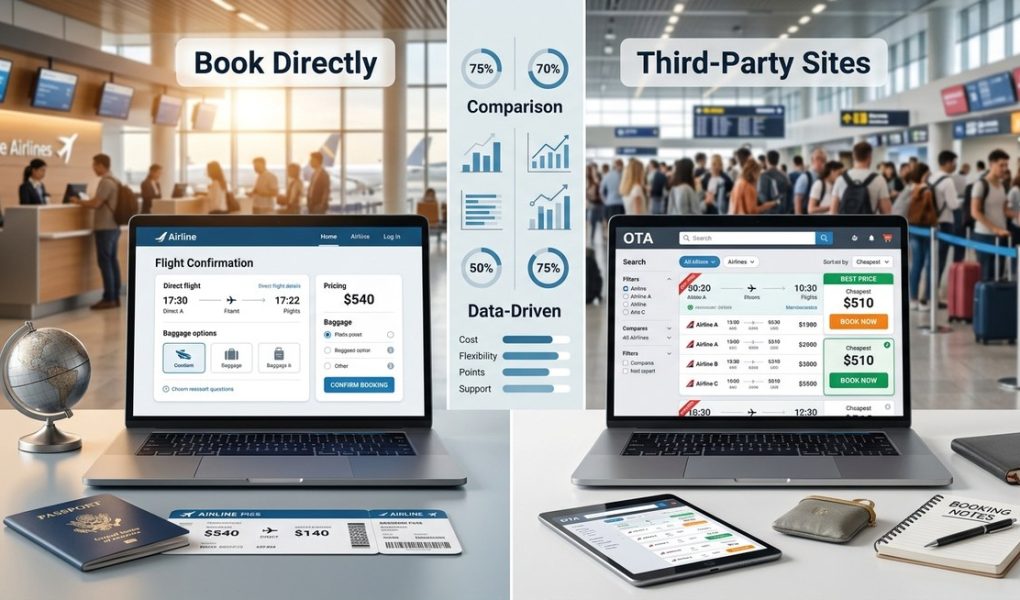
Travel planning can feel overwhelming. With so many options to book flights, it’s common to wonder if you should go directly to airlines or use third-party sites. Each method has its perks and pitfalls. Knowing which approach aligns with your travel goals can save you money, time, and hassle. Let’s break down the facts on booking flights directly versus through third-party platforms so you can make smarter choices on your next adventure.
Why the way you book your flights matters
Choosing the right booking method influences your overall trip experience. It affects your savings, flexibility, customer support, and even your ability to earn rewards. As a traveler, understanding the nuances can help you avoid pitfalls and maximize benefits.
This guide digs into the data and real-world insights to answer the big question: should you book flights directly or through third-party sites? We’ll look at costs, convenience, risks, and tips to help you decide what works best for your travel style.
Booking directly often offers better customer support and potential savings, but third-party sites can provide access to exclusive deals and bundled offers. The best choice depends on your priorities, trip complexity, and risk tolerance.
Comparing direct booking and third-party sites
Understanding the differences between booking directly and through third-party platforms helps you weigh their advantages.
Booking flights directly with airlines
When you book directly, you deal straight with the airline’s website or customer service. Many airlines offer perks like easier changes, better customer support, and sometimes exclusive discounts for direct bookings.
Advantages:
- Better customer service: If something goes wrong, dealing directly with the airline can result in quicker resolutions.
- Access to loyalty programs: Booking directly often allows you to earn more points or miles with the airline’s rewards program.
- Fewer hidden fees: Airlines usually don’t charge extra for booking directly, unlike some third-party platforms.
- More control: Making changes or cancellations tends to be simpler and more straightforward.
Potential drawbacks:
- Limited deals: You might find fewer discounts or bundled offers compared to third-party sites.
- Time-consuming: Searching multiple airline sites can take longer.
Booking through third-party sites
Third-party platforms like Expedia, Skyscanner, Kayak, or Google Flights aggregate flight options from many airlines. They often highlight deals and allow you to compare prices quickly.
Advantages:
- Access to exclusive deals: These sites sometimes negotiate special rates or offer discounts not available directly.
- Convenient comparison: See multiple airlines and fare options side by side.
- Bundled packages: You can add hotels, car rentals, and activities in one booking.
- Save time: Find options across different airlines in a single search.
Potential pitfalls:
- Limited customer support: Resolving issues can be complicated because you’re dealing with the third-party, not the airline.
- Hidden fees: Some platforms add booking fees or extra charges at checkout.
- Less flexible: Changes or cancellations might be more restrictive or costly.
Practical steps to decide your booking method
Knowing your priorities helps determine which approach suits you best. Here’s a simple process:
-
Identify your travel needs: Are you booking a simple round-trip or a complex multi-city journey? Do you need flexibility or are you set on non-refundable fares?
-
Compare prices: Use flight comparison tools to check if the third-party site offers savings. Sometimes these platforms reveal deals airlines don’t advertise directly.
-
Check loyalty benefits: Are you a frequent flyer with a specific airline? Booking directly might maximize your rewards.
-
Assess risk and support needs: If your trip involves multiple connections, special accommodations, or flexible dates, consider booking directly for easier management.
-
Review cancellation and change policies: Read the fine print to understand fees and procedures. Sometimes booking directly offers more leniency.
-
Consider bundled offers: If you plan to add hotels or rental cars, some third-party sites can offer better bundles.
Step-by-step process in action:
- Search for your flight on a comparison site like Skyscanner.
- Note the price and airline options.
- Visit the airline’s official website to see if prices match or are lower.
- Evaluate any loyalty benefits or extra perks offered for direct bookings.
- Decide based on price, convenience, and your comfort with potential risks.
Common mistakes to avoid
Making uninformed decisions can cost you. Here are typical pitfalls:
| Technique | Mistake | Explanation |
|---|---|---|
| Booking on low-cost third-party sites | Overlooking extra fees | Some platforms hide additional charges until checkout. |
| Relying solely on third-party deals | Missing out on loyalty rewards | Booking directly might earn you more points or perks. |
| Ignoring cancellation policies | Non-refundable tickets | Always review rules before confirming. |
| Not comparing across sources | Overpaying | Always check airline sites for potential savings. |
Expert advice on booking strategies
“Always compare prices on both airline websites and third-party platforms before booking. Sometimes the lowest fare appears on a third-party site, but additional fees or inflexibility can offset the savings,” advises seasoned travel planner Laura Jenkins.
Balancing benefits and risks
Choosing between booking directly and through third-party sites isn’t always black and white. If your priority is customer support, flexibility, and rewards, booking directly makes sense. For quick comparisons, bundled deals, or finding the best bargain, third-party platforms can be invaluable.
Making the most of your booking choice
Here are a few tips to optimize your flight booking experience:
- Use multiple sources: Always cross-check prices on airline sites and comparison tools.
- Be flexible with dates: Slight adjustments can unlock savings.
- Read the fine print: Understand cancellation, change, and baggage policies.
- Join frequent flyer programs: Maximize benefits whether booking directly or indirectly.
- Watch for hidden fees: Especially on third-party sites.
Your travel journey starts with a smart booking decision
Ultimately, the choice depends on your specific trip, preferences, and comfort level. If you value support and rewards, booking directly with airlines often pays off. For budget-conscious travelers or those seeking convenience, third-party sites can provide valuable access to deals. Combining both approaches and doing a little research ensures you get the best of both worlds.
Keep your travel plans smooth with informed choices
Next time you plan a trip, take a moment to compare your options. Whether you’re booking for a weekend getaway or a multi-leg adventure, understanding the strengths and weaknesses of each method empowers you to make decisions that save money and reduce stress. Happy travels start with smart planning.
Ready to make your flight bookings work for you? Remember, a little prep goes a long way. Use comparison tools, check loyalty benefits, and read the fine print. Making informed choices helps you enjoy your journey from the moment you click “book.”