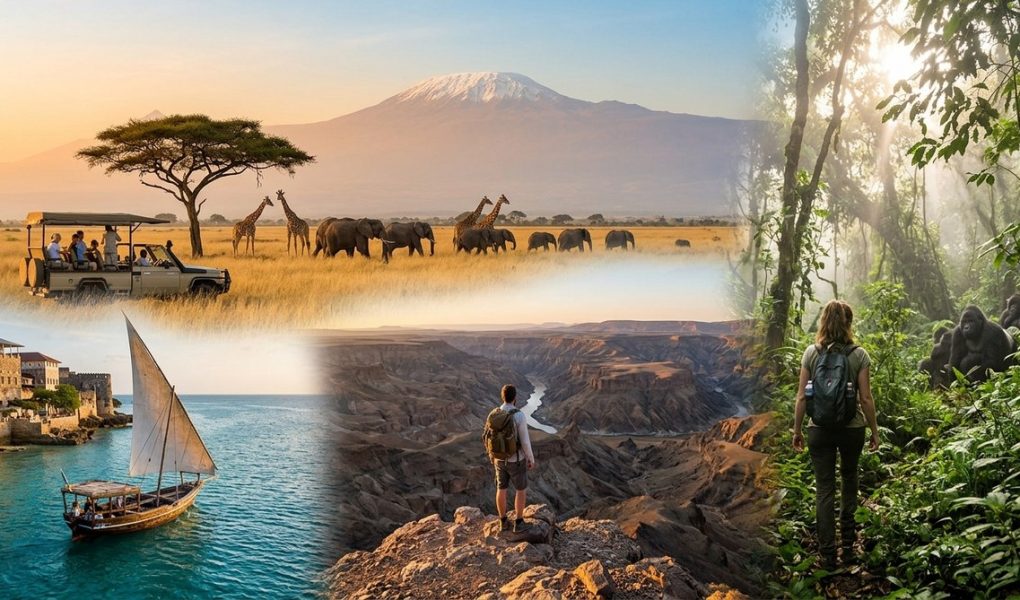
Africa doesn’t fit into the box most travelers expect. The continent spans 54 countries, each with distinct landscapes, cultures, and experiences that challenge every preconception. From turquoise coastlines to ancient cities, volcanic peaks to sprawling savannas, the best African destinations to visit offer transformations that go far beyond your typical vacation.
Africa’s most compelling destinations span Morocco’s desert landscapes, Tanzania’s wildlife-rich plains, South Africa’s diverse regions, Rwanda’s mountain gorilla habitats, and Botswana’s pristine waterways. Each location challenges stereotypes while offering authentic cultural encounters, world-class wildlife viewing, and landscapes that exist nowhere else on Earth. First-time visitors discover a continent far more nuanced, sophisticated, and welcoming than media portrayals suggest.
Morocco’s Atlas Mountains and Sahara Desert
Morocco serves as an accessible gateway for travelers new to Africa. The country blends Arab, Berber, and European influences into something entirely its own.
Marrakech’s medina overwhelms the senses with spice markets, leather tanneries, and labyrinthine alleyways. But the real magic happens when you venture into the Atlas Mountains or toward the Sahara.
The High Atlas range offers hiking trails through Berber villages where hospitality means mint tea with every encounter. Toubkal National Park contains North Africa’s highest peak, accessible to trekkers with moderate fitness levels.
Further south, the Sahara presents an entirely different experience. Erg Chebbi’s dunes near Merzouga rise 500 feet high, creating a landscape of shifting amber waves. Spending a night in a desert camp, watching stars emerge in numbers impossible near cities, resets your perspective on scale and silence.
If you’re drawn to desert landscapes with cultural depth, the perfect 7-day Moroccan desert adventure for first-time visitors provides a structured approach to experiencing these regions without feeling rushed.
“Morocco taught me that Africa contains multitudes. Within one country, I experienced snow-capped mountains, rolling deserts, coastal cities, and medieval architecture. It shattered my assumption that African countries were monolithic.” — Sarah Chen, travel writer
Tanzania’s Serengeti and Zanzibar Coast
Tanzania combines two completely different experiences into one destination. The northern safari circuit delivers wildlife encounters that exceed documentary footage, while Zanzibar offers Indian Ocean beaches and Swahili culture.
The Serengeti ecosystem supports the Great Migration, where over two million wildebeest, zebras, and gazelles move in a continuous loop following seasonal rains. Timing your visit between June and October positions you for river crossings, where herds navigate crocodile-infested waters in dramatic fashion.
Ngorongoro Crater functions as a natural amphitheater containing the Big Five within a collapsed volcanic caldera. The density of wildlife here means you’ll likely spot lions, elephants, rhinos, leopards, and buffalo within a single game drive.
After safari days, Zanzibar provides cultural immersion in Stone Town’s UNESCO-listed old quarter. Narrow streets reveal carved wooden doors, spice markets, and rooftop restaurants serving Swahili cuisine that blends African, Arab, and Indian influences.
The archipelago’s beaches on the east coast feature powdery white sand and water so clear you can see fish from the shore. Snorkeling trips to Mnemba Atoll bring you face-to-face with sea turtles, dolphins, and reef sharks.
South Africa’s Garden Route and Winelands
South Africa packs remarkable diversity into a manageable geography. Cape Town alone offers Table Mountain hikes, penguin colonies at Boulders Beach, and the vibrant Bo-Kaap neighborhood with its candy-colored houses.
The Garden Route stretches along the southern coast between Mossel Bay and Storms River. This 200-mile drive includes coastal cliffs, indigenous forests, and charming towns like Knysna and Plettenberg Bay.
Tsitsikamma National Park protects ancient yellowwood forests and dramatic coastline. The Storms River Mouth suspension bridge sways above churning ocean waters, while hiking trails wind through canopy forests that feel prehistoric.
The Winelands region around Stellenbosch and Franschhoek rivals any wine destination globally. Cape Dutch architecture frames vineyard valleys where you can taste world-class wines while overlooking mountain ranges.
Kruger National Park, though farther northeast, remains one of Africa’s premier self-drive safari destinations. The park’s extensive road network and varied ecosystems mean you can spot wildlife independently without constant guide assistance.
Planning Your South African Journey
- Start in Cape Town for 4-5 days covering Table Mountain, Cape Point, and the Winelands.
- Drive the Garden Route over 5-7 days, stopping in Hermanus for whale watching (June to November).
- Fly to Kruger for 3-4 days of safari experiences.
- Consider adding Durban for Indian Ocean warmth and Zulu cultural experiences.
Rwanda’s Volcanoes National Park
Rwanda transformed itself from tragedy to one of Africa’s safest, cleanest, and most progressive nations. The country’s mountain gorilla population represents one of travel’s most profound wildlife encounters.
Volcanoes National Park protects the Virunga Mountains, where roughly half of the world’s remaining mountain gorillas live. Trekking permits cost $1,500, but the experience justifies the investment.
Treks begin early, with guides leading small groups through bamboo forests and volcanic slopes. The altitude and terrain can be challenging, but porters are available to assist.
When you locate a gorilla family, you’ll spend one hour observing them from about 20 feet away. Watching silverbacks interact with playful juveniles, mothers nursing infants, and adolescents wrestling creates an emotional connection that photos can’t capture.
Kigali, Rwanda’s capital, surprises visitors with its cleanliness, safety, and sophisticated restaurant scene. The Kigali Genocide Memorial provides essential historical context, honoring victims while explaining how the nation rebuilt.
Botswana’s Okavango Delta
Botswana prioritizes low-volume, high-value tourism, resulting in pristine wilderness areas without crowds. The Okavango Delta stands as one of Earth’s unique ecosystems, where a massive river floods into the Kalahari Desert instead of reaching the ocean.
The delta’s seasonal flooding (May to September) creates a watery paradise attracting elephants, hippos, crocodiles, and hundreds of bird species. Traditional mokoro (dugout canoe) trips glide silently through reed-lined channels, bringing you eye-level with wildlife.
Chief’s Island and the Moremi Game Reserve offer exceptional game viewing on both land and water. Walking safaris here feel more adventurous than vehicle-based drives, as guides track animals on foot while explaining ecosystem interconnections.
Chobe National Park, in Botswana’s northeast, contains Africa’s largest elephant population. River cruises along the Chobe River at sunset provide front-row seats to elephants swimming, bathing, and playing.
The country’s commitment to conservation means wildlife populations thrive. You’ll often have sightings to yourself, a rarity in more accessible parks.
Namibia’s Desert Landscapes
Namibia feels otherworldly. The country’s vast emptiness, dramatic dunes, and stark beauty attract photographers and adventurers seeking solitude.
Sossusvlei in Namib-Naukluft National Park contains the world’s highest sand dunes, some reaching 1,000 feet. Climbing Big Daddy or Dune 45 at sunrise reveals an ocean of orange sand meeting cobalt sky.
Deadvlei, a white clay pan dotted with 900-year-old dead camel thorn trees, creates surreal photographic compositions. The contrast between black trees, white pan, orange dunes, and blue sky looks digitally enhanced but exists naturally.
The Skeleton Coast earned its name from shipwrecks and whale bones scattered along foggy shores. This desolate region where desert meets ocean supports adapted wildlife including desert elephants, lions, and seals.
Etosha National Park’s salt pan spans 75 miles, visible from space. During dry season (May to October), animals concentrate around waterholes, making wildlife viewing extraordinarily productive.
Namibia’s Unique Features
- Lowest population density: Space to experience nature without crowds
- German colonial architecture: Windhoek and Swakopmund blend African and European influences
- Dark sky reserves: Some of Earth’s best stargazing conditions
- Adventure activities: Sandboarding, quad biking, and scenic flights over dunes
Kenya’s Maasai Mara and Coast
Kenya pioneered African safari tourism and continues delivering exceptional wildlife experiences. The Maasai Mara National Reserve hosts the most dramatic portion of the Great Migration when herds cross from Tanzania’s Serengeti (typically July to October).
The Mara’s rolling grasslands support year-round wildlife populations beyond migration season. Lion prides, cheetah coalitions, and leopards hunting from acacia trees provide constant action.
Hot air balloon safaris over the Mara at dawn offer perspective on the ecosystem’s scale. Floating silently above herds while the sun rises creates a dreamlike experience worth the splurge.
Kenya’s Indian Ocean coast presents a different side of the country. Diani Beach south of Mombasa features white sand and warm water ideal for kitesurfing. Lamu Island, a UNESCO World Heritage site, preserves Swahili culture in a car-free environment where donkeys remain the primary transport.
The country’s diversity extends to landscapes. Mount Kenya, Africa’s second-highest peak, offers multi-day treks through alpine zones. The Great Rift Valley’s lakes attract millions of flamingos, creating pink shorelines visible for miles.
Egypt’s Ancient Wonders and Red Sea
Egypt connects Africa to the ancient world in ways no other destination matches. The Pyramids of Giza remain as impressive in person as in every photograph you’ve seen, but Egypt offers far more than Cairo’s monuments.
Luxor functions as an open-air museum where the Valley of the Kings, Karnak Temple, and Luxor Temple concentrate millennia of pharaonic history. Hiring an Egyptologist guide transforms stone ruins into stories of dynasties, beliefs, and daily life.
Nile cruises between Luxor and Aswan provide comfortable passage through Upper Egypt’s archaeological sites. Stopping at Edfu, Kom Ombo, and Philae temples breaks up sailing days with exploration.
The Red Sea coast offers world-class diving and snorkeling. Sharm el-Sheikh and Hurghada serve as jumping-off points for coral reefs teeming with colorful fish, rays, and occasional dolphins.
Egypt challenges visitors to reconcile ancient grandeur with modern chaos. Cairo’s traffic, touts, and intensity can overwhelm, but the country rewards those who push through initial culture shock.
Madagascar’s Unique Biodiversity
Madagascar split from the African mainland 165 million years ago, allowing evolution to take a completely different path. About 90% of the island’s wildlife exists nowhere else on Earth.
Lemurs represent Madagascar’s most famous residents. Over 100 lemur species range from tiny mouse lemurs to the indri, whose haunting calls echo through rainforests. Andasibe-Mantadia National Park offers accessible lemur viewing just three hours from the capital.
Avenue of the Baobabs near Morondava presents one of Africa’s most photographed scenes. Ancient baobab trees line a dirt road, their massive trunks and sparse branches creating silhouettes at sunset.
Tsingy de Bemaraha National Park protects a limestone karst formation of razor-sharp pinnacles. Via ferrata routes and suspension bridges allow you to navigate this “stone forest” that looks designed by an alien architect.
The island’s beaches rival any tropical destination. Nosy Be in the northwest offers resort comforts, while Île Sainte-Marie attracts humpback whales (July to September) during their breeding season.
Choosing Your First African Destination
Selecting where to start depends on your interests, budget, and comfort level with independent travel versus guided experiences.
| Destination | Best For | Budget Level | Ease of Travel |
|---|---|---|---|
| Morocco | Culture, desert landscapes, accessibility | Moderate | Easy (tourist infrastructure well-developed) |
| South Africa | Diversity, self-drive safaris, wine | Moderate to High | Easy (excellent roads, English widely spoken) |
| Tanzania | Classic safari, beach combination | High | Moderate (safaris require guides) |
| Kenya | Wildlife viewing, coastal culture | Moderate to High | Moderate (established tourism industry) |
| Rwanda | Gorilla trekking, safety, cleanliness | High | Easy (compact, well-organized) |
| Botswana | Pristine wilderness, exclusivity | Very High | Difficult (remote, fly-in camps) |
| Namibia | Dramatic landscapes, solitude | Moderate | Moderate (self-drive friendly but vast) |
| Egypt | Ancient history, diving | Low to Moderate | Moderate (crowds, persistent vendors) |
Practical Considerations for African Travel
Visa requirements vary dramatically by country and your passport. Many African nations offer visas on arrival or e-visas, but some require advance applications. Check requirements 2-3 months before departure.
Vaccinations typically include yellow fever (required for many countries), typhoid, hepatitis A, and routine boosters. Malaria prophylaxis is recommended for most safari destinations. Consult a travel medicine specialist 6-8 weeks before your trip.
Best travel seasons depend on your destination and priorities:
- East African safaris peak during dry seasons (June to October, January to February)
- Southern Africa’s dry winter (May to October) offers excellent wildlife viewing
- Morocco is pleasant spring and fall; summer brings extreme heat
- Egypt’s cooler months (October to April) make sightseeing more comfortable
Budget expectations range widely. Morocco and Egypt can be affordable with street food and mid-range hotels. Safari destinations command premium prices for lodging, park fees, and guides. Botswana deliberately positions itself as a luxury destination.
Safety concerns often dominate conversations about African travel, but most tourist areas are safer than many assume. Standard precautions apply: don’t flash valuables, avoid walking alone at night in cities, and follow local advice. Political situations can shift, so monitor travel advisories before departure.
Beyond the Highlights
The best African destinations extend far beyond this list. Ethiopia’s rock-hewn churches, Zambia’s walking safaris, Mozambique’s pristine coastline, and Senegal’s vibrant music scene all deserve attention.
Uganda offers gorilla trekking at lower prices than Rwanda, plus chimpanzee tracking in Kibale Forest. Zimbabwe’s Mana Pools National Park allows walking safaris that bring you remarkably close to elephants and other wildlife.
Malawi’s lake offers freshwater snorkeling and kayaking in a landlocked country most travelers overlook. Seychelles provides Indian Ocean luxury on granite islands that look photoshopped.
The continent rewards curiosity and flexibility. Travelers who venture beyond the standard circuit often find their most memorable experiences in unexpected places.
Just as learning basic phrases transforms your travel experience anywhere, attempting Swahili greetings in East Africa or Arabic phrases in North Africa opens doors that English alone cannot.
Common Mistakes to Avoid
Trying to see too much ranks as the top error. Africa’s size exceeds North America. Countries are vast, and distances between highlights can require full travel days. Choose 2-3 experiences and do them well rather than racing through a checklist.
Underestimating costs particularly for safaris causes budget stress. Quality wildlife experiences require knowledgeable guides, well-maintained vehicles, and strategic lodge locations. Budget safaris often disappoint with overcrowded vehicles and inexperienced guides.
Skipping travel insurance is riskier in Africa than many destinations. Medical evacuation from remote areas costs tens of thousands of dollars. Comprehensive coverage including emergency evacuation is essential.
Ignoring local customs creates uncomfortable situations. Research dress codes, photography restrictions, and cultural sensitivities before arrival. Conservative clothing is appreciated in many regions, particularly North and East Africa.
Booking everything independently works in some destinations but complicates safari planning. Reputable tour operators handle logistics, secure permits, and provide local expertise that independent travelers struggle to match.
What to Pack for African Adventures
Your packing list varies by destination, but these items prove useful across the continent:
- Neutral-colored clothing for safaris (khaki, olive, brown avoid attracting tsetse flies)
- Lightweight layers for temperature fluctuations
- Sun protection including high-SPF sunscreen, hat, and sunglasses
- Insect repellent with DEET for malaria zones
- Headlamp or flashlight (power outages occur in some areas)
- Universal power adapter (outlets vary by country)
- Reusable water bottle with filter
- Basic first aid kit and any prescription medications
- Binoculars for wildlife viewing
- Camera with zoom lens for safari photography
Making the Most of Your African Journey
Hire local guides whenever possible. Their knowledge transforms ordinary sightseeing into education about ecosystems, history, and culture. Supporting local guides also ensures tourism benefits communities directly.
Allow buffer days in your itinerary. African time operates differently, and transportation delays happen. Building flexibility prevents stress when flights get rescheduled or roads become impassable.
Engage with locals beyond transactional interactions. Conversations with guides, lodge staff, and fellow travelers often provide insights guidebooks miss. Asking questions and showing genuine interest in people’s lives enriches your understanding.
Support responsible tourism by choosing operators committed to conservation and community benefit. Research companies’ environmental practices and how they distribute economic benefits.
Document thoughtfully but don’t experience destinations exclusively through your camera. Some moments deserve your full presence without the screen barrier.
The approach that works for finding unmarked beaches that locals keep to themselves applies equally in Africa: genuine curiosity, respectful engagement, and willingness to venture beyond the obvious.
When Africa Gets Under Your Skin
First-time visitors often return home changed. Africa has a way of recalibrating what you thought you knew about wildlife, culture, landscape, and yourself.
The continent challenges assumptions about development, happiness, and what constitutes a meaningful life. You’ll encounter communities with limited material wealth but rich social connections. You’ll see conservation successes alongside environmental challenges. You’ll witness contrasts that defy simple narratives.
These experiences don’t fit neatly into Instagram posts or dinner party anecdotes. They require processing time, reflection, and often, a return trip to understand more deeply.
Many travelers find Africa becomes a lifelong pursuit. One safari leads to another in a different ecosystem. A single country visit sparks interest in neighboring nations. The continent’s diversity ensures you could spend decades traveling without exhausting compelling destinations.
Your African Adventure Starts with One Choice
Choosing among the best African destinations to visit feels overwhelming when each offers something extraordinary. Start with what genuinely excites you rather than what seems most impressive to others.
If ancient civilizations fascinate you, Egypt delivers. If wildlife photography drives your passion, Tanzania or Botswana won’t disappoint. If cultural immersion matters most, Morocco or Rwanda provide depth.
The “perfect” African destination is the one that matches your interests, budget, and travel style. There’s no wrong choice, only different paths to transformation.
Africa won’t match your expectations because it exceeds them in unexpected ways. The continent teaches patience, humility, and wonder. It reminds you that the world is larger, older, and more complex than any single perspective can capture.
Your first trip to Africa likely won’t be your last. The continent has a way of calling people back, revealing new layers with each visit. Start planning that first journey, and let Africa show you what you didn’t know you were looking for.