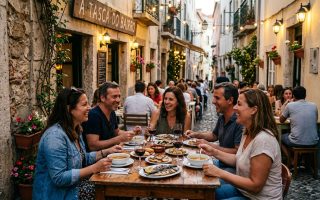
You land in a new city and your stomach growls. The main square is lined with restaurants displaying menus in five languages, stacked with photos of the same pasta, pad thai, or burger you could get at home. Easy choice, right? But that choice is also a missed chance. The real heartbeat of a place is never found on the tourist strip. It is hidden in a cramped noodle shop where the owner nods at regulars by name, at a market stall that has sold the same fermented specialty for three generations, or in a family kitchen where someone insists you stay for dinner. This is what eating like a local truly means, and it is the closest thing to a skeleton key a traveler can carry. When you share a meal on a community’s own terms, you stop being a spectator. You become a temporary part of the story.
Eating like a local is the single most effective way to understand a destination’s culture, history, and daily rhythms. This guide shows you how to find authentic meals, avoid tourist traps, and build genuine connections through food. You will learn practical strategies for market visits, street food safety, and reading a menu like an insider.
Why Your Plate Holds More Than Food
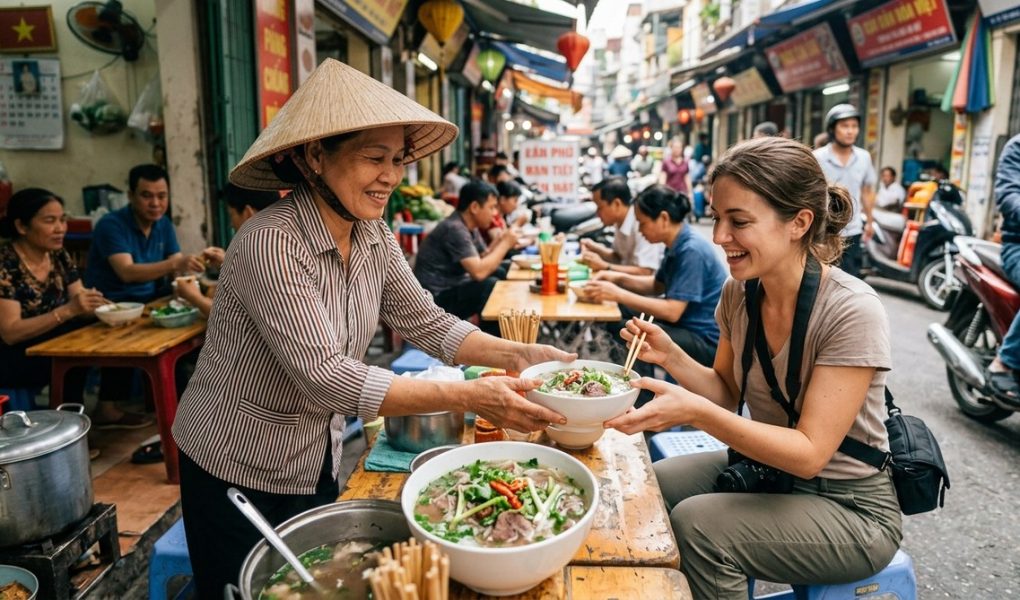
Every dish tells a story about geography, trade, migration, and survival. Consider the reliance on preserved fish in Scandinavian cuisine. That tradition did not arise from a random preference. It came from long winters and the need to store protein without refrigeration. The spice-heavy stews of North Africa trace back to ancient caravan routes that connected sub-Saharan Africa to the Mediterranean. A bowl of noodles in Vietnam reflects centuries of Chinese influence, French colonial infrastructure, and local ingenuity all at once.
When you eat like a local, you read these layers. You begin to understand why certain ingredients appear again and again. You notice how religious holidays shape weekly menus. You see how poverty or prosperity has molded what people consider a treat. Food is not just fuel. It is history you can taste.
This idea matters even more in 2026, as travelers increasingly seek meaningful connection over passive sightseeing. A recent survey found that nearly 70 percent of American travelers now rank “authentic food experiences” as a top priority when choosing a destination. That shift reflects a deeper hunger for understanding. People want to return from a trip with stories, not just photographs.
How to Find the Places Where Locals Actually Eat
Finding a genuine local meal is not about luck. It is about knowing where to look and what signals matter. The goal is to avoid the restaurants that exist only for tourists and find the ones that serve a neighborhood.
1. Follow the daily rhythm
Locals eat at specific times, and those times vary wildly. In Spain, lunch might not start until 2 p.m. In Thailand, breakfast often happens on the street before 7 a.m. If you walk into an empty restaurant at 5 p.m. in Rome, you are walking into a tourist trap. Pay attention to when the streets fill with people carrying groceries or sitting down at plastic tables. That is your window.
2. Use your phone like an insider
Do not just open a review app and pick the highest rated spot. Filter by language. Look for reviews written in the local language, not English. Those reviews are written by residents. If a restaurant has hundreds of glowing reviews in English and very few in the native tongue, it is probably catering to visitors.
3. Walk one block off the main drag
Rent is cheaper one street away from the main plaza or waterfront. Restaurants that serve locals cannot afford prime real estate, and they do not need it. Their customers know where they are. Walk two blocks in any direction from a tourist hub, and you will often find a completely different food scene with better prices and better quality.
4. Look for single-item menus
A place that only sells pho, or only serves grilled fish, or only makes one type of dumpling, is usually a specialist. Specialists have perfected their craft over years. They do not need a laminated menu with forty options. They make one thing, and they make it exceptionally well. That is a strong signal that you are in the right spot.
5. Ask the people who work with food
Hotel front desk staff rarely eat at the restaurants they recommend. But the person behind the counter at a corner grocery, the fishmonger at the market, or a taxi driver who has lived in the city for thirty years will point you to real food. They have no incentive to send you to a commission based spot. Ask them where they eat on their day off.
A Practical Table for Reading the Room
Not every restaurant signals its identity clearly. Use this table to decode what you see before you sit down.
| Signal | Tourist Trap | Local Spot |
|---|---|---|
| Menu languages | Five plus languages with photos | Local language only, maybe English |
| Staff behavior | Standing outside trying to pull you in | Going about their work, ignoring passersby |
| Menu size | Ten pages with cuisines from three continents | One page or a chalkboard, limited options |
| Customer age | Mostly young backpackers or families with guidebooks | Mixed ages, including elderly patrons and workers |
| Payment method | Credit cards accepted prominently | Cash only, or a small sign near the register |
| Opening hours | Open all day, every day | Closed between lunch and dinner, one day off |
| Decor | Traditional costumes on staff, themed interiors | Functional furniture, no show |
If you see three or more signals from the left column, keep walking. Trust your instincts.
The Market as Your Best Teacher
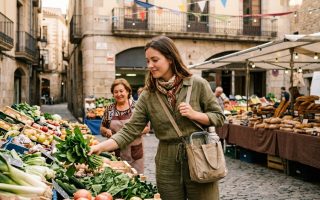
Food markets are the closest thing to a living museum of a culture. They show you what is in season, what people actually cook at home, and how ingredients are priced and traded. Unlike a restaurant, a market does not filter the experience through a menu. You see the raw materials.
Spend your first morning in a new city at the central market. Do not buy anything right away. Walk the aisles once just to observe. Notice what shoppers are carrying in their bags. Notice which stalls have the longest lines. Listen to the sounds of negotiation. Markets are loud, chaotic, and absolutely honest.
When you do buy, focus on items you cannot find at home. If you are in Mexico, try a fruit you have never seen before. If you are in Turkey, taste three types of olives and ask the vendor which one pairs best with breakfast. Vendors love to teach. They will give you samples and explain how to eat something if you show genuine curiosity.
Markets also offer the cheapest and most memorable meals. Many markets have a section where vendors cook the ingredients they just sold. A bowl of noodles made from the fish you watched being cleaned ten minutes ago is a meal you will remember for years. For more on this idea, read about why food markets reveal more about a culture than any museum.
Street Food: The Ultimate Equalizer
Street food is not a compromise. It is often the highest expression of a cuisine. The best versions of many iconic dishes come from carts, stalls, and tiny windows cut into walls. Street food is also the most democratic eating experience. A CEO and a construction worker stand at the same cart, eat the same thing, and pay the same price.
How to eat street food safely
Many travelers avoid street food out of fear. That fear is usually misplaced. Street food vendors cook in front of you. You can see the oil, the heat, and the hygiene. A restaurant kitchen is hidden. Here are the rules you actually need.
- Choose stalls that are busy with local customers. High turnover means fresh ingredients.
- Watch how the vendor handles money and food. If they use separate hands or a glove for money, that is a good sign.
- Eat foods that are cooked to order and served hot. Avoid anything that has been sitting under a heat lamp.
- Trust your nose. If something smells off, skip it. If it smells incredible, join the line.
- Do not be afraid to ask how something is made. Most vendors are proud of their craft and happy to explain.
Street food is also where you find the most surprising combinations. A grilled banana with chocolate in the Philippines. A fried dough filled with spiced potatoes in India. A skewer of grilled heart in Brazil. These are not dishes invented by a chef in a test kitchen. They emerged from necessity, creativity, and the ingredients available to ordinary people.
If you want a deeper framework for navigating street food with confidence, check out the complete guide to street food safety for adventurous eaters.
The Rituals That Surround the Meal
Eating like a local is not only about what you eat. It is also about how you eat. Every culture has rules around meals that reveal deeper values about community, hierarchy, and time.
In Ethiopia, meals are eaten from a shared platter using injera bread. No one eats alone. The act of tearing bread and offering it to someone else is a gesture of friendship. In Japan, slurping noodles is not rude. It signals enjoyment and appreciation for the chef. In France, bread is placed directly on the table, not on a plate, and it is never used as a utensil to push food.
These details matter. When you respect them, you signal that you are not just passing through. You are making an effort to understand. That effort is almost always reciprocated with warmth.
“The best meals I have ever had were not in famous restaurants. They were in homes, at market stalls, and in tiny shops where the cook looked me in the eye and asked if I was ready. Food is a language. You just have to show up willing to listen.” – Maria Santos, travel writer and author of The Shared Table
Share a meal with a local family if you get the chance. Platforms that connect travelers with home cooks have grown significantly. A dinner in someone’s home is not just a meal. It is an invitation into their daily life. You learn how they set the table, how they serve portions, how they argue and laugh and pass the salt.
The Mistakes Most Travelers Make
Even with good intentions, it is easy to fall into patterns that keep you in the tourist bubble. Here are the most common errors and how to avoid them.
- Eating near major attractions. The food within a three block radius of any landmark is almost always overpriced and underwhelming. Walk farther.
- Ordering familiar dishes. Do not go to Thailand and order pizza. Do not go to Italy and ask for a hamburger. You can eat those things at home. Order the thing the region is known for.
- Skipping breakfast at the hotel. Hotel breakfast buffets are convenient, but they are also a missed opportunity. Go to a bakery, a market, or a street stall instead. Breakfast is often the most culturally specific meal of the day.
- Not learning basic food words. You do not need to be fluent, but knowing how to say “thank you,” “delicious,” and “the bill please” in the local language changes how you are treated. It shows respect.
- Rushing through meals. Many cultures treat lunch or dinner as a two hour event. If you eat and leave in twenty minutes, you miss the point. Slow down. Stay for the conversation.
For a broader look at how respect for local customs changes your travel experience, see why learning basic phrases transforms your travel experience.
How to Build an Entire Trip Around Local Food
Some travelers treat food as an afterthought, something to fit in between sightseeing. But you can reverse that logic. Let food be the backbone of your itinerary.
Start by researching the signature dish of every region you plan to visit. Then build your day around it. If the best version of a dish is only available for breakfast, structure your morning around that. If a particular market is only open on Sundays, adjust your schedule.
Use food as a way to navigate neighborhoods. Instead of deciding to “explore the east side,” decide to “eat my way through the east side market and the three streets around it.” That focus gives you a reason to walk slowly and pay attention.
Book a cooking class early in your trip. A cooking class teaches you the techniques, ingredients, and flavor combinations that define a cuisine. After that class, you will taste restaurant food differently. You will recognize the decisions the chef made and understand why certain flavors work together.
For travelers who want to take this approach to the next level, read about how to plan an entire trip around a single dish. It is a strategy that guarantees focus and depth.
The Unwritten Rules of Eating Like a Local
Beyond the practical steps, there is a mindset that separates the traveler who eats like a local from the one who simply eats local food. That mindset comes down to a few principles.
- Be willing to be uncomfortable. You will not always know what you are ordering. You will sometimes get something you do not like. That is part of the process. The worst meal you have is still a story.
- Say yes to invitations. If a vendor offers you a taste of something you did not ask for, accept it. If a stranger at a communal table starts a conversation, engage. Some of the best food experiences come from spontaneous generosity.
- Do not treat food as content. It is tempting to photograph every dish for social media. But if you spend the whole meal framing shots, you miss the meal itself. Take one photo if you want, then put the phone away and eat.
- Eat with your hands when appropriate. In many cultures, eating with your hands is the norm. It changes the texture and temperature of food. It also changes the social dynamic. You cannot scroll through your phone while your hands are busy.
For more on the deeper connection between food and cultural identity, read how traditional craftsmanship reveals a destination’s soul. Food is one form of craft, and the same principles apply.
What Eating Like a Local Does for Your Travel Memories
The meals you remember five years later will not be the ones from white tablecloth restaurants where you felt out of place. They will be the ones where something unexpected happened. The street vendor who gave you an extra skewer for free. The grandmother who showed you how to fold dumplings properly. The market stall where you tried something that looked strange and tasted incredible.
Those memories stick because they involved connection. You were not just consuming. You were participating. You stepped out of the role of tourist and into the role of guest. That shift changes everything.
Your Next Step: One Meal, One Street, One Conversation
You do not need a two week itinerary to start eating like a local. You need one meal. Pick a destination you are planning to visit, or one you are curious about. Find a market, a street food stall, or a family run restaurant that serves the cuisine of that place. Go in without a phone in your hand. Ask a question. Try something you cannot pronounce. Pay attention to how it tastes, how it smells, how it makes you feel.
That single meal will teach you more about the culture than any guidebook chapter. And when you travel next, you will know exactly how to find the next one. The world is full of tables waiting for you to pull up a chair.