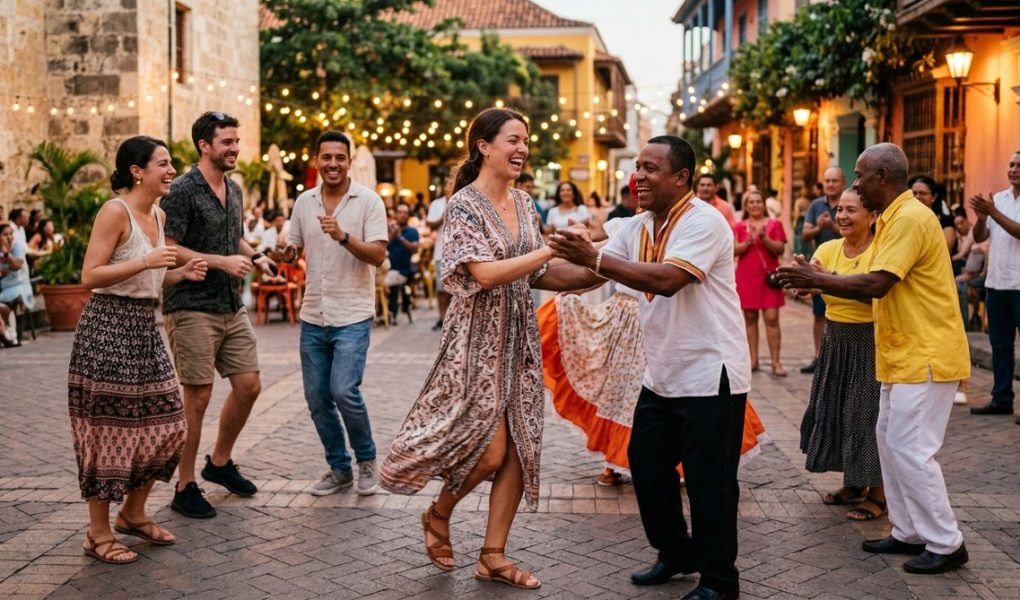
Picture this: you step into a small, low lit dance hall in Buenos Aires. A local couple glides past, their feet tracing invisible patterns. They smile and gesture for you to join. You hesitate. You have two left feet. But you step forward anyway, and within minutes the room is laughing, clapping, helping you find the rhythm. That night you don’t just learn a step. You earn a story, a friendship, and a memory that no museum could ever give you. That is the power of learning local dances while traveling.
Learning local dances while traveling is the fastest way to cross the invisible line between tourist and welcomed guest. It builds instant rapport, earns respect, and unlocks stories you will never find in a guidebook. You do not need skill, only willingness to try. This guide shows you how, where, and why to make dance part of your next trip.
Why Dance Works as an Icebreaker
Words fail us all the time when we travel. Grammar gets tangled. We forget the right verb tense. Accents make simple phrases sound foreign. But movement? Movement speaks a universal language. When you try to learn a local dance, you are telling the people around you “I care about your culture enough to look foolish for a moment.” That vulnerability is magnetic.
Consider the tango in Argentina. Locals pour years into perfecting their technique. They notice when a traveler shows genuine respect for the dance, not just a desire to post a video. The same goes for the samba in Brazil, the hula in Hawaii, or the Irish step dance in a cozy pub in Galway. Dance is a story. And when you let locals guide your feet, you become a character in their story, not just a spectator.
The Best Dances to Try Around the World
You do not need to become a professional. You just need one or two dances that are woven into the everyday life of a destination. Here are a few that travelers rave about:
- Tango (Argentina and Uruguay) : Deep, dramatic, and surprisingly beginner friendly if you take a milonga lesson before the evening crowd arrives.
- Flamenco (Spain) : Raw emotion meets foot percussion. Seville and Granada have schools where you can learn a basic palmas rhythm in one hour.
- Hula (Hawaii) : More than a dance, it is a storytelling tradition. Many resorts and community centers offer free or low cost workshops.
- Salsa (Cuba, Colombia, Puerto Rico) : A social dance that fills plazas and clubs every night. You can pick up the basic step in ten minutes.
- Gumboot Dance (South Africa) : Born in the gold mines, this rhythmic stomp is powerful and welcoming to newcomers.
- Bachata (Dominican Republic) : Slower and more forgiving than salsa, perfect for beginners who want to feel the music.
Each of these dances has a local context. To respect that context, make sure you learn about the origins. That is part of learning local dances while traveling the right way.
How to Start Learning Local Dances While Traveling
Here is a step by step process that works no matter where you are. Follow it to move from shy observer to the center of the dance floor with confidence.
-
Do a little homework before you go. Read about the dance’s history and cultural meaning. Know whether it is a social dance, a ceremonial one, or something in between. This knowledge will earn you instant respect when you ask a local to teach you. For example, if you plan to visit Oahu, learning about hula’s connection to Hawaiian mythology shows you are serious.
-
Find a beginner friendly class. Look for community centers, cultural workshops, or small studios listed on local event boards. Avoid tourist trap shows that promise a “authentic” dance lesson in thirty minutes. Instead, find a place where locals go to practice. Sites like Meetup and Facebook groups are gold mines. You can also ask your hotel or hostel concierge for recommendations.
-
Arrive early and watch. Do not jump into the middle of the floor. Sit, observe, and absorb the rhythm. Notice how the dancers interact, how they make eye contact, how they use their hands. This shows respect and helps your body understand the flow before you try.
-
Ask clearly for guidance. Approach someone who looks comfortable and say something like “I am a beginner traveler and I would love to learn a few steps. Would you be willing to teach me?” In many cultures, being direct but humble is the best approach. Most dancers are thrilled to share their passion.
-
Laugh at your mistakes. You will step on toes. You will lose the beat. That is fine. Those moments are what break the ice. Locals remember the traveler who laughed and kept trying far more than the one who got the steps perfect on the first try.
-
Thank your teacher sincerely. A simple gesture of gratitude, a small tip, or a round of drinks goes a long way. If you have a camera, offer to send them a photo. This builds a bridge that can last beyond the dance floor.
-
Practice a few basic moves later. Go back to your hotel and run through the steps for five minutes. It locks the muscle memory and makes you more confident for the next encounter.
Learning local dances while traveling does not require natural talent. It requires curiosity and courage.
Common Mistakes and How to Avoid Them
Even well meaning travelers can stumble. Here is a table of typical errors and the respectful alternatives that will keep you welcome on any dance floor.
| Mistake | Why It Hurts | What to Do Instead |
|---|---|---|
| Treating the dance as a performance for social media | It signals that you care more about content than connection | Put your phone away. Ask someone to film only after you have danced and connected. |
| Ignoring personal space and cultural norms | Some dances require close contact, others do not. Pushing too close can offend. | Follow your teacher’s lead on distance. If you are unsure, ask. |
| Assuming one style fits the whole country | Salsa in Cali, Colombia is different from salsa in Havana. Regional variations matter. | Learn the local name and style. Ask “is this the style from this region?” |
| Saying no to an invitation because you feel clumsy | Refusing a dance can be seen as rejection or rudeness in social settings | Accept gracefully. Let the local lead and follow their cues. |
| Overcommitting to a complex step before basics | Trying fancy moves too early frustrates both you and your partner | Master the basic step first. Repetition builds confidence. |
What the Experts Say
I reached out to Maria Santos, a dance instructor in Seville who has taught flamenco to travelers for over a decade. She shared this advice:
“The travelers I remember are the ones who come in with an open face, not an open phone. They let themselves be clumsy. They let me guide their hands. They laugh when they lose the rhythm. That is the moment of real connection. When you learn a local dance with your whole heart, you are not just moving your feet, you are saying ‘I see you, I respect you, I am here to share this moment.’ That is the most beautiful icebreaker I know.”
Her words capture the essence of learning local dances while traveling. It is not about perfection. It is about presence.
Why Dance Belongs in Your Travel Toolkit
Dance does something that eating, sightseeing, or even language lessons cannot do as quickly. It forces you into physical, shared time with another human being. In that shared time, guards drop. Laughter happens naturally. You become part of a community, even if only for one night.
- It accelerates trust. A study from the University of Oxford found that synchronized movement increases feelings of bonding and cooperation.
- It helps you read a culture’s values. In Japan, group dances like the Bon Odori emphasize harmony and collective joy. In Cuba, salsa celebrates individuality within partnership.
- It gives you a response to “where are you from?” Instead of a blank answer, you can say “I just learned my first tango step in San Telmo. Can you show me the real one?”
If you are planning a trip that focuses on cultural immersion, consider pairing dance lessons with other authentic practices. For example, learning basic phrases before you go will make your dance interactions smoother. And attending local festivals the right way often includes traditional dance performances where you can join in.
Your Next Trip: Where Will Dance Take You?
You do not have to be a professional dancer. You do not need rhythm. You just need a willingness to show up, be awkward, and let someone teach you something old. That is the secret that seasoned travelers know: the best souvenirs are not objects, they are steps stored in your muscles.
Next time you are in a new city, look for a dance studio, a community hall, or a local club that opens its doors to beginners. Take a deep breath. Walk in. Smile. And let the music guide you. Whether you are swaying to a bachata in Santo Domingo or stomping along to a gumboot rhythm in Johannesburg, you will leave not just with a new skill, but with a new friend.
The world is full of dances waiting for you to stumble through them. So go ahead. Your feet already know what to do. All they need is the permission to try.