The best archaeological sites don’t have ticket booths. They don’t appear on the front page of a Google search, and they certainly don’t have gift shops selling keychains. Some of the most stunning ancient ruins sit at the end of trails that aren’t marked on any official map. These places stay quiet because they’re hard to find. And that’s exactly what makes them worth the search.
Hidden ancient ruins exist near famous sites but remain off the radar due to lack of signage. This guide shows you how to find them using local knowledge, satellite imagery, and careful reading of the landscape. You’ll learn the research steps, the gear you need, and the etiquette for visiting unprotected sites responsibly.
Why Some Trails Stay Off the Map
It’s not an accident that certain trails are missing from tourist maps. Some landowners prefer to keep sites quiet to prevent damage. Local governments sometimes lack the budget to install signage or build proper paths. In other cases, the ruins themselves are not considered significant enough to warrant official attention, even though they hold real historical value.
Take the abandoned settlements in the American Southwest. There are hundreds of Ancestral Puebloan sites scattered across the Four Corners region. Only a handful get signposted. The rest sit behind barbed wire on ranch land or at the end of faint footpaths that only locals know about. These hidden ancient ruins tell a fuller story of the people who lived there than the curated park sites ever could.
How to Find Hidden Ancient Ruins
Finding these places requires a shift in mindset. You stop asking “Where are the ruins?” and start asking “Where would ruins be?” Here is a practical process that works across different regions.
-
Start with academic papers, not travel blogs. University archaeology departments publish field reports that include site coordinates. Search for terms like “survey report” plus the region you’re interested in. These documents often mention sites that are not developed for tourism.
-
Use satellite imagery with a trained eye. Open Google Earth or a similar tool. Look for unusual patterns in the terrain. Rectangular shapes in a forest, straight lines where nature should be curved, or mounds that stand out from the surrounding ground. These are signs of human activity.
-
Talk to locals who work the land. Farmers, ranchers, and park rangers know where the odd stone wall or old foundation sits. They might not call it a ruin, but they can point you in the right direction. Always ask permission before crossing private property.
-
Check historical maps. Many regions have old survey maps from the 1800s or early 1900s that mark structures that no longer appear on modern maps. The US Geological Survey’s historical map collection is a good starting point for domestic travel.
-
Cross-reference with hiking forums and offbeat guides. Some online communities share GPS coordinates for lesser-known sites. Reddit’s r/backcountry and specialized Facebook groups for “lost ruins” can be useful, but verify the information before you go.
What to Bring When the Trail Isn’t Marked
Walking an unmarked trail is different from a maintained path. You need to be self-sufficient. Here is the gear that makes the trip safe and enjoyable.
- GPS device or a phone with offline maps. Cell service is not guaranteed.
- Printed map of the area as a backup. Batteries die.
- Sturdy hiking boots. Unmarked trails often involve loose rock, steep slopes, or dense brush.
- Plenty of water. There are no water fountains on unmarked trails.
- A basic first aid kit. You are far from help.
- Sun protection and insect repellent. You will be exposed longer than on a marked trail.
- A camera or notebook. These sites often lack interpretive signs, so you need to document your own observations.
Common Mistakes People Make
| Mistake | Why It’s a Problem | Better Approach |
|---|---|---|
| Relying only on GPS coordinates | Coordinates can be off by hundreds of feet in remote areas | Cross-reference with topographic maps and visible landmarks |
| Going alone without telling anyone | If you get injured, no one knows where you are | Share your planned route and return time with a contact |
| Touching or moving stones | Unprotected sites are fragile; you can destroy evidence | Look with your eyes, leave everything in place |
| Visiting during wet season | Trails become impassable, and ruins can be damaged by foot traffic | Check local weather patterns and go during dry months |
| Ignoring private property boundaries | Trespassing is illegal and disrespectful | Get written permission when possible, or find public land alternatives |
The Etiquette of Visiting Unprotected Sites
Hidden ancient ruins are often unprotected. No fences. No security cameras. No staff. That means the responsibility for preservation falls entirely on you.
“The only thing you should take from an archaeological site is a photograph. The only thing you should leave is your thanks.” — Dr. Elena Marchetti, field archaeologist specializing in remote Andean sites
This rule matters more than any other. People who remove pottery shards or carve their initials into walls are stealing from everyone. They are also destroying the context that archaeologists need to understand the site. If you see someone damaging a ruin, report it to the local heritage authority if you can do so safely.
Where to Start Your Search
Some regions are especially rich in hidden ancient ruins. These areas have high concentrations of archaeological sites, but only a fraction are marked for visitors.
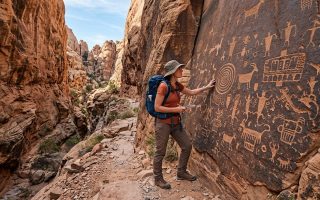
The American Southwest. Places like the backcountry of Canyonlands National Park or the remote canyons of the Gila National Forest hold countless Ancestral Puebloan sites. You can find granaries, petroglyphs, and dwelling structures that are not on any park brochure. For more on this, check out our guide on how to find ancient petroglyphs in the American Southwest’s most remote canyons.
The highlands of Peru and Bolivia. Beyond Machu Picchu and the Sacred Valley, there are countless pre-Inca terraces, fortresses, and burial towers. Many sit on private land where local farmers will show you around for a small fee.
The Mediterranean coast of Turkey. The Lycian Way hiking trail passes dozens of ancient tombs and city ruins. Some of the most impressive ones, like the rock-cut tombs of Myra, have official entrances, but smaller necropolises are scattered along the unmarked side trails.
The jungles of Central America. In Belize and Guatemala, there are hundreds of Maya sites that have not been excavated. Local guides can take you to overgrown temple mounds that look like hills covered in trees. Our article on hidden coastal retreats in Central America includes tips for arranging these kinds of trips.
How to Read the Landscape
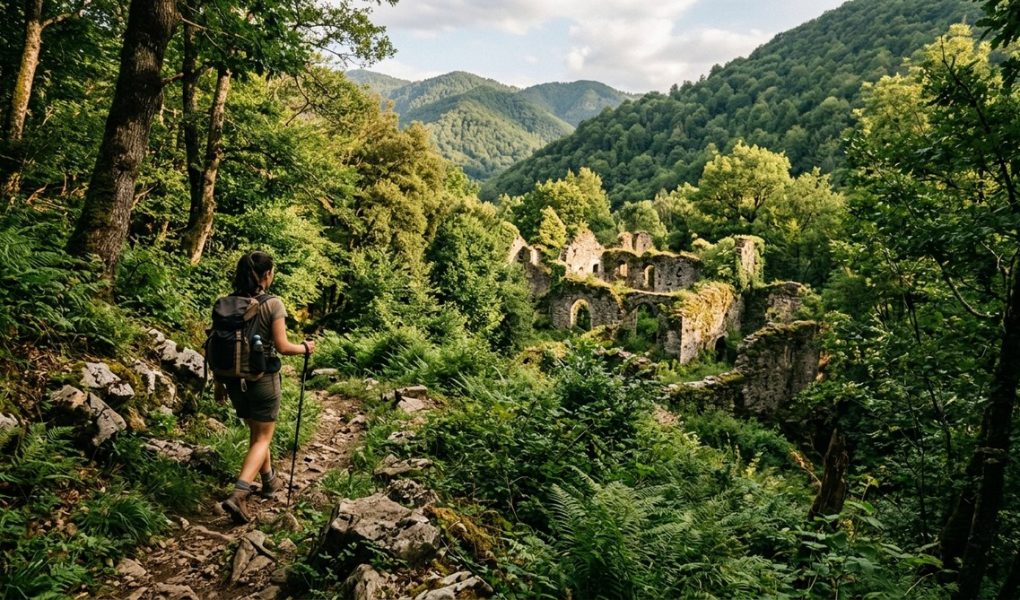
Once you are in the field, you need to train your eyes. Hidden ancient ruins rarely look like the postcard versions. They blend in.
Look for these signs:
- Mounds that are greener than the surrounding area. Decomposed building materials enrich the soil.
- Lines of stones that seem too straight to be natural. These could be foundation walls.
- Unusual vegetation patterns. In some regions, certain trees grow only on old human structures.
- Depressions in the ground. These might indicate collapsed rooms or storage pits.
Take your time. Walk slowly. Stop often to look around from different angles. The best way to spot hidden ancient ruins is to move at the pace of someone who is not in a hurry.
Putting It All Together
The thrill of finding hidden ancient ruins is not just about seeing old stones. It’s about the process. The research. The hike. The moment when you realize that the odd shape in the trees is actually a wall built by human hands centuries ago. That feeling cannot be replicated by walking up to a ticket window.
Start small. Pick one region. Do the research. Plan a trip that includes one unmarked site alongside the more famous attractions. See how it changes your perspective.
And when you get back, share what you learned. That is how these places stay alive. Not through official recognition, but through the stories that travelers pass on to each other.
If you want more ideas for off-the-beaten-path travel, take a look at our guide on 15 underrated European cities that rival Paris and Rome or our deep dive into why the Faroe Islands should be your next Nordic adventure. Both offer the same spirit of discovery that makes finding hidden ancient ruins so rewarding.
Pack your sense of curiosity. Bring your respect for the past. And leave the trail a little better than you found it.