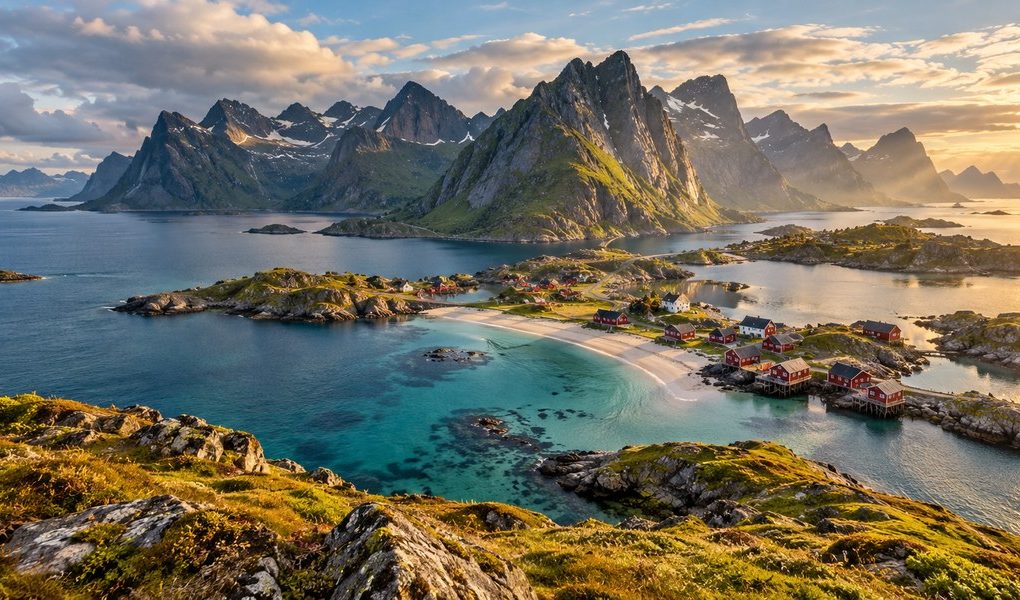
Most people picture Norway and think of Oslo’s sleek waterfront or the famous fjord cruises from Bergen. Those places are beautiful, sure, but they are also packed with tourists during peak season. If you want something wilder, quieter, and more dramatic, the Lofoten Islands should be at the top of your list. This archipelago sits above the Arctic Circle, and it delivers a raw, cinematic landscape that makes the typical Norway itinerary feel tame. Jagged peaks plunge straight into turquoise water. Fishing villages painted in deep red and ochre yellow cling to the shore. And the best part? You can hike for hours without seeing another person. The Lofoten Islands are underrated because they offer everything Norway is famous for, but with fewer crowds and a sense of discovery that is getting harder to find.
The Lofoten Islands are Norway’s most underrated archipelago because they combine Arctic wilderness, authentic fishing culture, and world-class hiking without the tourist crowds found in the fjord region. You get midnight sun in summer, northern lights in winter, and a slower pace of travel that rewards those who go off the main road.
What Makes the Lofoten Islands So Underrated
The term “underrated” gets thrown around a lot in travel writing. But in the case of Lofoten, it fits perfectly. Most international visitors land in Oslo, take the train to Bergen, and maybe cruise through the fjords. They rarely make the journey north of the Arctic Circle. That is a mistake. The Lofoten Islands have a concentration of natural beauty that rivals any place in Scandinavia. The mountains here are not gentle slopes. They are sharp, jagged spires that look like they were carved by a giant. The water between the islands is a deep teal color that looks photoshopped. And the beaches? Yes, beaches in the Arctic. White sand, clear water, and waves rolling in from the Norwegian Sea.
What makes Lofoten truly special is how accessible this wilderness feels. You do not need a multi-day expedition to see the highlights. You can drive from one end of the archipelago to the other in a few hours, stopping at viewpoints, trailheads, and tiny fishing villages along the way. That combination of epic scenery and easy access is rare. It is one reason why the Lofoten Islands are underrated. People do not expect to find that level of raw nature so close to a paved road.
How to Get to the Lofoten Islands
Getting to Lofoten takes some planning, but it is not difficult. Here is a simple breakdown of your options.
- Fly into a hub city. Most travelers fly into Oslo (OSL) or Bergen (BGO) first. From there, you take a connecting flight to either Svolvaer (SVJ) or Leknes (LKN), the two main airports on the islands. The flight from Oslo takes about two hours.
- Take the coastal ferry. Hurtigruten and Havila offer coastal voyages that stop in Lofoten. This is a slower, more scenic option. You can board in Bergen and arrive in Lofoten after about two and a half days at sea. It is a great way to ease into the trip.
- Drive from the mainland. The E10 highway connects the Lofoten Islands to the mainland via a series of bridges and tunnels. You can drive from Narvik to the southern tip of Lofoten in about four hours. This is the best option if you want to bring your own car or campervan.
If you are coming from the United States, plan for at least two flights. Most people fly into Oslo, spend a night there, and then catch an early morning flight north. The total travel time from a US East Coast city is around 12 to 15 hours. It is a long day, but the moment you step off the plane and see the peaks rising from the sea, you will forget the jet lag.
What to Do in the Lofoten Islands
The activities in Lofoten are centered on the outdoors. There are no theme parks or mega attractions here. The appeal is the landscape itself. Here are the best ways to experience it.
Hiking with a View
Hiking is the main event in Lofoten. The trails are not always well marked, so a good map or offline GPS app is essential. Some of the most rewarding routes include:
- Reinebringen. This is the most famous hike in the islands. It is steep and short, about 45 minutes up, but the view from the top is iconic. You look down over the village of Reine and the turquoise water of the fjord. Go early in the morning to avoid the small crowd.
- Ryten. This hike offers a view of the famous Kvalvika Beach. The trail is longer and more challenging than Reinebringen, but the reward is a beach that feels completely remote. You can camp there overnight if you pack a tent.
- Horseid Beach. This is another hike to a remote beach. The trail is relatively flat, but it takes about an hour each way. The beach itself is stunning, with white sand and clear water. It is a great spot for a picnic.
RIB Boat Tours
RIB stands for Rigid Inflatable Boat. These high-speed boats zip through the narrow fjords at thrilling speeds. You get close to the cliffs, see sea eagles up close, and feel the spray of the Arctic water. It is a different perspective than hiking. Several companies run tours out of Svolvaer and Reine. The tours usually last two to three hours.
Fishing and Cod Culture
Lofoten has a deep fishing history. For centuries, the islands were one of the most important cod fisheries in Europe. You can still see the traditional wooden racks where cod is dried into stockfish. The fish hang in the open air, and the smell is strong. It is a sensory experience you will not forget. You can also join a fishing tour and catch your own dinner. Many local operators offer half-day trips.
Surfing in the Arctic
Yes, you can surf in Lofoten. The village of Unstad has a surf spot that has gained international attention. The water is cold, so a thick wetsuit is required, but the waves are consistent and the setting is surreal. Surfing beneath snowy peaks is a memory that sticks with you. There is a surf school at Unstad that rents gear and offers lessons for beginners.
When to Visit the Lofoten Islands
The best time to visit depends on what you want to see. Here is a table to help you decide.
| Season | Months | Daylight | Weather | Best For |
|---|---|---|---|---|
| Summer | June to August | 24 hours of daylight (midnight sun) | 50 to 65 degrees Fahrenheit, rain possible | Hiking, kayaking, fishing, road trips |
| Shoulder | May and September | 16 to 20 hours of daylight | 40 to 55 degrees Fahrenheit, more rain | Hiking with fewer people, lower prices |
| Winter | October to March | 4 to 6 hours of daylight | 25 to 40 degrees Fahrenheit, snow common | Northern lights, winter hiking, cozy cabin stays |
Summer is the most popular time, but it is also the most crowded. If you want to experience the Lofoten Islands as underrated and quiet, consider visiting in late May or early September. The weather is still decent, the trails are less busy, and accommodation prices drop.
Where to Stay in the Lofoten Islands
Accommodation in Lofoten ranges from traditional fishing cabins to modern hotels. The most iconic option is the rorbu, a former fisherman’s cabin that has been converted into a guesthouse. These cabins are usually right on the water, with a view of the mountains. Here are a few recommendations:
- Nusfjord Arctic Resort. This is a historic fishing village that has been restored into a high-end resort. The rorbuer here are beautiful, and the restaurant serves excellent local seafood. It is on the pricier side, but the experience is worth it.
- Svinoya Rorbuer. Located in the village of Svolvaer, this is a more affordable option. The cabins are cozy and well maintained. You can walk into town for dinner and drinks.
- Camping and cabins. If you are on a budget, consider renting a cabin through Airbnb or booking a spot at a campground. Many campgrounds have small cabins with basic kitchens. This is a great way to save money and feel more connected to the landscape.
For a full list of options, check out our guide to hidden coastal retreats in Central America you need to discover for inspiration on how to find unique stays in remote areas. The same principles apply here.
A Practical 5-Day Lofoten Itinerary
If you have five days, you can see the highlights of the archipelago without feeling rushed. Here is a sample itinerary.
- Day 1: Arrive in Svolvaer. Pick up your rental car. Spend the afternoon exploring the town. Visit the Lofoten War Memorial Museum and walk along the waterfront. Eat dinner at a local restaurant.
- Day 2: Hike Reinebringen. Drive south to Reine. Hike the mountain in the morning. Spend the afternoon walking through the village and visiting the nearby beach at Hamnoy. Stay overnight in Reine or nearby.
- Day 3: RIB boat tour and A. Take a morning RIB boat tour from Svolvaer. After lunch, drive to the fishing village of A (pronounced “oh”). It is a small, picturesque village at the southern tip of the islands. Visit the stockfish museum.
- Day 4: Surf at Unstad. Drive to the west side of the islands and spend the day at Unstad Beach. Take a surf lesson or just watch the waves. In the evening, drive to a dark spot and look for the northern lights (if visiting in winter).
- Day 5: Hike Ryten or relax. Choose one last hike or simply drive the scenic E10 highway back toward Svolvaer. Stop at viewpoints along the way. Fly out from Leknes or Svolvaer in the evening.
“The Lofoten Islands are a place where the mountains meet the sea in a way that feels almost too dramatic to be real. Go there before the secret gets out.” — Local hiking guide, Svolvaer
Why the Lofoten Islands Stay Under the Radar
Part of the reason the Lofoten Islands are underrated is simple geography. They are far north. It takes effort to get there. Most travelers only have one or two weeks for Norway, and they choose the easier, more obvious route. The fjords are marketed heavily. The Lofoten Islands are not. That is changing, though. Social media has put places like Reinebringen and Unstad Beach on the map. But the islands are still far less crowded than the Norwegian fjords or Iceland’s Golden Circle. If you visit in the shoulder season, you can have entire trails to yourself.
Another reason is the weather. Lofoten is unpredictable. You can get rain, sun, and fog all in the same day. That scares off some travelers. But for those who embrace it, the changing light creates incredible moments. A rainy morning can turn into a golden evening. The clouds break, and the light hits the peaks in a way that feels magical. That is the kind of travel that stays with you.
Packing for the Lofoten Islands
Packing for Lofoten requires layers. The weather changes fast. Here is what you need:
- A waterproof shell jacket and pants.
- Mid-layer fleece or wool sweater.
- Hiking boots with good grip.
- Wool socks and thermal underwear.
- Hat, gloves, and a scarf (even in summer).
- A headlamp for winter hikes.
- A dry bag for boat tours.
Do not overpack. You will be moving around a lot, and laundry facilities are available in most towns. A good rule is to bring three tops, two bottoms, and one set of rain gear. Everything else is extra.
If you are planning a longer trip that includes other Nordic destinations, you might enjoy reading about why the Faroe Islands should be your next Nordic adventure. Both places share that raw, windswept beauty that feels untouched.
Respecting the Local Environment
Lofoten is a fragile environment. The landscape is sensitive to foot traffic, and the wildlife is easily disturbed. Follow these simple rules:
- Stay on marked trails. Do not cut switchbacks.
- Pack out all trash. There are no garbage bins at trailheads.
- Do not disturb the drying cod. It is a traditional industry.
- Keep a safe distance from sea eagles and other birds.
- Camp only in designated spots. Wild camping is legal in Norway, but respect private property.
The locals are friendly and welcoming. They appreciate visitors who show respect for their home. A simple “hei” (hello) goes a long way.
Why the Lofoten Islands Deserve Your 2026 Adventure
The travel world is full of overhyped destinations. The Lofoten Islands are not one of them. They deliver on every promise: dramatic scenery, authentic culture, and a sense of solitude that is increasingly rare. Whether you are hiking Reinebringen at midnight in the summer sun or watching the northern lights dance over a frozen fjord in winter, Lofoten gives you something real. It is not a curated Instagram backdrop. It is a living, working landscape that has been shaped by fishermen and the sea for centuries.
If you are an adventure traveler who values quiet moments over crowded viewpoints, the Lofoten Islands are calling. Go now, before the rest of the world catches on. You will come home with stories that do not sound like anyone else’s. And that is the whole point of travel, isn’t it?