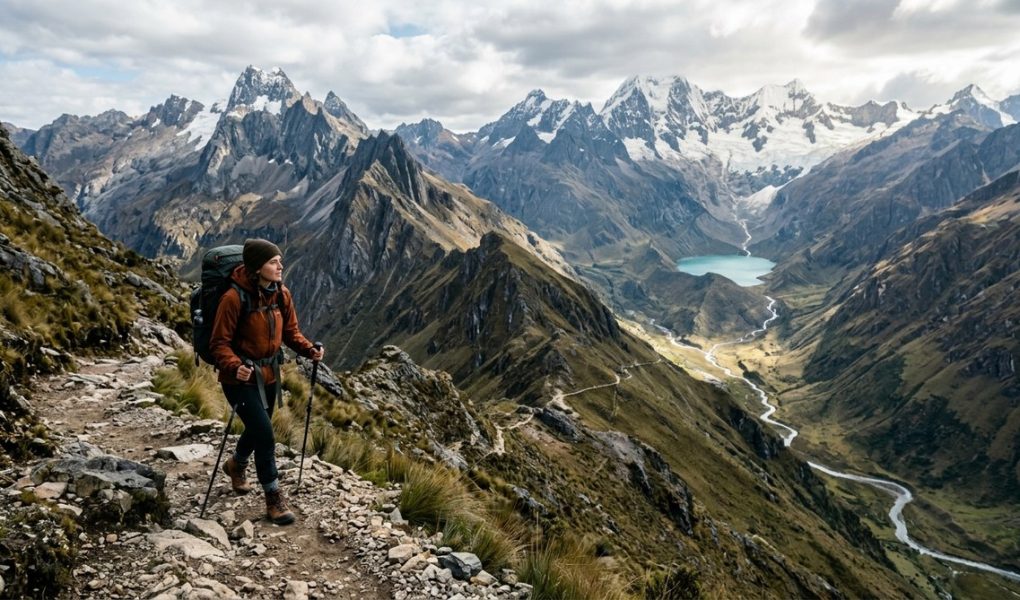
You have hiked the Cordillera Huayhuash in Peru. You have chased the Torres del Paine circuit in Chile. You have eaten steak in Buenos Aires and watched the sunset over the Atacama. You are already the kind of traveler who does not need a hand-holding introduction to South America. So let me cut to the chase.
The most underrated country in South America for adventure travel is Bolivia. It is not a dark horse. It is a thoroughbred that the travel industry has simply failed to market well. Bolivia has the highest navigable lake in the world, the largest salt flat, the most biodiverse national park, and some of the most technical climbing routes on the continent. It also costs half of what you would pay in Peru or Chile. If you have not been, you are missing the single best value adventure destination in the hemisphere.
Bolivia offers world-class adventure travel at a fraction of the cost of its neighbors. From the Salar de Uyuni salt flats to the jungle trails of Madidi, the country delivers high adrenaline and raw wilderness without the tourist crowds. With cheap internal flights, excellent local guides, and a growing network of eco-lodges, 2026 is the year to go before prices rise.
Why Bolivia Beats the Popular Kids
Everyone talks about Patagonia. Everyone talks about Machu Picchu. Those places are incredible. They are also expensive, crowded, and increasingly regulated. Bolivia has the same raw ingredients without the baggage.
Consider the numbers. A multi-day trek in the Cordillera Real costs a fraction of what you would pay for a similar route in Patagonia. A private room in a decent hostel in La Paz runs between $10 and $15. A three-course lunch with soup, main, and dessert costs $3. You are not sacrificing quality. You are paying for the country’s lack of international marketing.
Bolivia also has a massive diversity of terrain packed into a relatively small area. You can wake up in the Amazon basin and sleep in the high Andes on the same day. That is not a marketing slogan. That is a logistical reality.
The Adventures That Make Bolivia the Most Underrated Country in South America
Let me walk you through the specific experiences that earn Bolivia this title. Each one is a legitimate world-class adventure that most travelers overlook.
1. The Salar de Uyuni and the Southwest Circuit
The salt flats are not a secret. Every Instagram feed has that forced-perspective photo of a person looking tiny against a white horizon. But the full southwest circuit is something else entirely. It is a four-day jeep trip that crosses the flats, passes through high-altitude deserts, and ends at the Eduardo Avaroa National Park with its red lagoons, geysers, and flamingos.
Most travelers book a standard tour from Uyuni. The savvy ones book a private jeep or join a group that includes the seldom-visited hot springs at Polques. The water is naturally heated, the stars are absurdly bright, and you will share the pools with maybe five other people.
2. Mountain Biking the Death Road
The World’s Most Dangerous Road is no longer the most dangerous road. Safety improvements and guardrails have made it manageable. But it is still one of the most thrilling mountain bike descents on the planet. You drop from 4,700 meters to 1,200 meters in about 60 kilometers. The weather changes from freezing to humid jungle. You pass waterfalls, clouds, and the occasional llama.
Book with a reputable operator that provides proper full-suspension bikes and helmets. The cheap operators use old frames and worn brakes. Spend the extra $30. It is worth it.
3. Trekking in the Cordillera Real
This is where Bolivia truly shines as the most underrated country in South America for adventure travel. The Cordillera Real is a 200-kilometer stretch of peaks that runs behind La Paz. It contains some of the most accessible high-altitude trekking in the world. You can do a five-day traverse of the Condoriri massif, summit 6,000-meter peaks like Huayna Potosi, or hike the Takesi Trail that follows an ancient Inca road.
The best part? You will see almost no other tourists. I did a four-day trek in the Cordillera Real and encountered exactly two other groups. Compare that to the Inca Trail where you are never alone.
4. Madidi National Park
Madidi is one of the most biodiverse places on Earth. It contains over 1,000 bird species, 200 mammal species, and an uncounted number of insects and plants. The park borders Peru and Brazil, forming a massive transboundary conservation area.
You can access Madidi from Rurrenabaque, a small town that you reach by bus from La Paz or by a short flight. Once there, you choose between jungle lodges and river camps. Activities include night hikes, piranha fishing, and canopy walks. The guides are local Tacana people who know the forest intimately.
5. Climbing Illimani
Illimani is the mountain that looms over La Paz. It stands at 6,462 meters. It is a serious climb that requires technical ice and rock skills. But it is also one of the most accessible high-altitude ascents in the world because you can start from a city with a population of over 800,000 people.
You need a guide, proper gear, and at least three days for acclimatization and the climb itself. The summit views of the Altiplano and the Amazon basin are unforgettable. This is not a beginner mountain. But if you have experience on glaciated peaks, it belongs on your list.
How to Plan Your Bolivia Adventure in 2026
Planning a trip to Bolivia is straightforward if you follow a logical sequence. Here is a step-by-step process that has worked for hundreds of travelers.
-
Choose your season. The dry season runs from May to October. This is the best time for trekking, climbing, and salt flat visits. The wet season from November to April makes the salt flats reflective but can close mountain passes.
-
Book your international flight. The main entry point is El Alto International Airport in La Paz. You can also fly into Santa Cruz and connect from there. Airlines like LATAM, Boliviana, and American serve the country.
-
Acclimatize in La Paz. La Paz sits at 3,650 meters. Do not land and immediately hike. Spend at least two days drinking coca tea, walking slowly, and sleeping early. The city itself is fascinating with its markets, cable cars, and colonial architecture.
-
Reserve your internal transport. Bolivia has a good network of overnight buses and short flights. For remote areas like Rurrenabaque or Uyuni, book your bus or flight a few days in advance during peak season.
-
Hire local guides. Bolivia has a strong culture of certified mountain guides. Use agencies in La Paz for climbing and trekking. For jungle trips, book through lodges in Rurrenabaque. Avoid booking everything online before you arrive. In-person booking is cheaper and lets you vet the operator.
What to Pack for Bolivia
Packing for Bolivia is tricky because you will encounter every climate except coastal. Here is a table that breaks down the essentials.
| Item | Why You Need It | Where to Get It |
|---|---|---|
| Waterproof hiking boots | Trails are muddy or rocky | Bring from home |
| Down jacket | High altitude nights are freezing | Buy in La Paz for cheap |
| Sunscreen SPF 50+ | UV is intense at altitude | Bring from home |
| Reusable water bottle | Avoid plastic waste | Bring from home |
| Headlamp | For early summit starts | Bring from home |
| Electrolyte packets | Prevent altitude sickness | Buy in La Paz pharmacies |
| Insect repellent | Jungle areas have mosquitoes | Buy in La Paz |
| Dry bags | For jungle boat trips | Bring from home |
A Common Mistake Travelers Make
The biggest mistake is trying to do too much in too little time. Bolivia is not a country you can rush. Distances are long, roads are rough, and altitude slows everything down.
“I see travelers try to do the salt flats, the jungle, and a mountain trek in ten days. That is a recipe for altitude sickness and exhaustion. Pick two regions and do them well. You will have a better trip than someone who tries to see everything and remembers nothing.” — Local guide Marcelo Quispe, La Paz
Do not try to squeeze in the Amazon, the salt flats, and the Cordillera in a single week. You will spend half your time on buses. Instead, choose a focus. If you want hiking and climbing, base yourself in La Paz and explore the Cordillera Real. If you want wildlife and culture, head to Rurrenabaque and Lake Titicaca.
How Bolivia Compares to Other South American Adventure Destinations
Let me put this in perspective with a simple comparison.
| Destination | Cost per day (budget) | Crowd level | Adventure variety |
|---|---|---|---|
| Peru (Cusco region) | $40 – $60 | High | High |
| Chile (Patagonia) | $70 – $100 | High | Medium |
| Argentina (Bariloche) | $50 – $80 | Medium | Medium |
| Bolivia (La Paz region) | $25 – $40 | Low | Very high |
| Ecuador (Banos) | $35 – $50 | Medium | High |
Bolivia is the clear winner for value and variety. You get more adventure for less money and fewer people.
The Best Time to Visit for Adventure
The dry season from May to October is the safest bet for most activities. If you want to see the salt flats with water on them (the mirror effect), go in January or February. Just be prepared for cold temperatures and the possibility of road closures.
For jungle trips, the dry season is also better because trails are less muddy and wildlife gathers around water sources. The wet season makes river travel easier but hiking more difficult.
Why You Should Go Now
Bolivia is changing. The country has invested in infrastructure. New airports, better roads, and improved internet access are making it easier to travel. More tour operators are offering English-speaking guides. The government has started promoting adventure tourism more aggressively.
This means prices will rise. They have already started. A basic tour of the salt flats cost $100 per person in 2020. In 2026, the same tour costs $150. The trend is upward. If you wait another three years, Bolivia will still be affordable compared to Peru, but it will no longer be the bargain it is today.
Go now. Go before the crowds arrive. Go while you can still have the Cordillera Real to yourself.
Why Bolivia Deserves Your Next Adventure Trip
Bolivia is not the easiest country to visit. The bureaucracy can be frustrating. The roads are rough. The altitude is punishing. But those are the same reasons it remains the most underrated country in South America for adventure travel. The difficulty keeps the crowds away. The people who do make the effort are rewarded with experiences that feel genuinely undiscovered.
If you are the kind of traveler who values authenticity over comfort, who wants to earn your views with sweat and altitude, and who does not need a luxury lodge to feel fulfilled, Bolivia is your next destination.
Start planning. Book your flight. Get your boots ready. The salt flats, the mountains, and the jungle are waiting.