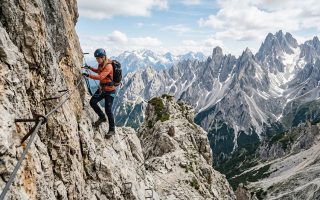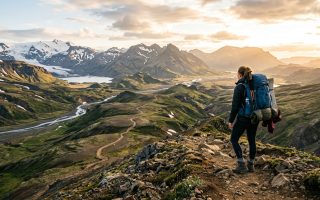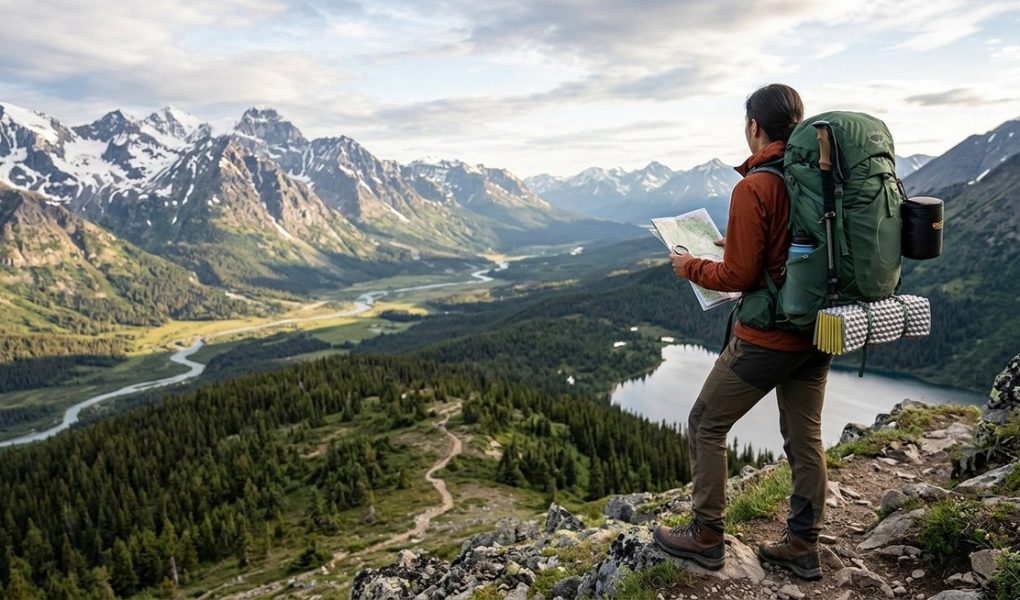
The silence hits you first. Not the kind of quiet you get at home with the windows closed, but a deep, physical absence of sound. Then the wind picks up, and you realize you haven‘t seen another person in six hours. This is what solo backpacking in a remote national park feels like. It’s not for everyone, and that‘s exactly why it’s worth chasing.
Solo backpacking in remote national parks requires careful planning around permits, navigation, and safety. Focus on parks like Gates of the Arctic, North Cascades, Isle Royale, and Great Basin to avoid crowds. Use a six-step framework: research permits, pack light, manage food and water, master navigation, carry an emergency beacon, and follow Leave No Trace. Preparation turns solitude into a gift, not a risk.
Why Remote National Parks Are Perfect for Solo Backpacking
You have probably visited a national park during summer and spent more time in traffic than on the trail. Yellowstone, Zion, Great Smoky Mountains — they draw millions each year. But the U.S. park system holds gems that see fewer visitors in a year than Yosemite sees in a day. These remote parks offer something priceless for solo travelers: the chance to test your skills, connect with raw nature, and hear only your own footsteps.
Solo backpacking in remote areas builds confidence. You make every decision, carry every ounce, and solve every problem. The solitude forces you to slow down. You notice the way light filters through a canopy of ancient pines or how a marmot watches you from a boulder. It is not a vacation. It is an expedition. And with the right plan, it is absolutely achievable.
How to Choose the Right Remote Park for Your Solo Trip
Not all remote parks are equally accessible. Some require bush planes. Others demand long ferry rides or bone-rattling dirt roads. You need to match your experience level to the park’s logistics.
- Gates of the Arctic National Park (Alaska) — No roads, no trails. You fly in or hike from the Dalton Highway. Best for experienced backpackers who can navigate unmarked terrain.
- North Cascades National Park (Washington) — Rugged alpine peaks and glaciers. Requires backcountry permits. Many trails are long and strenuous, but well-marked.
- Isle Royale National Park (Michigan) — Accessible only by ferry or seaplane. Moose and wolves roam free. Perfect for intermediate solo hikers who want a true island wilderness.
- Great Basin National Park (Nevada) — High desert meets 13,000-foot peaks. Fewer than 100,000 visitors per year. Classic backpacking with established trails and solitude.
- Dry Tortugas National Park (Florida) — 70 miles west of Key West. Requires a boat or seaplane. More of a basecamp destination, but incredibly remote for those who make it.
- Lake Clark National Park (Alaska) — Brown bears, volcanoes, and salmon streams. Best with a guide or very experienced solo travel.
When choosing, consider your comfort with self-rescue, your ability to read maps without cell service, and how many days you can go without a shower. If this is your first remote solo trip, start with Great Basin or North Cascades. Save Gates of the Arctic for after you have a few solo trips under your belt.
Your 6-Step Planning Framework for Solo Backpacking Success
This framework transforms a daunting task into a clear checklist. Follow each step before you leave home.
-
Research and secure permits. Many remote parks have quota systems. North Cascades requires a backcountry permit, often through a lottery. Isle Royale lets you book a specific campground the day before. Gates of the Arctic has no permit, but you must file a trip plan with the ranger station. Check Recreation.gov early. For 2026 trips, start looking in January. Some permits open in March.
-
Build a lightweight gear system. Every ounce matters when you carry everything. Aim for a base weight under 20 pounds. Critical items: a reliable tent or tarp, sleeping bag rated for the expected low, a stove, water filter, first-aid kit, and a satellite messenger.
-
Plan your food and water strategy. In dry parks like Great Basin, you may need to cache water or carry extra. In wet parks like North Cascades, you can filter from streams. Pack high-calorie, no-cook options to save fuel and weight. Aim for 2.5 to 3 pounds of food per day.
-
Master navigation without cell service. Download maps on apps like Gaia GPS or CalTopo before you go. Bring a paper map and compass as backup. Know how to take a bearing. Remote parks often have unmarked trails or no trails at all.
-
Set up safety and communication. Bring a personal locator beacon or satellite messenger (Garmin inReach, ZOLEO). Leave a detailed itinerary with someone at home. Check in at ranger stations when possible. Cell service is rare. Your safety net is the beacon.
-
Commit to Leave No Trace. Pack out all waste, including toilet paper. Camp at least 200 feet from water sources. Avoid cooking near your tent to prevent attracting bears. In parks with bear canister requirements, use them. The solitude you love depends on everyone protecting it.
Common Solo Backpacking Mistakes in Remote Parks
Even experienced backpackers make these errors. Knowing them will save you trouble.
| Mistake | Why It Hurts | How to Avoid It |
|---|---|---|
| Overestimating daily mileage | Remote terrain is slower than trail miles. You may average 1.5 mph on tundra or talus. | Plan 6–8 miles per day for the first trip. Adjust based on elevation gain and surface. |
| Ignoring weather patterns | Afternoon thunderstorms in the Rockies, 40-degree temperature swings in the desert. | Check 7-day forecasts and prepare for worst case. Bring rain gear and extra insulation. |
| Forgetting a personal locator beacon | Without cell service, an accident or wrong turn can become a survival situation. | Rent or buy a satellite messenger. Practice using it at home. |
| Carrying too much food | Heavy pack leads to fatigue and injury. You may not have the appetite you expect. | Stick to the 2.5 pounds per day rule. Bring electrolyte powders to stay hydrated. |
| Not testing gear before the trip | A stove that won‘t light or a tent pole that snaps ruins the trip. | Set up your tent in the backyard. Cook a test meal. Hike a shakedown trip with full gear. |
Solo Backpacking Etiquette and Mindset
When you travel alone in remote places, the rules change slightly. You have no one to share the load, but you also have no one to disappoint. That freedom is the whole point.
“The biggest lesson I learned from solo backpacking is that discomfort is temporary and growth is permanent. The first night I camped alone in the North Cascades, I barely slept. By the third night, I was reading by headlamp under stars so bright they looked fake.” — Mara J., seasoned solo backpacker and guide
Be respectful of other groups you may encounter. Step off the trail to let faster hikers pass. Keep noise minimal. If you meet other solo travelers, a nod or a short conversation can be a highlight. But remember: you came for solitude. Do not feel obligated to socialize.
Trust your instincts. If a river crossing looks dangerous, turn back or wait. If the weather turns, set up camp early. Pride has no place in the backcountry. The mountain will still be there tomorrow.
The Gear That Makes It Work
Your gear choices matter more on a solo trip because there is no one to borrow from. Here are the items worth investing in:
- Satellite messenger: Garmin inReach Mini 2 or ZOLEO. Non-negotiable.
- Water filter: Sawyer Squeeze or Katadyn BeFree. Lightweight and reliable.
- Sleep system: A down quilt and inflatable pad for warmth and packability.
- Cook system: A small canister stove and titanium pot. Or go stoveless with cold soaking.
- Navigation tools: Download offline maps on your phone, carry a paper map, and a compass.
- First-aid kit: Add blister treatment, antihistamines, and an emergency blanket.
Do not buy the cheapest version of critical gear. Rent things like bear canisters and beacons if your trip is short. But a good sleeping bag and a reliable tent are worth the splurge.
The Quiet That Stays With You
Solo backpacking in the most remote US national parks is not about proving anything. It is about stripping away distraction and meeting yourself on a ridge line. The planning can feel overwhelming, but each step you take at home saves you trouble on the trail.
Start small. Pick Great Basin or Isle Royale. Get the permits. Pack carefully. Then go. The first time you sit alone at dusk with a warm meal and watch the light fade over a valley with no sign of human life, you will understand why people return to these places again and again.
The silence will stay with you long after you fly home. That is the real reward of solo backpacking in remote national parks.