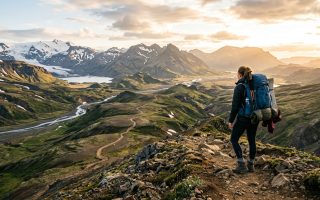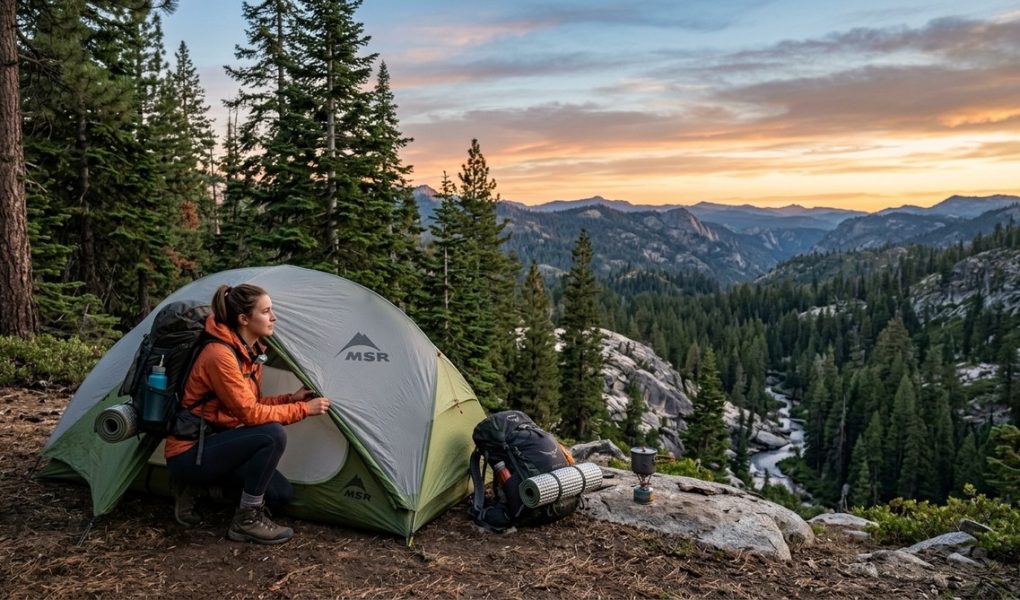
Your pack is loaded. The trail is quiet. You have found a clearing tucked between pines, far from any campground sign or paid reservation slip. The question that stops you is simple: can you actually sleep here without getting a ticket? For anyone who loves the idea of pulling off a forest road and pitching a tent under the stars, the rules around wild camping in National Forests can feel confusing. But here is the good news: in most cases, yes, you can. The U.S. Forest Service manages about 193 million acres of public land, and a huge portion of it is open for what they call “dispersed camping.” That is the official term for wild camping on National Forest land. This guide will walk you through exactly where it is allowed, where it is not, and how to stay on the right side of the rules in 2026.
Wild camping (dispersed camping) is legal across most U.S. National Forests unless posted otherwise. You can camp anywhere outside developed sites as long as you follow key rules: stay 200 feet from water and trails, keep campsites small, and pack out all waste. Some areas like wilderness zones or active timber sales have restrictions. This guide covers where you can camp legally, how to find the best spots, and what mistakes to avoid in 2026.
What Does Wild Camping Mean on National Forest Land?
Wild camping goes by many names. You may hear “dispersed camping,” “primitive camping,” or “backcountry camping.” They all mean the same thing: setting up camp outside of a designated, developed campground. No picnic tables. No fire rings. No bathroom facilities. Just you and the land.
The U.S. Forest Service manages 154 National Forests and 20 National Grasslands across the country. The vast majority of these lands are open to dispersed camping unless a specific area is marked as closed. That is a big shift from how many people think about public land. In National Parks, for example, backcountry camping almost always requires a permit and a designated site. In National Forests, the default is permission.
This simple distinction makes National Forests one of the best places in the United States for a true wild camping experience. You can pull off a gravel road, hike a mile into the woods, and set up camp without checking in with anyone. That freedom is rare and valuable, and it is protected by a few straightforward rules.
Where Wild Camping Is Restricted or Banned
Even though the default is open, there are important exceptions. Knowing them will keep you out of trouble and protect the land for everyone.
Developed Recreation Areas
You cannot wild camp in developed campgrounds, picnic areas, or trailhead parking lots unless you pay for a site. If there is a toilet, a picnic table, or a fee station, you are in a developed area. Move on.
Wilderness Areas with Permit Systems
Some National Forests contain designated Wilderness Areas. These are managed by the Forest Service but often require a free or low-cost permit for overnight stays. The Boundary Waters Canoe Area Wilderness in Minnesota, for instance, has a strict quota system. The John Muir Wilderness in California requires permits from Memorial Day through late September. Check with the local ranger district before you go.
Active Timber Sales and Logging Zones
Forest Service land is working land. Trees get cut. If you camp in an active timber sale area, you risk injury from logging equipment or falling trees. Look for signs that say “Active Timber Sale” or “Closed for Harvest.” Do not camp there.
Areas Near Water and Trails
The standard rule across almost every National Forest is that you must camp at least 200 feet away from lakes, streams, rivers, and trails. This protects water quality and keeps wildlife corridors open. It also ensures that other hikers do not stumble onto your camp while trying to enjoy a scenic overlook.
Seasonal Fire Closures
In 2026, many western National Forests are under increasing fire risk. Seasonal fire bans may restrict campfires or close entire forests during extreme drought. Check the Forest Service website for the specific forest you plan to visit. A county-level burn ban often applies to National Forest land within that county.
How to Find a Legal Wild Camping Spot in a National Forest
Finding a spot is part of the adventure. Here is a step-by-step process that works across most National Forests.
-
Choose a National Forest and check the Motor Vehicle Use Map (MVUM). This map shows every road and trail open to motorized vehicles. You can camp anywhere within 300 feet of these roads unless posted otherwise. Download the MVUM from the forest’s website before you leave cell service.
-
Look for pull-offs and spur roads. As you drive through the forest, watch for unmarked dirt roads that branch off the main route. Drive slowly and look for previously used campsites. Avoid creating a new site if an existing one is available.
-
Walk your camp area before setting up. Make sure you are at least 200 feet from water and trails. Check for widowmakers (dead branches hanging overhead). Look for signs of poison ivy or oak. Confirm that the ground is not a fragile meadow or alpine tundra.
-
Set up camp on durable surfaces. Dirt, gravel, pine needles, and sand are all fine. Avoid vegetation that will be crushed. If you are in a popular area, try to camp on an existing bare patch rather than creating a new one.
-
Leave a smaller footprint than you found. Do not dig trenches around your tent. Do not hammer nails into trees. Do not move rocks to create a windbreak. The goal is to leave no trace that you were ever there.
Essential Gear and Best Practices for a Successful Night
Wild camping means you are on your own. There are no camp hosts, no emergency phones, and no one checking on you. That is the beauty of it, but it also means you need to be prepared.
| Wild Camping Technique | Why It Works | Common Mistake | Why That Mistake Hurts |
|---|---|---|---|
| Camp 200 ft from water | Protects fragile shorelines and keeps wildlife access open | Setting up right on a lake edge | Contaminates water sources and disturbs animals |
| Store food in a bear canister or hang it properly | Prevents bears from associating humans with food | Leaving food inside your tent | Attracts bears directly to your sleeping space |
| Use an existing fire ring or go without fire | Avoids scarring the landscape with new rings | Building a ring from fresh rocks | Leaves permanent marks on the forest floor |
| Pack out all waste including toilet paper | Keeps the forest clean for the next person | Burying trash or toilet paper | Animals dig it up and spread it |
| Set up on durable bare ground | Prevents damage to fragile plant life | Camping in a grassy meadow | Kills alpine plants that take years to regrow |
Leave No Trace: The Golden Rule for Wild Camping
Every person who wild camps in a National Forest is a steward of that land. No one is paid to clean up after you. No one is coming to collect your trash. The only way this system works is if every camper follows the seven principles of Leave No Trace.
- Plan ahead and prepare. Know the regulations for the forest you are visiting.
- Travel and camp on durable surfaces. Stick to dirt and rock.
- Dispose of waste properly. Pack it in, pack it out.
- Leave what you find. Do not pick flowers or take rocks.
- Minimize campfire impacts. Use a stove when possible.
- Respect wildlife. Observe from a distance.
- Be considerate of other visitors. Keep noise down and give space.
These principles are not optional suggestions. They are the foundation that keeps National Forests open for wild camping year after year. When people ignore them, the Forest Service responds by closing areas to dispersed camping. We have seen this happen in popular zones across Colorado, California, and Oregon. Do not let your visit be the one that tips a forest over the edge.
“The biggest mistake I see is people camping too close to water,” says Jenna Rushford, a backcountry ranger for the Pike-San Isabel National Forest in Colorado. “They think they are being convenient, but they are actually trampling the exact ecosystem that makes the spot beautiful. A 200-foot buffer sounds like a lot until you pace it out. Do it. Your future self and the fish will thank you.”
Common Myths About Wild Camping in National Forests
There is a lot of bad information floating around. Let me clear up a few persistent myths.
Myth: You need a permit for any overnight stay in a National Forest.
Truth: Most National Forests do not require a permit for dispersed camping. The exceptions are Wilderness Areas with quota systems and some popular recreation corridors that have implemented permit trials. Check the specific forest’s website.
Myth: You can camp anywhere as long as you leave no trace.
Truth: Some areas are permanently closed to camping to protect sensitive habitats. These are marked on the MVUM and on signs at trailheads. Even the best Leave No Trace ethics do not override a closure.
Myth: Campfires are always allowed in National Forests.
Truth: Fire restrictions change by season and by forest. In 2026, many western forests are under year-round fire restrictions in certain zones. Always check the current fire order before striking a match.
Myth: If there is no sign, it is legal to camp.
Truth: The absence of a sign does not mean the area is open. Some sensitive zones like research natural areas or riparian corridors are closed without prominent signage. Always consult the MVUM.
Your 2026 Wild Camping Checklist for National Forests
Before you head out, run through this list. It will save you from a sleepless night or an expensive citation.
- Download the Motor Vehicle Use Map for your selected forest.
- Check the forest website for fire restrictions and seasonal closures.
- Pack a bear canister or bear hang kit if you are in grizzly or black bear territory.
- Bring a map and compass or a fully charged GPS device. Cell service is unlikely.
- Carry at least one gallon of water per person per day, plus a filtration system.
- Pack a trowel and toilet paper in a sealed bag. You will need to bury human waste at least 6 inches deep and 200 feet from water.
- Tell someone your planned route and your expected return time.
Wild camping in National Forests is one of the most accessible and rewarding ways to connect with the American outdoors. The rules are simple. The land is vast. And the experience of waking up in a silent forest with no one else around is worth every ounce of planning.
So pick a forest, check the map, and go find your spot. The woods are waiting, and in 2026, they are still open for those who treat them with respect.